Identity theft does not always begin with an empty bank account or a loan taken out in your name. It often begins with something small enough to dismiss.
A verification code you did not request. A password-reset email that appears in the middle of the night. A $2 charge you cannot explain. A bank statement that suddenly stops arriving.
Separately, these events may look like harmless mistakes. Together, they could mean someone has obtained part of your personal information and is testing how far they can go with it.
The sooner you notice the pattern, the easier it may be to stop the thief before your money, credit, medical records, tax information, or government benefits are affected.
This guide explains how to tell if someone is trying to steal your identity, the early warning signs most people overlook, how to check whether your identity is already being used, and what to do immediately if something feels wrong. Read to the end because some of the most damaging forms of identity theft never appear on a bank statement.
First, you need to understand the difference between an attempted theft and actual identity misuse.
How To Tell If Someone Is Trying to Steal Your Identity? (17 Warning Signs)
Someone may be trying to steal your identity if you receive unexpected login alerts, verification codes, password-reset requests, credit inquiries, account-opening messages, or requests for sensitive information.
These warning signs do not always prove that identity theft has occurred. Someone may have entered the wrong email address, a merchant may use an unfamiliar billing name, or a company may have made an administrative error.
However, you should become more concerned when:
- Several unexplained events happen close together.
- The activity involves important accounts.
- Your contact information changes without permission.
- You suddenly lose access to an account.
- An unfamiliar transaction appears after a suspicious message.
- A new account or credit inquiry appears in your name.
Imagine receiving a password-reset email from your bank in the morning. Later, your phone unexpectedly loses service. By evening, you discover that your bank’s contact number has been changed.
Those events may be connected. A criminal could be attempting to transfer your phone number, intercept your security codes, and enter your financial accounts.
You should not panic over every unusual notification. Nevertheless, you should investigate suspicious activity through the company’s official app, website, or verified telephone number.
Now, examine the signs one by one.
1. You Receive Verification Codes You Did Not Request
An unexpected one-time passcode may mean someone has entered your username, email address, phone number, or password while attempting to access an account.
The attempt may have failed because the person could not complete the second verification step. However, the code suggests that some of your account information may already be exposed.
Never share an unexpected verification code. A criminal may call immediately after the code arrives, pretend to work for the company, and ask you to read it aloud.
Instead:
- Open the company’s official app.
- Check recent login activity.
- Change the account password.
- Remove devices you do not recognize.
- Review your recovery information.
- Activate stronger login protection.
Be especially suspicious of messages saying, “Send us this code if you did not request it.” Sending the code could give the criminal exactly what they need to enter your account.
2. You Keep Receiving Password-Reset Emails
One password-reset request could be an innocent mistake. Repeated requests involving several accounts are more serious.
Someone may know your email address and be testing different websites to discover where you have accounts. If one of your old passwords was exposed, the person may also be trying it on your email, bank, shopping, and social media accounts.
Do not click a reset link inside an unexpected message. Open the official app or type the correct website address yourself.
Pay particular attention to your primary email account. If someone gains access to it, they may be able to reset the passwords for many of your other accounts.
3. You See Login Alerts From Unknown Devices or Locations
A security alert about an unfamiliar browser, phone, computer, or location deserves attention.
Location information is not always exact. Mobile networks and internet providers can make a legitimate login appear to come from a nearby town or city. But an alert from another country or a device you have never owned should not be ignored.
Check:
- The login date and time
- The device type
- The approximate location
- Recent account activity
- Active login sessions
- Recovery email addresses and phone numbers
If the login was not yours, sign out of all other devices and change the password immediately.
4. Your Password Suddenly Stops Working
A password may stop working because you entered it incorrectly. It can also happen when a criminal changes it after taking control of your account.
Search your email for notifications confirming changes to your:
- Password
- Security questions
- Phone number
- Email address
- Mailing address
- Recovery information
Act quickly if you find a change you did not authorize. A thief may alter recovery settings to prevent you from regaining access.
Use the company’s official account-recovery process. Do not call a support number found in a suspicious email or text message.
5. Your Phone Suddenly Loses Service
Unexpected loss of calls, text messages, and mobile data can be a warning sign of a phone-number takeover.
A criminal may try to persuade a mobile provider to move your number to another SIM card or device. If successful, the thief could receive your calls and security codes.
Restart your phone first to rule out a normal network problem. If service does not return, contact your mobile provider from another phone.
Ask whether anyone recently requested:
- A replacement SIM card
- A phone-number transfer
- A port-out
- An account password change
- A new authorized user
- A change to your security PIN
You should also check any bank, email, or payment account that uses text messages for verification.
6. Small Unfamiliar Charges Appear on Your Account
Many people look only for large fraudulent transactions. That is a mistake.
Identity thieves sometimes make a tiny purchase to test whether a card works and whether the account owner is paying attention. If the small charge succeeds, they may attempt a larger transaction later.
Before reporting it, check whether:
- The merchant uses a different billing name.
- An authorized family member made the purchase.
- The charge is a temporary authorization hold.
- It belongs to a subscription you forgot to cancel.
- A previous purchase was processed late.
If you still cannot identify it, lock the card and contact the card issuer through an official channel.
Learning how to recognize the early warning signs of identity theft can prevent a small test transaction from turning into a much larger loss.
7. Money Leaves Your Account Without Your Permission
An unfamiliar cash withdrawal, bank transfer, payment-app transaction, or newly added recipient may indicate that someone has entered your financial account.
Changing the password alone may not be enough. The criminal could have changed your contact information, linked another account, added a trusted device, or created an automatic transfer.
Review:
- Completed and pending transfers
- Cash withdrawals
- Recently added recipients
- Linked cards and bank accounts
- Automatic payments
- Trusted devices
- Mobile wallets
- Contact information
- Notification settings
Contact the institution’s fraud department and save screenshots of the suspicious activity.
8. An Unfamiliar Credit Inquiry Appears
A credit inquiry may appear when someone applies for a loan, credit card, mobile contract, apartment, or another service using your information.
Not every unfamiliar business name means fraud. A store or lender may perform credit checks through a parent company whose name you do not recognize.
Check the inquiry date and company carefully. Consider whether it could be connected to a recent application you made.
If you cannot find a legitimate explanation, contact the company and ask why it checked your credit. An unauthorized inquiry may be an early sign that someone is attempting to borrow in your name.
9. A New Account Appears on Your Credit Report
An account you did not open is one of the strongest signs that someone is already using your identity.
Look beyond ordinary credit cards. Fraudulent accounts may include:
- Personal loans
- Retail financing
- Mobile phone contracts
- Utility accounts
- Vehicle loans
- Lines of credit
- Buy-now-pay-later accounts
- Collection accounts
Check the account’s opening date, balance, lender, payment history, and associated address. An address you do not recognize may reveal where the criminal directed correspondence.
Contact the company’s fraud department. Explain that you did not open the account, ask for it to be blocked, and dispute the fraudulent information on your credit reports.
10. Your Credit Score Changes Unexpectedly
Credit scores naturally rise and fall. A change may result from increased card balances, a new application, a closed account, or a late payment.
However, an unexplained drop may point to:
- A fraudulent account
- An unfamiliar collection
- Missed payments on an account you never opened
- A high balance created without your permission
- Several unauthorized applications
- Changes to an existing account
Do not rely on the score alone. Examine the full credit report to identify what caused the change.
11. You Receive a Credit Card You Never Requested
An unexpected credit card, loan agreement, account welcome letter, or approval email can mean that someone used your personal information to apply for an account.
The thief may have failed to intercept the card or change the mailing address before it was sent.
Do not activate, use, destroy, or throw away the card.
Contact the issuer through its official website or verified telephone number. Ask whether an account exists in your name and request the fraud department.
Keep the card, letter, envelope, email, and reference numbers as evidence.
12. Your Regular Mail Stops Arriving
A missing bank statement may appear unimportant, but it can be a serious warning.
Someone may have:
- Changed the mailing address on your account
- Submitted a mail-forwarding request
- Stolen letters from your mailbox
- Switched your statements to electronic delivery
- Changed the email address receiving notifications
Contact the company if an expected statement does not arrive. Verify the mailing address, email address, phone number, and delivery settings.
If several pieces of mail disappear, ask the postal provider whether a forwarding request has been placed in your name.
13. You Receive Bills for Things You Never Bought
Unexpected bills can indicate that someone has opened an account or purchased goods using your information.
Do not assume the bill is a simple mistake. Contact the company through independently verified details and ask when the account was opened, what information was provided, and where the product or service was delivered.
Avoid giving additional personal information to someone who calls unexpectedly about the bill. The call itself could be a phishing attempt designed to collect more details.
14. Debt Collectors Contact You About Unknown Accounts
A debt collector may contact you because someone opened an account in your name and failed to pay it. However, a scammer may also pretend to collect a nonexistent debt.
Do not make an immediate payment to stop the calls.
Ask for written information showing:
- The original creditor
- The amount owed
- The date the account was opened
- The account reference
- The reason for the debt
Do not confirm your Social Security number, bank details, or full date of birth during an unsolicited call.
If the debt is genuine but does not belong to you, check your credit reports and contact the original company’s fraud department.
Financial accounts are not the only places where stolen identities appear.
Signs Someone Is Using Your Personal Information
Some forms of identity theft affect medical care, tax records, employment, government payments, and even interactions with law enforcement. These cases may remain hidden for months because people rarely check these records.
15. Your Tax Return Is Rejected
A tax return may be rejected if someone has already filed another return using your identifying information.
The thief may be attempting to claim a refund before you submit your legitimate return.
Other warning signs include:
- A refund notice you did not expect
- A balance-due letter for a return you never filed
- A tax transcript you did not request
- Income reported by an employer you do not recognize
- Instructions concerning an unfamiliar tax account
- A message saying that your tax return has already been submitted
Respond through your country’s official tax authority. Do not provide personal information to someone who contacts you unexpectedly and claims to be investigating the problem.
16. Your Medical Records Contain Unfamiliar Treatment
Medical identity theft occurs when someone uses your identity or insurance information to obtain treatment, medicine, equipment, or insurance payments.
Warning signs include:
- Bills from medical providers you never visited
- Claims for treatment you never received
- Prescriptions you were never given
- Insurance benefits reaching their limit unexpectedly
- A claim submitted from a place you have never been
- Incorrect health conditions appearing in your records
This type of identity theft can threaten both your finances and your health. If someone else’s allergies, blood type, medication, or diagnosis is added to your file, the incorrect information could influence future medical decisions.
Contact the medical provider and insurance company. Request copies of the questionable records and ask how fraudulent information can be corrected.
Understanding how medical identity theft can affect your health records is important because freezing your credit will not prevent someone from misusing your insurance information.
17. Your Employment, Benefits or Criminal Records Look Wrong
A criminal may use stolen personal information to obtain employment, claim government assistance, collect benefits, or give a false identity to law enforcement.
Possible warning signs include:
- Wages reported by an employer you do not know
- A benefit application you never submitted
- A payment card you did not request
- A notice saying benefits have already been claimed
- A traffic ticket that does not belong to you
- A court notice about an unfamiliar case
- A background check containing unknown offences
- Police contacting you about an incident you know nothing about
Criminal identity theft can be particularly difficult to correct. Preserve every notice and confirm that the agency contacting you is genuine. Qualified legal assistance may be necessary if an arrest, warrant, court case, or criminal record is involved.
But isolated warning signs do not always confirm identity theft.
How to Check If Someone Has Stolen Your Identity
The best way to determine whether your identity has been stolen is to examine your financial, credit, digital, medical, tax, and government records systematically.
Review All Your Credit Reports
Do not check only your credit score. Review the full reports for:
- Accounts you did not open
- Inquiries you did not authorize
- Addresses where you have never lived
- Unknown phone numbers
- Unfamiliar employers
- Incorrect balances
- Late payments on unknown accounts
- Collections that do not belong to you
If a company name looks unfamiliar, investigate before disputing it. Some creditors appear under different corporate or parent-company names.
Inspect Every Financial Account
Review your bank, card, investment, digital-wallet, and payment-app accounts line by line.
Look for small transactions as well as large ones. Check pending payments, automatic transfers, newly linked accounts, recently added recipients, and changes to transaction alerts.
Do not forget accounts you rarely use. A dormant card may be attractive to a thief because the owner is less likely to check it regularly.
Search Your Email for Security Messages
Search your inbox for phrases such as:
- “Password reset”
- “New login”
- “Verification code”
- “Welcome to your new account”
- “Your application”
- “Contact information changed”
- “New device added”
- “Payment confirmed”
- “Address updated”
Check the spam, trash, archive, forwarding settings, and email-filtering rules. Someone with access to your email may create a rule that automatically hides security warnings.
Review Your Important Online Accounts
Check accounts connected to your:
- Banking
- Mobile service
- Taxes
- Insurance
- Government benefits
- Shopping
- Payment apps
- Social media
Inspect active sessions, trusted devices, recovery details, linked accounts, security questions, and third-party applications.
Take screenshots of suspicious activity before removing it.
Once you find credible evidence, speed becomes more important than perfect certainty.
What to Do If You Think Someone Is Trying to Steal Your Identity
Take action immediately if several warning signs appear or you discover unauthorized activity.
Secure Your Email Account First
Your email is often the recovery key for other accounts. Anyone who controls it may reset your passwords and hide security messages.
From a trusted device:
- Change your email password.
- Use a long password that is not used elsewhere.
- Sign out of all other sessions.
- Remove unknown devices.
- Delete unfamiliar forwarding rules.
- Check the recovery phone number and email address.
- Remove unauthorized third-party applications.
- Enable stronger login protection.
Then secure your financial and other important accounts.
Contact the Affected Companies
Use the company’s official app, the number printed on your card, or a verified website. Do not use contact information contained in a suspicious message.
Ask the fraud department to:
- Lock affected accounts
- Block compromised cards
- Investigate unauthorized transactions
- Remove unfamiliar devices
- Restore your correct contact details
- Replace compromised account numbers
- Provide a case number
- Send written confirmation of the report
Write down the name of each representative, the time of the call, and the instructions provided.
Freeze Your Credit
A credit freeze makes it harder for someone to open new credit accounts in your name.
You normally need to contact each nationwide credit bureau separately. Freezing one report does not automatically freeze the others.
A credit freeze does not:
- Close existing accounts
- Reverse fraudulent transactions
- Remove incorrect information
- Stop misuse of medical insurance
- Prevent tax or benefit fraud
- Protect existing accounts from takeover
It is still one of the strongest barriers against new-account fraud.
Report the Identity Theft
Report confirmed identity theft through the appropriate government identity-theft reporting service in your country.
Depending on what happened, you may also need to contact:
- The police
- Your tax authority
- Your insurance provider
- Your mobile provider
- A government-benefits agency
- A medical provider
- The relevant credit bureaus
A police report may be particularly useful when physical documents were stolen, the thief is known, a creditor requests it, or the theft involves criminal impersonation.
Preserve All Evidence
Create a recovery folder and save:
- Screenshots
- Emails
- Letters and envelopes
- Account statements
- Transaction numbers
- Names of representatives
- Case numbers
- Copies of reports
- Dates and times of calls
- Notes about what happened
Do not delete suspicious messages until you have preserved the relevant information.
The next step is preventing the same thief from returning.
How to Protect Yourself From Identity Theft After a Warning Sign
Even if the attempted theft failed, assume that some of your information may have been exposed.
Change Reused Passwords
If the affected password was used on another account, change it everywhere.
Every important account should have its own password. A password manager can generate and store long, unique passwords so you do not have to remember each one.
Replace Weak Verification Methods
Text-message verification is better than having no second security step, but it may be vulnerable to phone-number takeovers.
When available, consider using:
- An authenticator app
- A passkey
- A physical security key
- Device-based approval
Also create a strong PIN or password for your mobile-provider account.
Activate Account Alerts
Set up notifications for:
- Purchases
- Cash withdrawals
- Bank transfers
- Password changes
- New logins
- Contact-detail changes
- New recipients
- Credit inquiries
- Large transactions
Low transaction thresholds can help you detect the small test charges that thieves sometimes make before attempting larger purchases.
Secure Your Physical Documents and Mail
Store sensitive documents in a locked place. Shred paperwork containing account numbers, identification details, tax information, or medical data before throwing it away.
Collect your mail promptly. If you will be away, arrange for secure collection or temporarily pause delivery.
Avoid carrying documents containing sensitive identifying information unless you genuinely need them.
Be Careful What You Reveal Online
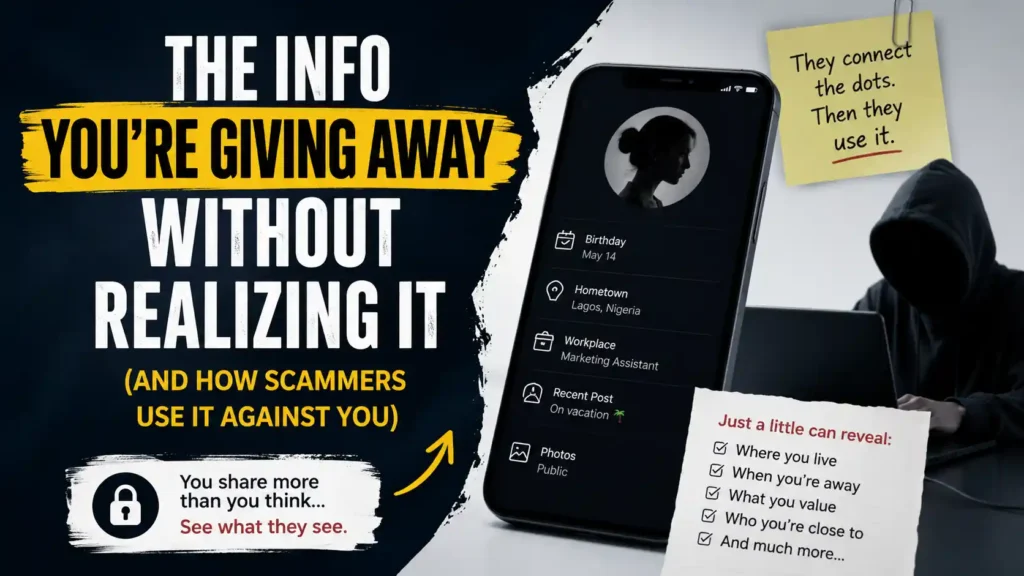
Criminals can gather useful information from public profiles, including:
- Full birth dates
- Home addresses
- Phone numbers
- Family members’ names
- Schools attended
- Employers
- Travel plans
- Pet names
- Answers to common security questions
A harmless-looking social media quiz may ask for details that match account-recovery questions.
Keep personal profiles private where possible and avoid publishing information commonly used to verify your identity.
If identity misuse has already occurred, learning how to recover from identity theft and repair the damage should become the immediate priority.
One common misunderstanding still needs to be cleared up.
Does a Data Breach Mean Your Identity Has Been Stolen?
No. A data breach means your information may have been exposed or accessed without permission. It does not automatically mean someone has used your identity.
However, the level of risk depends on the information involved.
A leaked email address may expose you to more phishing attempts. A stolen password may allow someone to enter accounts where you reused it. A combination of your name, address, date of birth, identification number, and financial details creates a more serious risk.
After receiving a legitimate breach notification:
- Verify the notification through the company’s official website.
- Change any exposed or reused passwords.
- Enable stronger login protection.
- Monitor your financial accounts.
- Inspect your credit reports.
- Consider freezing your credit.
- Watch for follow-up phishing attempts.
Criminals may impersonate a breached company and offer to “protect” you. Their real goal may be to collect the personal information they do not yet have.
Finally, turn identity protection into a routine.
How to Detect Identity Theft Earlier in the Future
You cannot stop every data breach or prevent every criminal from attempting to obtain your information. You can make unauthorized activity much harder to hide.
Check financial accounts regularly rather than waiting for monthly statements. Review your complete credit reports throughout the year. Pay attention to missing mail, strange verification codes, unfamiliar login alerts, unexpected bills, and changes to government or medical records.
Most importantly, investigate events that do not fit your normal activity.
One strange notification may be a mistake. A password-reset message, sudden loss of phone service, and an unauthorized transaction occurring close together could reveal an active account takeover.
Recognizing the pattern early can prevent months of financial and emotional damage.
Frequently Asked Questions
What is usually the first sign of identity theft?
There is no single first sign. Early warnings may include unexpected verification codes, password-reset messages, small unauthorized charges, unknown login alerts, missing mail, or unfamiliar credit inquiries.
How do I know if someone is using my personal information?
Check your financial statements, credit reports, email security activity, medical records, tax information, and government-benefit accounts. Look for anything you did not authorize or recognize.
How can I tell if someone is using my Social Security number?
Possible signs include unknown accounts, unfamiliar employment income, a duplicate tax return, benefits claimed without permission, or inaccurate information in official earnings records.
Can someone steal my identity with my name and address?
A name and address may not be enough to complete every type of identity fraud. However, a criminal may combine that information with details obtained from social media, public records, phishing messages, or data breaches.
Can someone steal my identity without taking money from my bank?
Yes. Someone may open credit accounts, receive medical treatment, claim benefits, file a tax return, obtain employment, rent property, or give your identity to law enforcement without accessing your current bank account.
Does an unfamiliar credit inquiry always mean identity theft?
No. A lender may appear under a company name you do not recognize. Investigate the inquiry date and organization first. If it is unrelated to a legitimate application, report it promptly.
Should I freeze my credit if I only suspect identity theft?
A credit freeze may be a sensible precaution when sensitive information has been exposed or unexplained credit activity appears. It can help prevent new credit accounts from being opened while you investigate.
Can identity theft happen even if I use two-factor authentication?
Yes. Criminals may use phishing, stolen browser sessions, malicious software, phone-number takeovers, or weak account-recovery procedures. Two-factor authentication reduces the risk but does not eliminate it.
How quickly should I report suspected identity theft?
Report it as soon as you discover credible evidence. Early action may help block transactions, stop new accounts, preserve evidence, and make disputes easier.
The Bottom Line
Learning how to tell if someone is trying to steal your identity means noticing small changes that do not belong in your normal financial or digital life.
An unexpected security code, missing statement, unfamiliar credit inquiry, unexplained medical bill, or tiny card charge may appear insignificant. It could also be the first visible sign that someone is testing or already using your information.
Do not panic, but do not wait.
Verify suspicious activity through official channels. Secure your email account first, change compromised passwords, contact affected companies, examine your credit reports, freeze your credit when necessary, and preserve every piece of evidence.
The faster you respond, the fewer opportunities an identity thief has to turn one stolen detail into long-term damage.