Your card is still in your wallet. Your recent purchases look familiar. Then a message from your bank says your account may be at risk.
It is unsettling because you cannot see what went wrong—or whether anything has happened yet.
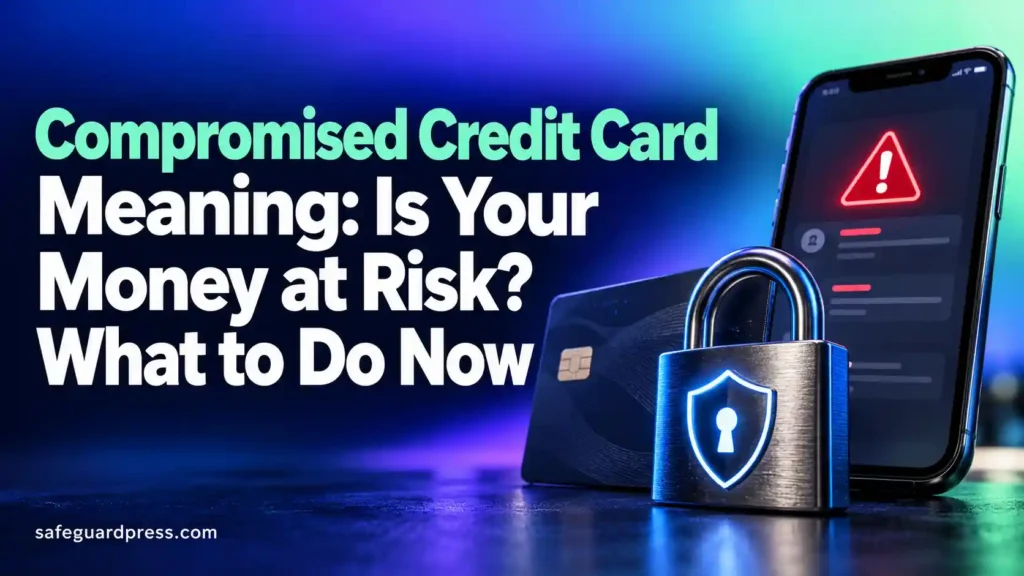
A compromised credit card means its payment details may have reached someone who is not authorized to use them. It does not automatically mean money has been stolen, your banking password is exposed, or your identity has been taken.
But it does mean you should verify the warning and ask your issuer what protection is needed.
Start with the actions below. You can investigate the cause afterward.
Compromised Credit Card Meaning: Exposure Does Not Always Mean Fraud
The simplest explanation is that the security of your card information is in doubt.
An unauthorized person may have obtained the account number or other payment details. This can happen without taking the physical card.
That is consistent with the official explanation of a compromised-card notice.
The important distinction is between information being exposed and someone successfully using it.
Your issuer might identify a risk before any unfamiliar charge appears. Alternatively, an unauthorized transaction might be the first indication that something is wrong.
Ask what the issuer knows. Do not assume the word “compromised” tells the whole story.
Do These Five Things Now
If you have received a compromise notice or believe you exposed your card details, use this checklist.
- Open your banking app yourself. Avoid links and telephone numbers supplied only in the warning.
- Temporarily lock the card if available. Then contact the issuer; a lock is not a complete response.
- Confirm whether the warning is genuine. Ask what was detected and whether replacement is required.
- Review pending and posted transactions. Report anything you did not authorize.
- Keep the case reference and follow-up instructions. Confirm that any transaction claim was recorded separately from the card replacement.
Do not wait for a large charge. Possible exposure is enough reason to ask your issuer for help.
If the person contacting you wants a banking code, remote access, or a transfer to a “safe account,” stop the conversation and contact the bank independently.
What Does Your Particular Warning Mean?
A replacement notice, a declined purchase, and a completed unauthorized charge require different follow-up questions.
| What You Received or Discovered | What It Establishes | What to Ask Next |
|---|---|---|
| A verified notice of possible card exposure | The issuer has identified a security concern | “Is replacement required, and when will the old card stop working?” |
| An unfamiliar declined-payment alert | A transaction may have been attempted | “Do you consider the card compromised even though the payment failed?” |
| An unfamiliar pending transaction | An authorization is awaiting further processing | “What should I do now, and when can the formal claim be opened?” |
| An unfamiliar posted charge | A completed transaction needs investigation | “How do I report this as unauthorized?” |
| A replacement card you did not request | The issuer may have taken protective action | “Why was this issued, and is it connected to a genuine alert?” |
| A caller demanding codes or money | The caller’s claim remains unverified | End the call and use your established banking contact route |
This table helps you ask the right questions. It cannot authenticate a message or establish that a particular transaction is fraudulent.
Verify the Notice Without Contacting the Possible Impersonator
A genuine warning may arrive by text, email, letter, telephone call, or an app notification. Scammers can imitate those formats.
The safest response is to move the conversation into a channel you control.
Open the Official App or Use an Existing Statement
Use the app already installed on your device, a trusted bookmark, or a known website address you type yourself.
For a telephone call, use the number printed on your card or statement.
Do not call the number in a suspicious message simply to ask whether that message is genuine.
If the warning arrived by email, check how to tell if an email is from a scammer before following its instructions.
Ask the Issuer to Confirm the Card’s Status
Start with:
“I received a message saying my card is compromised. Please confirm whether there is a genuine security notice on my account.”
Then ask:
- Is the concern possible exposure or actual misuse?
- Have any attempted transactions been declined?
- Is the affected card still active?
- Has a replacement already been ordered?
- Are other cards or account credentials affected?
A real support conversation should clarify the status of your account. You do not need to accept the original message’s explanation.
Read Every Code and Approval Request
A caller may describe a code as necessary to “cancel fraud,” while the message itself refers to a payment or account access.
Read the actual notification.
Do not relay banking codes to the person who contacted you, and do not approve an unfamiliar action because they insist it will protect the account.
A security story does not change what an approval actually authorizes.
What to Ask the Bank When No Money Is Missing
Finding no unfamiliar transactions is reassuring, but it does not settle whether your card details are exposed.
You can say:
“I have checked my transactions and have not found any unauthorized charges. Does the compromise notice still require a new card number?”
Ask whether the issuer recommends replacement, has already disabled the old credentials, or needs any further action from you.
Also ask what to monitor while the replacement is being arranged.
You do not need to keep using a potentially exposed card to find out whether a criminal will try it.
Why You May Not Be Told Which Business Was Involved
The issuer may have limited information about where the exposure happened, or it may not be able to disclose the source.
That is frustrating, but you can still establish the protective steps.
Ask what the notice means for your card rather than delaying action until you receive a complete account of the incident.
Do Not Blame Your Most Recent Purchase Without Evidence
The last shop you visited is not automatically responsible.
The timing of a warning or suspicious transaction does not prove where information escaped.
Save any relevant receipts, but start with the issuer’s investigation.
Locking the Card, Replacing It, and Reporting Fraud Are Different Actions
These steps solve different problems. Completing one does not automatically complete the others.
A Card Lock Is a Temporary Precaution
A lock generally blocks many new transactions, but some activity may continue. Certain recurring payments and previously authorized transactions can be exceptions.
Check your issuer’s explanation of card-lock limitations rather than assuming every payment stops.
A lock does not submit a fraud claim or change information already exposed.
Replacement Addresses the Affected Card Credentials
Ask whether the replacement includes a new number and when the old credentials will be disabled.
A replacement requested because the plastic is damaged may be handled differently from one issued because of suspected fraud.
Tell the issuer why you need it.
A Fraud Claim Addresses Transactions Already Made
If an unauthorized charge exists, ask whether it has been formally recorded for investigation.
Use this question:
“Have you opened a claim for these transactions, or have you only arranged the replacement card?”
Keep the claim reference. Do not assume receiving a new card means the disputed charges have been resolved.
For a broader review of suspicious activity, read credit card fraud warning signs and what to do immediately.
What to Do If You Find an Unfamiliar Charge
First, make a quick check for a legitimate explanation.
Compare the amount and date with receipts. Ask authorized users whether they made the purchase. A merchant’s billing name may differ from its shop name.
If you still do not recognize or authorize it, contact the issuer promptly.
Explain Whether You Approved Anything
Be accurate about what happened:
- “I did not make or authorize this purchase.”
- “An authorized user did not recognize it either.”
- “I approved a payment because a caller said it would cancel fraud.”
- “I entered card details on a page I now believe was false.”
These are different circumstances. Let the issuer apply the appropriate process to the facts.
Preserve the Relevant Evidence
Keep the transaction details, messages, website address, and dates of contact.
A short record is enough to begin:
| Record | What to Write Down |
|---|---|
| Transaction | Date, amount, currency, and merchant name |
| Discovery | When you first noticed the problem |
| Exposure | What information you shared, if any |
| Report | When and how you contacted the issuer |
| Follow-up | Case reference, documents requested, and deadlines |
Do not delay reporting while trying to assemble perfect evidence.
Check the Written Dispute Requirements
For U.S. credit cards, protecting federal billing-error rights generally requires a written notice to reach the designated billing-inquiries address within 60 days after the issuer sent the first statement showing the error.
Call promptly, then confirm the required written procedure and keep copies. See the instructions for disputing a credit-card charge.
Do not treat the deadline as a waiting period.
Debit cards and accounts outside the United States may have different protections and requirements. Ask your issuer what applies.
Does a Compromised Card Mean Your Banking Account Was Hacked?
Not necessarily.
Someone may obtain payment details without obtaining your banking password. Conversely, exposed login credentials can create risks that replacing a card alone will not address.
Use the evidence to decide what else needs attention.
| Possible Problem | Clues to Discuss With the Bank |
|---|---|
| Card information exposed | A compromise notice or unfamiliar card purchases |
| Banking login exposed | Unfamiliar logins, password changes, or altered contact details |
| Device or wallet access affected | Unexpected device approvals or wallet enrollment |
| Broader identity misuse | Unfamiliar accounts, applications, or credit-report entries |
If You Shared a Password or Banking Code
Tell the bank exactly what you provided and what the code’s message said.
Change exposed passwords through the real service using a trusted device. Secure other accounts using the same password.
Do not assume a new card also resets banking access.
If You Allowed Remote Access
End the session and contact your bank from another trusted device.
Explain whether the person saw your banking screen or controlled the device while you were signed in.
Ask what access needs reviewing before you use the affected device for sensitive accounts again.
If the Concern Extends Beyond One Card
Check other financial accounts for unfamiliar activity.
If there are signs of broader identity misuse, use how to tell if someone is trying to steal your identity to assess the additional warning signs.
A credit-report freeze is different from a card lock. It generally helps restrict new credit accounts being opened in your name; it does not block charges on an existing exposed card.
What to Check After Your Replacement Arrives
The replacement is an important milestone. Now confirm that the practical details are in order.
Activate It Through a Verified Route
Follow the issuer’s established activation process.
If an unexpected message offers to “complete activation” in exchange for codes or card photographs, verify it independently.
Do not give the new details to the same suspicious person who obtained the old ones.
Review Upcoming Bills
Check services that use the card:
- Utilities and insurance
- Telephone and internet bills
- Streaming subscriptions
- Transport and delivery apps
- Other automatic payments
Update details where necessary.
Do not assume every merchant requires a manual update, or that every recurring payment will stop. Ask the issuer how replacement affects those arrangements.
Check Wallets and Stored Payment Methods
Confirm whether your digital wallet updates automatically or needs attention.
If you reported an unfamiliar wallet or device, ask whether that access has been addressed. Removing a card from your own phone is not the same as removing access elsewhere.
Keep Monitoring the Original Claim
Track any reported transactions until you understand the outcome.
Ask whether an account adjustment is temporary or final and what remains due. Continue handling legitimate payments according to the issuer’s instructions.
Replacing card credentials does not erase legitimate debt.
Three Examples That Clarify the Meaning
These fictional situations show why “compromised” does not always describe the same outcome.
Possible Exposure With No Unauthorized Charges
Amira receives a verified notice and a replacement card. Her transactions look normal.
Her response: Confirm the old card’s status, follow replacement instructions, and review upcoming payments. She does not need to wait for an unauthorized charge.
An Unauthorized Purchase With the Card Still at Home
Ben finds a posted purchase he did not authorize. His card never left the house.
His response: Report the transaction and ask about exposed payment credentials. Possession of the plastic does not rule out misuse.
A False Security Warning
Clara receives a call saying her card is compromised. The caller demands a transfer to a protected account.
Her response: End the call and contact the bank independently. The request for money is not proof of a genuine security incident.
Frequently Asked Questions About Compromised Credit Cards
These questions cover details you may need to clarify with your issuer.
Is a Compromised Card the Same as a Lost Card?
No. A lost card is physically missing. A compromised card may still be in your possession while its payment information is at risk.
Is an Expired Card Automatically Compromised?
No. Expiry is part of the card’s normal lifecycle. A security notice is a separate issue.
Does a Broken Chip Mean Someone Copied My Details?
Not by itself. Report physical damage separately from any evidence of suspicious activity.
What Does “Potentially Compromised” Mean?
It indicates a possible exposure rather than certainty about what happened. Ask what protective action the issuer recommends.
Can the Issuer Replace a Card Before Fraud Occurs?
It may issue a precautionary replacement. Confirm why the new card was sent and when the old one stops working.
Should I Contact the Merchant or the Issuer First?
For exposed card details or unauthorized activity, start with the issuer. You can contact a merchant separately when needed.
What If an Authorized User Made the Purchase?
Do not report a recognized, permitted purchase as fraud. Explain any remaining disagreement accurately.
What If the Transaction Is in a Foreign Currency?
Check whether it matches a legitimate purchase. The currency alone does not establish fraud.
Should I Report a Tiny Unauthorized Charge?
Yes. Report based on whether you authorized it, not its size.
What If the Charge Disappears Before I Call?
If the attempted activity was unfamiliar or you suspect exposure, still discuss it with the issuer.
Can I Dispute a Charge I Already Paid?
Yes, payment does not automatically prevent a dispute. Ask about the applicable procedure and deadline.
Should I Close the Whole Credit Account?
Ask what the issuer recommends. Replacing payment credentials and closing the underlying credit account are different actions.
Does Replacement Cancel an Unwanted Subscription?
Do not rely on it for cancellation. Manage the subscription with the merchant and discuss disputed charges with the issuer.
Should I Keep the Old Card?
Follow the issuer’s instructions once it is disabled. Retain necessary records and dispose of the card securely.
What If I Am Traveling?
Tell the issuer and ask about replacement delivery, temporary access, and another way to pay.
What If a Hotel or Car-Rental Booking Uses the Old Card?
Contact the provider through your booking account and ask how to update payment arrangements securely.
What If a Refund Is Still Expected?
Tell the issuer about it and ask how incoming credits will be handled after replacement.
What If New Suspicious Activity Appears After Replacement?
Report it again. Ask the issuer to investigate the new activity and review relevant payment and account access.
Can I Know Exactly Where the Information Escaped?
Sometimes the source remains unclear. Protecting the account does not depend on proving which business or interaction caused it.
Should I Pay Someone to Recover the Charges?
Start with the issuer’s established process. Be cautious about unsolicited recovery offers and read fund recovery scams before paying a stranger.
Resolve the Warning, Not Just the Worry
A compromise notice does not tell you that every account is unsafe or that money has already gone.
It tells you to establish what is affected.
Verify the alert independently. Confirm the card’s status. Review transactions. Keep replacement and fraud claims separate. Follow through on the issuer’s instructions.
You do not need to discover how the details escaped before protecting your account. Start with the verified issuer and make sure each necessary action has actually been completed.