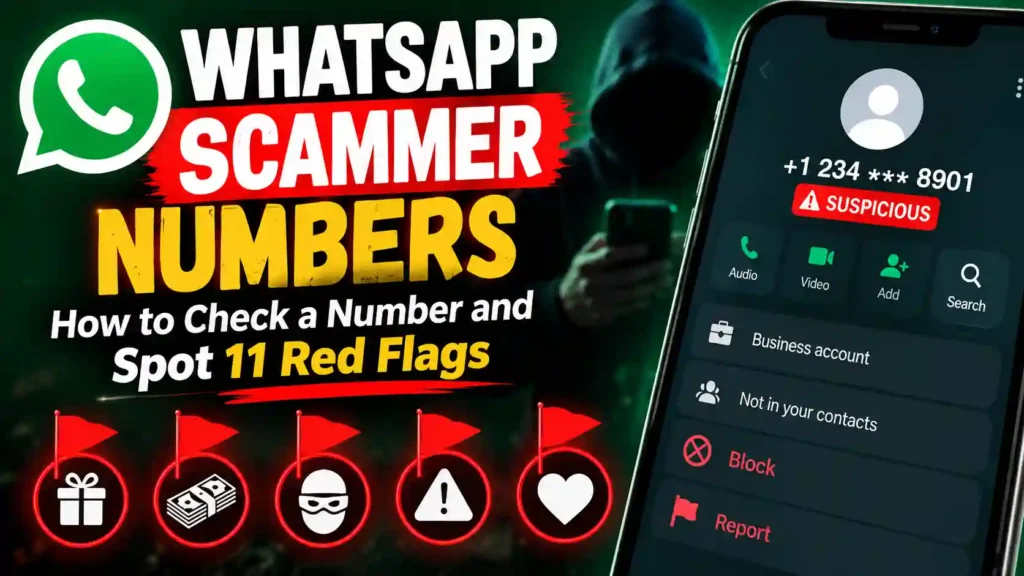
An unfamiliar WhatsApp number has just contacted you. Maybe the sender knows your name, claims to be a recruiter, or says they accidentally messaged the wrong person.
Something feels suspicious.
You search the number online, hoping to find a warning. But what if nothing appears? Does that mean the person is genuine? And what if someone has already reported the number as fraudulent?
Before you reply, click a link, or send money, there is something important you should understand.
WhatsApp scammer numbers cannot be reliably identified by their digits alone. A number may appear on a public scam-reporting website without proof that its current owner committed fraud. Another number may have no complaints whatsoever and still be used in a scam.
There is no complete, publicly searchable, authoritative list of every WhatsApp scammer number.
But you can investigate suspicious numbers safely.
The key is to combine a phone-number search with independent identity verification and a careful examination of what the sender wants.
This guide shows you exactly where to check a suspicious WhatsApp number, how to interpret search results, 11 warning signs of fraud, and what to do if you’ve already replied or sent money.
How to Check a WhatsApp Scammer Number Right Now
If you’re looking at a suspicious message, follow this process before doing anything else.
- Copy the complete phone number, including its international country code.
- Search the number online using quotation marks and different formatting styles.
- Check available public scam reports, remembering that user-submitted accusations are not verified findings.
- Verify the sender’s claimed identity independently, using contact information you already trust.
- Examine the message for fraud indicators, especially payment demands, verification-code requests, suspicious links, and unusual urgency.
- Report and block the account if appropriate, preserving evidence first if money or threats are involved.
Do not reply merely to test whether the sender is a scammer.
A person attempting fraud may use your response to begin a longer conversation.
And never pay a stranger who promises to identify the account holder or reveal their exact location.
Where Can You Search WhatsApp Scammer Numbers?
Several kinds of websites may provide clues about suspicious phone numbers.
However, they are not equally reliable, and none can certify that a WhatsApp account is safe.
1. Google or Another Search Engine
A search engine is a useful starting point because a phone number may appear in business listings, complaint discussions, or public warnings.
Try searching the complete number inside quotation marks.
For example, using the fictional number +1 202 555 0147, you might search:
"+1 202 555 0147""2025550147""202-555-0147" scam"2025550147" WhatsApp
These searches may return different results because websites format numbers differently.
Look for the original context rather than relying only on a search-result snippet.
A number appearing on a genuine company’s website may be a useful clue, but it does not prove that a message from that number is authentic.
Likewise, a complaint does not automatically prove that the person currently using the number committed fraud.
2. Community-Maintained WhatsApp Scammer Databases
Some websites allow users to submit and search suspected scammer numbers.
One example is WhatsApp Scammer Tracker, which provides a searchable collection of community reports.
Its own description identifies the entries as self-reported information rather than confirmed criminal findings.
That distinction matters.
A community database may reveal that someone previously reported a similar message or suspicious offer.
But it cannot independently prove that the current account holder is guilty.
Before relying on any report, examine whether it includes a date, description, and evidence that can be evaluated.
Never treat a community allegation as a legal finding.
3. Official Company Contact Information
If the WhatsApp sender claims to represent a bank, retailer, courier, or recruitment agency, the most useful check may have nothing to do with a scam database.
Instead, find the organization’s official website independently.
Use the contact information published there to verify the message.
For example, if someone claims to work for your bank and requests an account verification code, do not call the number supplied in the WhatsApp conversation.
Open your banking application or contact the bank through a number you already trust.
4. Official Consumer-Fraud Warnings
Government consumer-protection resources may explain whether the message matches a known scam pattern.
The Federal Trade Commission regularly publishes warnings about fake jobs, unexpected messages, impersonation, and investment fraud.
These warnings usually focus on criminal methods rather than maintaining a list of individual WhatsApp numbers.
That is often more useful because scammers can change numbers while repeating the same tactics.
What Does It Mean if a WhatsApp Number Appears on a Scammer List?
A reported number is a reason to investigate further, not an automatic verdict.
To understand the difference, consider three possible search results.
| Search result | What it actually tells you | What you should do |
|---|---|---|
| Number appears in a user-submitted scam report | Someone has accused or flagged the number | Examine the report and independently verify the sender |
| Number appears in an authoritative, case-specific official warning | An authority has published information relevant to that number or incident | Confirm the source and whether the warning applies to the current situation |
| Number has no search results or complaints | You found no relevant public information | Continue checking the message and sender’s claims |
An unreported number is not necessarily safe. A reported number is not automatically proof of fraud.
Phone numbers can be reassigned. Accounts can be compromised. Reports can be inaccurate.
That is why the strongest evidence usually comes from what the sender is asking you to do and whether their identity can be verified independently.
A Three-Minute Example: Checking a Suspicious WhatsApp Number
Imagine receiving this message:
“Hello, my name is Rachel. I’m contacting you about a remote position. You can earn $250 daily reviewing products. Are you interested?”
The sender uses a +1 number, has a professional-looking profile photograph, and claims to work for a recognizable company.
Here’s how to check the situation without replying.
Minute 1: Search the Number
Copy the full number and search it in several formats.
Suppose you find no public complaints.
That does not establish legitimacy.
The number may be new, unreported, or associated with an account whose history is unknown.
Minute 2: Verify the Employer
Find the supposed employer’s official website independently.
Look for the vacancy through its careers page or established recruitment channels.
If necessary, contact the company’s human resources department using independently verified information.
Do not use a recruitment website or telephone number supplied solely by the stranger.
Minute 3: Examine the Offer
The promise of $250 daily for unspecified product-rating tasks deserves scrutiny.
Ask whether the supposed job involves depositing money, buying cryptocurrency, or unlocking commissions.
The FTC has warned that task scams often begin with unexpected messages promising payment for simple online activities. Victims may initially see fictional earnings before being instructed to deposit their own money.
If the sender demands payment to unlock earnings, stop.
You do not need to prove who owns the number before refusing a suspicious financial request.
Result: The number search was inconclusive, but the job offer contained enough warning signs to justify caution and independent verification.
This fictional example illustrates why the message itself can reveal more than the phone number.
11 Warning Signs a WhatsApp Number May Be Used for Scams
Fraudulent accounts can look ordinary at first.
Some use stolen photographs, convincing business names, or long conversations to create trust.
These 11 warning signs help you assess the behavior behind the number.
1. An Unknown Number Starts With a Strange or Vague Message
A stranger writes:
“Hello, is this Michael?”
“Are we still meeting tomorrow?”
“Sorry, I think I saved the wrong number.”
These messages can be genuine mistakes.
However, scammers sometimes use accidental-contact stories to start conversations with strangers.
The warning becomes stronger when the person continues chatting after discovering the mistake, quickly becomes unusually friendly, or introduces financial opportunities.
Our guide to random WhatsApp messages from girls explains how wrong-number conversations can develop into fraud attempts.
2. The Sender Claims to Be a Company Representative Without Verifiable Credentials
A profile photograph shows a company logo.
The display name reads “Customer Support” or “Recruitment Department.”
The sender may even know your full name.
None of these details proves that the account belongs to the company.
Fraudsters can copy logos, employee photographs, and publicly available business information.
If the message concerns your money or personal information, contact the organization through an independently verified channel.
3. The Number Offers Easy Money for Simple Online Tasks
Someone promises unusually high earnings for liking videos, reviewing hotels, or rating products.
You may be shown an account dashboard displaying commissions.
Eventually, the sender says you must deposit money before you can withdraw your supposed earnings.
This is a hallmark of task scams.
Some criminals even send small initial payments to build trust before demanding larger deposits.
A legitimate job should not require you to pay money simply to receive wages you supposedly earned.
4. The Sender Requests a WhatsApp Verification Code
A stranger claims a code was accidentally sent to your phone.
They ask you to forward it.
Alternatively, someone pretending to be WhatsApp support says they need the code to secure your account.
Do not share it.
Verification codes are used to confirm account access.
Giving one to an attacker may help them take over an account.
Be cautious about unexpected requests to scan QR codes or link unfamiliar devices as well.
5. The Conversation Quickly Becomes Romantic
A stranger sends affectionate messages, compliments your appearance, or talks about building a future together.
The relationship may develop quickly despite limited independent verification.
Later, the person requests money, introduces an investment, or claims to face an emergency.
The romantic attention may be part of a deliberate attempt to build trust.
Not every online relationship is fraudulent, but emotional pressure combined with financial requests is a serious warning.
Read our detailed guide to 17 warning signs of romance scams before sending money to someone you have not independently verified.
6. The Sender Promises Guaranteed Cryptocurrency Profits
Someone claims they can help you earn extraordinary returns from cryptocurrency or foreign exchange trading.
They may provide screenshots of impressive balances or successful withdrawals.
These images do not prove the profits are real.
A fraudulent platform can display invented account balances and refuse withdrawals until victims pay additional fees.
If screenshots are being used as proof, learn how to identify a fake WhatsApp screenshot before trusting the claim.
7. The Message Creates an Urgent Crisis
The sender insists that you must act immediately.
For example:
“Your account will be frozen in 15 minutes.”
“Your parcel will be destroyed unless you pay today.”
“Your son needs emergency money.”
Urgency reduces the time available for verification.
A genuine emergency can happen, but the sender should not control how you confirm it.
Contact the relevant person or organization through a trusted channel.
8. The Number Sends Suspicious Links or Attachments
The sender asks you to open a website, install an application, or download a file.
The message may claim you need to verify a payment, claim a prize, or fix an account problem.
A fake website can imitate the appearance of a legitimate business.
Do not enter passwords, banking information, or security codes into a site reached through an unexpected WhatsApp link.
If you are uncertain about the technical risks of viewing an unfamiliar conversation, read whether it is safe to open a WhatsApp message from an unknown number.
9. The Sender Refuses Independent Identity Verification
Someone claims to be a friend or family member using a new number.
They insist that their old phone is broken and ask you to transfer money.
When you suggest calling their previous number or contacting another family member, they discourage you.
That refusal is a warning sign.
A legitimate person may have a reason for changing numbers, but you can still verify their identity through another trusted method.
10. The Sender Requests Sensitive Personal Information
An unfamiliar contact asks for your Social Security number, banking password, identification documents, or account recovery information.
The request may be disguised as employment verification, prize collection, or an account-security procedure.
Do not share sensitive details until the organization and the necessity of the request have been independently verified.
If the person already knows your phone number, remember that this alone does not ordinarily grant access to your bank account.
Our article on whether a scammer can access your bank account with your phone number explains the actual risks.
11. The Sender Threatens or Blackmails You
Some fraudulent conversations turn threatening.
The person may demand money while claiming they will expose private images, contact your employer, or publish personal information.
Preserve the evidence and stop providing additional information.
Contact appropriate law enforcement if threats or extortion are involved.
If you face immediate physical danger in the United States, call 911.
Do not assume that paying the person will make the threats stop.
Can You Identify WhatsApp Scammer Numbers by Country Code?
Many people become suspicious when they receive messages from unfamiliar international country codes.
But a country code identifies a numbering region, not whether a person is honest.
Here are some common examples.
| Country code | Numbering region |
|---|---|
| +1 | United States, Canada, and other North American Numbering Plan territories |
| +44 | United Kingdom |
| +91 | India |
| +234 | Nigeria |
| +92 | Pakistan |
| +27 | South Africa |
| +63 | Philippines |
| +971 | United Arab Emirates |
None of these prefixes is a reliable scam indicator.
A legitimate business, relative, or customer may contact you from another country.
A criminal may also use a number associated with a country where they do not physically live.
Are +234 WhatsApp Numbers Scammers?
No.
+234 is Nigeria’s country calling code.
The prefix alone provides no evidence that the account is fraudulent.
Evaluate the sender’s message, claims, and requests just as you would with any other number.
Are +1 WhatsApp Numbers More Trustworthy?
Not automatically.
A +1 number does not establish that the sender is located in the United States or Canada.
It also does not verify the identity of the account holder.
Can Scammers Use Someone Else’s Phone Number?
Yes, accounts can be compromised, and phone numbers can be reassigned or misused.
A suspicious number does not necessarily identify the individual responsible for a fraudulent message.
That is why publicly accusing the supposed owner without reliable evidence can harm innocent people.
How to Tell a Legitimate WhatsApp Message From a Scam
There is no perfect visual test.
However, the way a sender responds to independent verification can reveal important differences.
| Situation | More reassuring behavior | More suspicious behavior |
|---|---|---|
| Wrong-number message | Sender acknowledges the mistake and stops | Sender quickly tries to build an intimate relationship |
| Recruitment offer | Employer and vacancy can be independently verified | Sender demands deposits or cryptocurrency |
| Bank notification | You can confirm it through the official bank app | Sender requests passwords or security codes |
| Delivery message | Tracking information matches an independently checked order | Sender directs you to an unfamiliar payment website |
| Friend with a new number | Identity can be verified through a trusted channel | Sender demands urgent money and refuses verification |
| Investment offer | Claims can be independently assessed and risks are disclosed | Sender guarantees returns and pressures you to deposit |
A sophisticated scammer may imitate reassuring behavior.
Use multiple checks rather than relying on one sign.
Beware of Fake WhatsApp Scammer Number Checkers
Searching for suspicious numbers can expose you to another kind of risk: websites that claim to reveal secret information about phone-number owners.
Some services advertise instant identification, live tracking, or access to private WhatsApp records.
Be cautious.
A Website Claims It Can Reveal Any WhatsApp User’s Exact Location
A phone number alone does not reliably reveal someone’s precise physical location.
Be skeptical of websites promising guaranteed tracking or an exact address.
A Checker Demands Your WhatsApp Verification Code
Never provide it.
A legitimate public phone-number lookup does not need your WhatsApp registration code.
A Website Requires You to Install an Unknown App
Avoid installing unfamiliar software merely to check whether someone is a scammer.
An app requesting broad permissions to messages, contacts, or device access deserves particular scrutiny.
A Checker Demands Payment Before Revealing a Supposed Criminal Identity
A paid service is not automatically fraudulent, but guaranteed identification claims are a warning sign.
Do not assume a payment will produce accurate information.
A Website Publishes Accusations Without Verification
Anonymous submissions can be wrong or malicious.
Before trusting a listing, examine its methodology, report date, and evidence.
The safest approach is to use public information as a clue while making your decision based on independently verifiable facts.
What if the WhatsApp Number Is Not on Any Scammer List?
A clean search result does not mean the sender is trustworthy.
The number may be new.
The account may have recently changed hands.
Victims may not have reported previous incidents.
Or the scammer may be using a number that has never appeared in a public complaint.
If the message contains strong warning signs, do not dismiss them because a database returns no matches.
For example, someone demanding a verification code or a cryptocurrency deposit is making a risky request regardless of the number’s search history.
The absence of complaints should not override the evidence in front of you.
What if You Already Replied to a Suspicious WhatsApp Number?
The next step depends on what happened.
If You Only Said Hello
A simple reply does not ordinarily give the sender access to your phone, photographs, or bank account.
However, it may confirm that your account is active.
If the conversation becomes suspicious, stop responding.
You do not owe the sender an explanation.
If You Opened the Message
Reading ordinary text in a WhatsApp conversation does not normally compromise your device.
However, software vulnerabilities can exist, so keeping your phone and WhatsApp updated remains important.
Do not assume that merely opening a message means you have been hacked.
If You Clicked a Suspicious Link
Stop interacting with the website.
If you entered a password, change it through the legitimate service.
If you entered payment information, contact your financial institution.
If you installed unfamiliar software, review your device security and seek assistance if necessary.
If You Shared a Verification Code
Follow the affected service’s official account-recovery instructions immediately.
Review linked devices and enable additional security protections.
Do not send further codes to anyone offering to help.
If You Sent Money
Contact your bank, card issuer, payment application, or cryptocurrency exchange immediately.
Ask about available fraud reporting and recovery procedures.
Preserve the transaction details and conversation.
If You Are Still Talking to the Scammer
You do not need to argue or confront the person.
Our guide on what to say to a scammer explains when ending communication without replying is the safer option.
How to Report WhatsApp Scammer Numbers
If you believe an account is involved in fraud, preserve relevant evidence and use the appropriate reporting channel.
Report the Number Directly Through WhatsApp
On most current versions of WhatsApp:
- Open the suspicious conversation.
- Tap the sender’s name or phone number.
- Locate the reporting option.
- Select Report.
- Confirm your choice.
- Block the account if you want to prevent further direct contact.
The exact menu labels may vary by device and app version.
According to WhatsApp’s reporting guidance, the service may receive up to five recent messages sent to you by the reported account, along with relevant account information.
The sender is not notified that you submitted the report.
Reporting does not guarantee an account ban.
Report Suspected Fraud to the FTC
If the message involves an attempted or completed consumer scam, you can report it at the FTC’s official reporting website.
Include relevant details about the number, conversation, and any financial loss.
Report Suspected Cybercrime to the FBI
For suspected internet-related criminal activity, the FBI’s Internet Crime Complaint Center accepts complaints.
Preserve relevant evidence, including screenshots, suspicious website addresses, and transaction records.
For a complete step-by-step explanation, read our guide on how to report a WhatsApp number to cyber crime.
Should You Publish the Number on Social Media?
Be cautious.
A phone number alone does not prove who committed an offense.
The number may be compromised, reassigned, or associated with an innocent person.
Official reporting channels are generally a better starting point than publicly accusing an unverified individual.
How to Reduce Messages From Suspicious WhatsApp Numbers
You may not be able to prevent every unwanted message, but you can make your account less exposed.
Review Your Privacy Settings
Open WhatsApp Settings and review the Privacy section.
Consider limiting who can view your profile photograph, last-seen information, and other available details.
Enable Two-Step Verification
Turn on WhatsApp’s available two-step verification feature.
Never share security codes or your account PIN.
Review Linked Devices
Check whether unfamiliar devices are connected to your WhatsApp account.
Remove any you do not recognize.
Silence Unknown Callers
WhatsApp provides a setting to silence calls from unknown numbers.
This can reduce interruptions while allowing you to review relevant call information.
Limit Unnecessary Public Exposure
Consider whether your phone number needs to appear publicly on social media or other websites.
Publicly accessible numbers may attract unsolicited contact.
However, receiving an unknown message does not automatically mean your information was stolen in a data breach.
Frequently Asked Questions About WhatsApp Scammer Numbers
These questions address the most common concerns about searching suspicious numbers, interpreting scam reports, and protecting yourself from fraud.
Is There an Official WhatsApp Scammer Numbers List?
No comprehensive public directory identifies every WhatsApp scammer number. Some community websites collect reports, but their entries should not be treated as verified criminal findings.
How Can I Check if a WhatsApp Number Is a Scammer?
Search the complete number, review credible information, examine the message, and verify the sender’s identity through an independent channel. No single method guarantees certainty.
Can I Search a WhatsApp Scammer Number for Free?
Yes. You can search public information using a search engine and consult some community-reporting websites without paying. Results may be incomplete or inaccurate.
What if a Number Appears on a Scammer List?
Treat the listing as a warning that requires further verification. Examine the evidence and date rather than assuming the current account holder committed fraud.
What if a WhatsApp Number Has No Scam Reports?
The absence of reports does not establish safety. Continue evaluating the sender’s behavior and requests.
Can I Identify a Scammer by Their Country Code?
No. Country codes identify numbering regions, not whether the account is fraudulent or where the sender is physically located.
Are +234 WhatsApp Numbers Dangerous?
The +234 prefix is Nigeria’s country code. It is not evidence of fraud. Evaluate the sender’s actions rather than their nationality or numbering region.
Can a Scammer Use a US WhatsApp Number?
Yes. A +1 number does not establish the sender’s identity or physical location.
Can Scammers Change Their WhatsApp Numbers?
Yes. Fraudsters may switch accounts or numbers, which makes permanent public scam-number lists unreliable.
Can a Scammer Use a Real Person’s Number?
Accounts can be compromised, and numbers may be reassigned or misused. A suspicious number does not necessarily identify the person responsible.
Does a WhatsApp Business Profile Mean the Sender Is Legitimate?
No. A business-style profile or professional branding should not replace independent verification of the organization and the specific request.
Can a Profile Photograph Reveal Whether Someone Is a Scammer?
Not reliably. Photographs may be copied, edited, or used without the person’s permission.
Is It Dangerous to Reply to an Unknown WhatsApp Number?
A simple text reply does not ordinarily compromise your phone, but it can encourage further contact. Avoid responding when there is no good reason to engage.
Can Someone Hack My Phone by Sending a WhatsApp Message?
Receiving an ordinary message does not mean your phone has been hacked. However, software vulnerabilities and malicious content can create risks. Keep your device updated and avoid suspicious downloads.
Can I Report a WhatsApp Scammer Without Losing Money?
Yes. WhatsApp accepts reports about problematic accounts, and the FTC accepts reports of attempted consumer fraud.
Will WhatsApp Ban a Reported Scammer Number?
Not necessarily. WhatsApp may take action after reviewing reported activity, but a report does not guarantee a ban.
Will the Scammer Know I Reported Their Number?
WhatsApp states that reported users are not notified that someone submitted a report.
Can the FBI Trace a WhatsApp Scammer?
Law enforcement may investigate using legally available records and other evidence, but submitting a complaint does not guarantee identification, investigation, or arrest.
What Should I Do if the Scammer Keeps Contacting Me From Different Numbers?
Preserve relevant evidence, block and report the accounts, and contact appropriate authorities if the behavior involves threats, extortion, or suspected criminal activity.
Should I Trust a Website That Promises to Track Any WhatsApp Number?
Be skeptical. A phone number alone does not reliably reveal an exact location or criminal identity. Avoid services demanding verification codes, unsafe software installations, or payment for guaranteed tracking.
Final Thoughts: The Number Is Only One Part of the Evidence
A strange WhatsApp message can make you feel exposed, especially when the sender knows your name or claims to represent someone you trust.
Searching the number may help, but the results are only part of the picture.
A number with no complaints can still be used for fraud. A number appearing in a public accusation may belong to someone who was impersonated or wrongly identified.
The safest decision comes from examining the complete situation.
Verify the sender independently. Never share security codes. Do not send money because an unfamiliar WhatsApp contact pressures you. And never treat a phone number, profile photograph, or business name as proof of identity.
If the evidence points toward fraud, preserve the messages and use the appropriate reporting channels.
You do not need to discover the scammer’s real name to protect yourself.