Your phone buzzes. You open WhatsApp and discover a message from a woman you have never met.
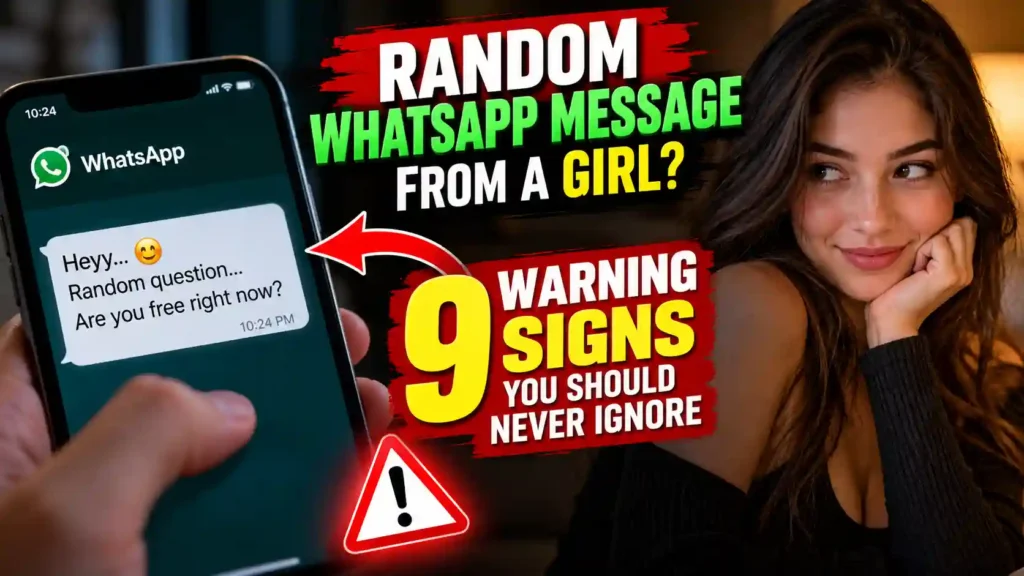
“Hey, is this Michael? 😊”
You explain that she has the wrong number.
Instead of ending the conversation, she apologizes, introduces herself, and asks whether you would like to be friends.
Her profile picture looks attractive. She seems polite, friendly, and genuinely interested in you.
But something feels strange.
Why would a woman you have never met suddenly want to know you?
If you have received a random WhatsApp message from a girl, it could be an innocent mistake, a genuine attempt to contact you, or the beginning of a carefully planned scam.
Some criminals impersonate women to start conversations with strangers. They may use stolen photographs, fabricated identities, and friendly messages to establish trust before introducing investment opportunities, romantic relationships, or financial emergencies.
The safest response is to avoid sharing personal information, opening unexpected links, or sending money until you have a legitimate reason to trust the sender.
You do not have to reply at all.
Here is how to recognize the difference between an ordinary unexpected message and a potentially dangerous conversation.
Why Am I Getting Random WhatsApp Messages From Girls?
There are several possible explanations, and not all involve fraud.
She Genuinely Contacted the Wrong Number
Someone may have entered an incorrect phone number or selected the wrong contact.
For example:
“Hi David, are we still meeting for dinner tonight?”
You reply that you are not David.
She apologizes and ends the conversation.
That is consistent with an ordinary mistake.
However, when the sender immediately tries to turn the error into a friendship, it becomes more important to pay attention to what happens next.
She Found Your Number Through a WhatsApp Group
Members of some WhatsApp groups can see other participants’ phone numbers.
Someone may contact you after seeing your name or reading something you posted.
This does not necessarily indicate a scam, but sharing a group does not establish that the person is trustworthy.
Your Phone Number Is Available Elsewhere
Your number may have appeared on a public social media profile, business listing, online advertisement, or website.
It could also have been exposed through a data breach or shared without your knowledge.
Receiving an unexpected message does not, by itself, mean your phone has been hacked.
Someone Is Testing Whether You Will Respond
Scammers sometimes initiate conversations using simple greetings:
“Hello.”
“Hi dear.”
“Are you free?”
“Can we be friends?”
A response may tell the sender that you are willing to engage.
It does not automatically compromise your WhatsApp account, but it can encourage further messages.
Someone Is Trying to Build Trust Before a Scam
This possibility deserves particular attention.
The person may not ask for anything suspicious initially.
Instead, they might spend days discussing your hobbies, job, family, and daily routine.
Eventually, the conversation may turn toward money, cryptocurrency, online work, or a personal emergency.
The US Commodity Futures Trading Commission has warned that fraudulent online relationships can begin with wrong-number messages and develop over several weeks before the financial deception appears.
Random WhatsApp Message From a Girl: Genuine Mistake or Scam?
One of the easiest ways to assess an unfamiliar message is to examine how the conversation develops.
| Situation | More consistent with an innocent interaction | More suspicious behavior |
|---|---|---|
| Wrong number | Apologizes and ends the conversation | Insists on becoming friends |
| Personal questions | Has a clear reason for contacting you | Immediately asks about income, location, or relationship status |
| Profile photograph | Does not use the picture as proof of identity | Uses an attractive photo to demand trust |
| Romantic interest | Develops naturally with mutual understanding | Expresses strong feelings almost immediately |
| Video calls | Communicates consistently and respects boundaries | Repeatedly avoids verification while making major claims |
| Money | No unexpected financial demands | Introduces crypto, investment platforms, or emergency payments |
| Phone numbers | Explains a legitimate reason for changing contact details | Repeatedly switches numbers or identities without a credible explanation |
| Secrecy | Respects your right to seek advice | Tells you not to discuss the relationship or investment |
These are behavioral clues, not a foolproof test.
A genuine person may be shy, private, or unusually friendly. A sophisticated scammer may also appear completely normal for a long time.
The most important warning signs are requests for money, security codes, sensitive information, or actions that put your accounts at risk.
9 Warning Signs That a Random WhatsApp Message From a Girl Is a Scam
1. She Says It Was a Wrong Number but Wants to Be Friends
This is one of the most recognizable patterns.
You receive a message intended for someone else.
You explain the mistake.
The sender responds:
“Oh, I’m sorry! You seem like a very kind person. Maybe we can be friends.”
She may then introduce herself as a businesswoman, traveler, fashion designer, or successful investor.
The conversation begins to feel spontaneous.
But in some scams, the accidental introduction is deliberate.
The CFTC warns that criminals may use wrong-number messages as a way to begin fraudulent friendships and romantic relationships.
What should you do?
You can simply stop replying.
You are under no obligation to continue communicating with someone who contacted you unexpectedly.
2. Her Profile Picture Looks Convincing, but Her Identity Cannot Be Verified
The sender’s profile may show a smiling young woman, a professional photograph, or pictures suggesting a luxurious lifestyle.
She may claim to live in California, New York, Florida, or another US location.
None of these details proves who controls the account.
Scammers can use stolen photographs, fabricated profiles, and AI-generated images.
A useful precaution is to check whether the profile photograph appears elsewhere online using a reverse-image search.
However, even if you cannot find the image anywhere else, that does not prove the sender is genuine.
What should you do?
Do not treat a profile photograph, phone number, or claimed location as reliable identification.
3. She Becomes Romantic Before You Really Know Each Other
You have been talking for only two days.
Suddenly, she begins sending messages such as:
“Good morning, my love ❤️”
“I think you are my soulmate.”
“I have never felt this connection before.”
“I cannot stop thinking about you.”
Romantic attention can make someone feel special.
That emotional connection may also lower their guard.
Some fraudsters deliberately accelerate intimacy so their targets become more trusting and less likely to question later requests.
This can overlap with a manipulation technique commonly called love bombing.
The problem is not that someone expresses affection. It is when affection becomes a tool for pressure, secrecy, or financial exploitation.
If the stranger quickly starts expressing love or discussing a future together, learn to recognize these 17 warning signs of romance scams before emotional pressure turns into financial loss.
What should you do?
Avoid making important personal or financial decisions based on an online relationship that has not been independently verified.
4. She Keeps Messaging You but Never Asks for Money
This may seem like a strange warning sign.
After all, if she has not requested money, how could it be a scam?
The answer is that some scammers are patient.
They may spend weeks establishing a relationship before introducing financial topics.
The conversation may follow a pattern:
- First, friendly greetings and apologies.
- Next, discussions about your personal life.
- Then, frequent messages and emotional closeness.
- Later, stories about business success or investments.
- Finally, encouragement to send money or join a platform.
This gradual approach can make a fraudulent offer seem like advice from someone you already trust.
The FBI describes this trust-building process in its guidance on cryptocurrency investment fraud.
What should you do?
Do not use the absence of an immediate financial request as proof that someone is legitimate.
Instead, evaluate the person’s behavior over time.
5. She Asks You to Message Her on a Second WhatsApp Number
Imagine that you have been chatting with someone for several days.
Suddenly, she says:
“This is my business number. Please message me on my private WhatsApp.”
Or:
“My old account has problems. Contact me here instead.”
There are legitimate reasons for changing phone numbers.
However, switching numbers can also help a scammer maintain contact, replace an account that is no longer usable, or continue an impersonation.
The FBI notes that fraudsters involved in cryptocurrency investment schemes may use different phone numbers or move conversations between messaging platforms.
What should you do?
Do not assume that a second number belongs to the same person.
Be especially cautious if the new contact introduces investments, requests money, or asks you to provide security information.
6. She Claims to Be Rich and Wants to Teach You Cryptocurrency Trading
At first, she talks about ordinary things.
Then she mentions her business.
“I made $4,000 from trading yesterday.”
“My uncle has a special crypto strategy.”
“I can teach you how to make passive income.”
She may share screenshots showing impressive profits.
Eventually, she recommends a trading website or application.
This is a serious warning sign.
In some relationship investment scams, victims are directed to fake platforms that display fabricated account balances and profits.
A victim might even be allowed to withdraw a small amount initially to create confidence.
Later, larger withdrawals become impossible, or the platform demands additional payments.
Remember that screenshots are not reliable evidence of investment success. Scammers can manipulate images to make fraudulent transactions and conversations appear genuine. Our guide explains how to identify a fake WhatsApp screenshot before trusting what someone sends you.
What should you do?
Never transfer money or cryptocurrency to a platform recommended by someone who unexpectedly contacted you on WhatsApp.
If the person is genuinely interested in a relationship, they should not require you to participate in their investments.
7. She Sends a Suspicious Link, QR Code, or Verification Request
A stranger may send:
“Please vote for me in this contest.”
“Open this link to see my private photos.”
“Scan this code so we can connect.”
“I accidentally sent my WhatsApp verification code to your number. Please forward it.”
These requests may be attempts to steal information, trick you into visiting a phishing website, or gain unauthorized access to an account.
Be particularly careful with WhatsApp verification codes and device-linking requests.
Someone who wants to chat with you does not need your account’s security code.
What should you do?
Do not share one-time passwords, approve unexpected device-linking requests, or scan unfamiliar login QR codes.
Use official websites or apps rather than links provided by strangers.
8. She Suddenly Has a Financial Emergency
After several weeks of friendly conversations, the sender tells you something terrible has happened.
Her mother needs surgery.
Her bank account has been frozen.
She needs money to buy a plane ticket.
She must pay an unexpected fee to access her funds.
The story may sound believable because you already feel emotionally connected.
Sometimes, the person promises to repay you immediately.
Other times, they insist that you are the only person who can help.
What should you do?
Do not send money to an online stranger based solely on an emotional story.
Never allow urgency or guilt to replace independent verification.
9. She Wants the Relationship or Investment Kept Secret
The sender may begin discouraging you from talking to friends and relatives.
“Your family will not understand us.”
“Please keep our relationship private.”
“This investment is confidential.”
“If you trust me, you will not ask other people.”
This behavior can isolate you from people who might recognize warning signs.
It becomes especially concerning when secrecy is combined with requests for money or personal information.
What should you do?
Talk to someone you trust before making a financial commitment.
If the sender reacts angrily when you seek independent advice, treat that as a major warning sign.
Why Do Scammers Pretend to Be Girls on WhatsApp?
A scammer may impersonate a woman because the persona is useful for gaining attention or trust from a particular target.
The person operating the account may be male, female, or part of a larger criminal operation.
The important issue is not the scammer’s actual gender. It is the false identity being used.
To Encourage a Reply
A friendly message from an attractive stranger may make someone curious enough to respond.
To Create Emotional Attachment
A fabricated romantic connection can make victims more willing to overlook inconsistencies.
To Collect Personal Information
Ordinary conversations can reveal someone’s workplace, financial circumstances, relationship status, or daily routine.
That information may later be used to make a scam more convincing.
To Promote Fraudulent Investments
Some criminals portray themselves as wealthy professionals who want to share investment opportunities with a new friend.
To Exploit Loneliness or Curiosity
A person who feels isolated or appreciates the attention may continue the conversation despite warning signs.
This does not mean everyone who responds is vulnerable or careless.
Fraudsters deliberately use ordinary human emotions to make deception more effective.
What a WhatsApp Wrong-Number Scam Can Look Like
The following is a fictional example designed to illustrate a common fraud pattern.
Day 1: The Unexpected Message
A man named James receives a WhatsApp message.
“Hi Robert, are you available for lunch tomorrow?”
James explains that he is not Robert.
The sender apologizes.
“My mistake! I’m Sophia. You seem friendly. Nice to meet you.”
Days 2–5: The Friendship
Sophia begins messaging James regularly.
She asks about his work, interests, and daily routine.
She shares pictures of restaurants and vacations.
James starts looking forward to her messages.
Days 6–14: The Emotional Connection
Sophia becomes more affectionate.
She tells James that she feels unusually comfortable talking to him.
She also mentions that she runs a successful business and invests in cryptocurrency.
She does not ask James for money.
Day 15: The Investment Offer
Sophia shows James screenshots of supposed trading profits.
She offers to explain her strategy.
James agrees to try a platform she recommends.
He deposits $250.
His account shows a profit.
Day 22: The Financial Trap
Encouraged by the apparent success, James deposits another $3,000.
When he attempts to withdraw his money, the website demands a withdrawal fee.
Sophia insists the fee is normal.
James pays.
The withdrawal still fails.
Soon afterward, Sophia stops responding.
This fictional scenario illustrates a known fraud mechanism: a relationship is used to establish trust before directing someone toward a fraudulent investment.
The critical mistake is not simply responding to an unfamiliar woman. It is trusting an unverified relationship enough to transfer money to a platform she controls or recommends.
What Should You Do If a Random Girl Messages You on WhatsApp?
Follow these practical steps.
Step 1: Do Not Feel Obligated to Reply
You do not owe an unfamiliar person a response.
If the message seems suspicious, ignoring it is a reasonable choice.
If you are unsure how to end an uncomfortable exchange, our guide to what to say to a scammer explains when a brief response makes sense and when silence is safer.
Step 2: Check the Context
Look at the message and any information WhatsApp displays about the sender.
Ask yourself:
- Do I recognize this person?
- Do we share a legitimate connection?
- Is there a credible reason for the message?
- Is the sender asking for something unusual?
Remember that even a familiar-looking number or photograph can be misleading.
Step 3: Avoid Sharing Sensitive Details
Do not disclose your banking information, home address, identification documents, passwords, or verification codes.
Be cautious about answering questions concerning your salary, investments, or financial situation.
Step 4: Do Not Open Unexpected Links
Avoid unfamiliar websites, QR codes, and downloads sent by unknown contacts.
If the sender claims to represent a company, verify that claim independently.
Step 5: End Suspicious Conversations
You can stop responding at any time.
There is no need to argue with the sender or prove that the person is a scammer.
Step 6: Block or Report the Number
If the messages appear fraudulent or become persistent, use WhatsApp’s built-in safety tools.
Step 7: Preserve Evidence If Money or Threats Are Involved
Take screenshots of relevant messages, payment instructions, suspicious URLs, and transaction records.
Do this before deleting the conversation.
How to Block and Report a Random WhatsApp Number
WhatsApp provides tools for blocking and reporting suspicious contacts.
The interface may vary by device and app version, but the general process is:
- Open the conversation.
- Tap the sender’s name or phone number.
- Find the Block or Report option.
- Choose the action you want.
- Confirm your selection.
Blocking and reporting serve different purposes.
Blocking prevents that account from sending you direct WhatsApp messages and calls.
Reporting sends information about the suspicious interaction to WhatsApp for review.
WhatsApp explains that a report may include up to five of the latest messages sent by the reported user, along with relevant account and message information.
The person is not notified that you submitted a report.
Blocking does not necessarily prevent someone from seeing messages you post in a group you both belong to.
What If You Already Replied to the Random WhatsApp Message?
The appropriate response depends on what happened.
| What happened | What to do now |
|---|---|
| You only replied “Hello” | Stop communicating if suspicious; no automatic account compromise is implied |
| You shared personal information | Watch for targeted phishing and impersonation |
| You clicked a link | Avoid entering information; check for unwanted downloads |
| You entered a password | Change it through the legitimate service and enable additional security |
| You shared a WhatsApp code | Follow WhatsApp’s account recovery instructions immediately |
| You approved an unknown linked device | Remove unfamiliar linked devices and secure your account |
| You sent money | Contact your financial institution immediately and report the suspected fraud |
If you merely opened the conversation and read the text, that is different from clicking a malicious link or sharing a verification code.
Our detailed guide explains whether it is safe to open a WhatsApp message from an unknown number and what actions actually create security risks.
If you paid through a bank transfer, card, payment app, or cryptocurrency exchange, contact the relevant provider as soon as possible.
Recovery is not guaranteed, but acting quickly may improve your options.
Be careful of people who later claim they can recover your lost money for an upfront payment. They may be recovery scammers.
Can Someone Hack Your Phone by Sending a WhatsApp Message?
Receiving an ordinary message does not normally mean someone has gained access to your phone.
Many common WhatsApp scams rely on social engineering.
That means persuading you to perform an unsafe action, such as sharing a code, installing an unfamiliar application, or entering your password on a fake website.
However, messaging applications can sometimes contain security vulnerabilities.
Keep WhatsApp and your phone’s operating system updated.
Review linked devices periodically and enable two-step verification where available.
Do not assume that every unexpected message is evidence of hacking.
And if you are concerned because the stranger already knows your phone number, learn whether a scammer can access your bank account with your phone number and what additional information or account access could put your money at risk.
How to Stop Random Girls and Unknown Numbers From Messaging You on WhatsApp
You cannot guarantee that no stranger will ever contact you, but you can reduce unwanted exposure.
Open WhatsApp and go to Settings → Privacy.
Review the following options.
Profile Photo
Limit who can see your profile picture.
Last Seen and Online
Restrict the visibility of your activity information.
Groups
Control who can add you to WhatsApp groups.
Calls
Consider enabling the option to silence unknown callers.
Unknown Messages
Check whether your version of WhatsApp provides an option to block high volumes of messages from unknown accounts.
This feature is designed to reduce unusually high message volumes, not necessarily block every unfamiliar sender.
Two-Step Verification
Enable WhatsApp’s additional account security protections.
Also review linked devices and remove any you do not recognize.
These precautions can improve privacy, but they cannot guarantee that a determined scammer will never contact you.
Where to Report a WhatsApp Scammer in the United States
If you believe someone attempted to defraud you, you can report the incident through WhatsApp.
US residents can also report suspected fraud to the appropriate authorities.
Federal Trade Commission (FTC): Submit a fraud report at ReportFraud.ftc.gov.
FBI Internet Crime Complaint Center (IC3): Report suspected internet-related crime at IC3.gov.
Your bank or payment provider: Contact the institution immediately if money was transferred.
Provide accurate information and preserve evidence.
You do not need to identify the criminal yourself before submitting a report.
Frequently Asked Questions
These frequently asked questions address common concerns about unexpected WhatsApp messages from unfamiliar women, including how to recognize scams, protect your privacy, and respond safely.
Why Did a Random Girl Message Me on WhatsApp?
She may have entered the wrong number, found your contact through a group, or obtained it from another source. The sender could also be using a fabricated identity to initiate a scam. Examine the context rather than assuming the message is genuine or fraudulent.
Is It Normal for a Random Girl to Text You on WhatsApp?
Unexpected messages do happen, but a stranger who insists on developing a personal relationship after a supposed wrong-number mistake deserves caution. You are not obligated to continue the conversation.
Why Does a Random Girl on WhatsApp Want to Be Friends?
It may be genuine friendliness, but it can also be an attempt to establish trust. Be particularly careful if the conversation develops into romantic pressure, financial requests, or investment advice.
Why Does She Keep Talking Without Asking for Money?
Some scammers spend considerable time developing emotional trust before introducing fraudulent offers. The absence of an immediate request does not establish legitimacy.
What If She Says She Is From New York or California?
A claimed location is not proof of identity. A US phone number also does not guarantee that the sender is physically located in the United States.
Why Would a Girl on WhatsApp Ask for My Picture?
She may simply be curious, but an unknown person may also be collecting images or personal information. Avoid sending intimate photographs or identifying documents to someone you cannot verify.
Can a Random WhatsApp Girl Be a Real Person and Still Be a Scammer?
Yes. Fraud does not always involve a completely fake identity. A real person can make deceptive financial requests or participate in a fraudulent scheme.
Is It Safe to Reply to a Random WhatsApp Message?
A simple text reply does not ordinarily compromise your account. However, responding can encourage further contact. Avoid links, downloads, security-code requests, and sensitive disclosures.
Should I Ask Her for a Video Call?
A video call may offer additional context, but it cannot guarantee authenticity. Manipulated media and other forms of impersonation can make verification difficult.
Why Does She Want to Change WhatsApp Numbers?
There may be a legitimate reason, but switching numbers can also be part of an impersonation or fraud attempt. Be cautious if the new number is followed by financial requests or inconsistent explanations.
What If She Asks Me to Invest in Cryptocurrency?
Do not invest based on advice from an unsolicited contact. Relationship investment scams often involve fake trading platforms and fabricated profits.
Can Someone Steal My WhatsApp Account With a Verification Code?
A verification code is sensitive account security information. Sharing it can help an attacker attempt unauthorized account access. Never forward an unexpected code.
Should I Block the Number Immediately?
If the message appears suspicious or you do not want further contact, blocking is reasonable. You do not have to investigate the sender first.
Can I Report the Number Even If I Did Not Lose Money?
Yes. WhatsApp allows users to report suspicious or problematic contacts. You can also report attempted fraud to the appropriate authorities.
What If I Already Sent Money to the Girl?
Stop sending additional payments. Contact your bank or payment provider immediately, preserve the conversation, and report the suspected fraud. Be alert for recovery scams promising to retrieve your money for a fee.
Final Thoughts: A Friendly Message Is Not Proof of a Genuine Connection
A random WhatsApp message from a girl can trigger curiosity, excitement, or even romantic interest.
Sometimes, it is simply an innocent mistake.
But criminals also use unexpected conversations to build relationships that eventually lead to financial fraud.
The most dangerous scams do not always begin with obvious threats or suspicious links.
They may begin with a friendly greeting, a convincing photograph, and someone who appears genuinely interested in your life.
That is why the safest approach is to judge unfamiliar contacts by their behavior rather than their appearance or affectionate words.
Never share security codes, send money, or follow investment advice from someone whose identity and intentions you cannot independently verify.
You can be friendly without abandoning your boundaries.
And if something feels suspicious, you can end the conversation without offering an explanation.