The transaction is almost complete.
You have toured the property, negotiated the price, completed the inspection and signed the contract. Your lender is ready, and the closing company has already explained where your money should go.
Then an urgent email arrives inside the existing conversation:
“Our receiving bank has changed. Do not use the previous instructions. Send your closing funds to this new account today to avoid delaying the transaction.”
The message includes the correct property address, closing amount and names of everyone involved.
You call the number in the replacement document. A professional representative confirms the change. A manager even appears during a video call and assures you that the new account is legitimate.
You send the money.
The following morning, your real closing representative says the account never changed. The email was compromised, the telephone number belonged to criminals and the person you saw on video may have been artificially generated.
Deepfake real estate scams combine synthetic faces, cloned voices, fabricated documents and compromised communications to steal deposits, closing funds, rental payments, properties and sensitive personal information.
A transaction may involve deepfake fraud when a remote seller avoids independent identity checks, property details do not match or someone changes payment instructions unexpectedly. Stop and verify the person, property and account through trusted contacts established before the request.
Do not rely on a professional email, familiar voice or convincing video call. When a property or life-changing sum of money is involved, appearance is not verification.
If Your Wire Instructions Just Changed
Do not send the money until the change has been verified independently.
Take these steps:
- Stop using the email or message announcing the change.
- Do not reply to it.
- Do not call the telephone number contained in it.
- Find contact information verified before the request.
- Call the known closing representative.
- Read the recipient name and every account number aloud.
- Ask why the instructions changed.
- Require a second authorized person to confirm the change.
- Document who confirmed the information and when.
- Contact your bank immediately if the wire was already submitted.
A short delay is safer than sending your deposit or home-sale proceeds to a criminal.
What Are Deepfake Real Estate Scams?
Deepfake real estate scams use artificially generated or manipulated voices, faces, images, videos, documents or identities to deceive someone during a property transaction.
A criminal may impersonate:
- A property owner
- A buyer
- A real estate agent
- A broker
- A title-company employee
- A closing attorney
- A lender
- An appraiser
- A landlord
- A tenant
- A contractor
- A property manager
The objective may be to:
- Divert a closing wire
- Steal an earnest-money deposit
- Redirect sale proceeds
- Sell property without the owner’s authority
- Collect rent for a fake listing
- Obtain identity documents
- Apply for a fraudulent mortgage
- Redirect commission payments
- Conceal property defects
- Bypass remote identity checks
- Gain access to an occupied home
These schemes are part of the wider family of deepfake scams, but they exploit the unusually large payments, numerous participants and remote communications involved in real estate.
Traditional Real Estate Fraud vs Deepfake Real Estate Fraud
Not every fake listing or fraudulent wire uses artificial intelligence.
Traditional real estate fraud may rely on:
- Compromised email
- Forged documents
- Stolen identities
- Copied listings
- Fake checks
- False payment instructions
- Telephone impersonation
Deepfake fraud adds synthetic or manipulated media such as:
- A cloned agent’s voice
- A face-swapped seller
- An artificial video meeting
- A generated identity photograph
- A fabricated property tour
- AI-created proof-of-funds documents
Both forms require the same core protection: verify identity, ownership, authority and payment information independently.
Do not delay reporting a stolen wire while trying to establish whether AI was involved. Recovering the money is the immediate priority.
Where Deepfake Fraud Enters a Property Transaction
Every stage creates a different opportunity for impersonation.
| Transaction stage | Possible scheme | Required verification |
|---|---|---|
| Listing | Criminal impersonates the owner | Confirm identity, ownership and authority |
| Marketing | AI images invent rooms or hide defects | Inspect the property independently |
| Offer | Synthetic buyer submits false documents | Verify identity and proof of funds |
| Contract | Fake professional changes documents | Confirm changes through established contacts |
| Inspection | Manipulated media misrepresents condition | Use an independent inspector |
| Financing | Synthetic borrower submits fabricated information | Apply layered identity and document checks |
| Closing | Criminal replaces wire instructions | Call a trusted number and read back every detail |
| Disbursement | Fake seller changes the receiving account | Require enhanced verification and second approval |
| After closing | Impersonator demands another payment | Contact the verified closing professional |
A property, agent and closing date can all be genuine while one fraudulent message changes where the money goes.
Six Common AI Real Estate Scams
Artificial intelligence can strengthen several established forms of property fraud.
Fake Seller Impersonation
A criminal pretends to own a property.
Public records may reveal the owner’s name, mailing address and property information. The scammer combines those facts with a fabricated identification document, synthetic photograph, cloned voice or manipulated video.
The property may then be listed without the real owner’s permission.
Closing-Wire Diversion
A criminal compromises or imitates an agent, attorney or title employee.
Shortly before closing, the attacker supplies replacement payment instructions directing the buyer’s money into a criminal-controlled account.
Seller-Proceeds Diversion
The criminal impersonates the seller and changes the bank account designated to receive proceeds from the sale.
AI Rental Fraud
A fake landlord copies a genuine advertisement or uses generated images to promote a property they do not control.
Applicants are pressured to pay rent, application fees or deposits before viewing the home properly.
Manipulated Property Images
AI staging may be legitimate when disclosed. Fraud begins when alterations hide defects, enlarge rooms or create features that do not exist.
Synthetic Mortgage Fraud
A criminal combines stolen and fabricated information to apply for financing.
The application may include artificial selfies, altered identification, fake bank statements and deepfake video.
How a Fake-Seller Scam Is Prepared
Seller impersonation may be carefully constructed before an agent receives the first message.
A Suitable Property Is Selected
Potential targets may include:
- Vacant land
- Empty homes
- Investment properties
- Second homes
- Property without a mortgage
- Property owned by someone living elsewhere
- Recently inherited property
- Homes belonging to deceased owners
- Commercial property
- Property held through a business or trust
These are risk indicators, not proof of fraud.
The Owner Is Researched
Depending on the jurisdiction, public records may reveal:
- Owner’s name
- Tax mailing address
- Purchase date
- Property description
- Ownership entity
- Mortgage status
- Previous transactions
Social media and professional profiles may provide photographs, employment information, family connections and voice samples.
An Identity Is Manufactured
The criminal may create:
- A lookalike email address
- A spoofed telephone number
- A false identification document
- A synthetic profile photograph
- A cloned voice
- A face-swapped video
- A fabricated authorization letter
- A copied signature
A Reason for Remote Communication Is Invented
The supposed owner may claim to be:
- Working abroad
- Traveling
- Receiving medical treatment
- Handling a family emergency
- Living in another state
- Avoiding meetings for privacy
- Selling quickly because of financial problems
The story explains why ordinary interaction is supposedly impossible.
A Realistic Closing-Wire Fraud Scenario
Anthony is buying his first home.
Several days before closing, the legitimate title company sends instructions through the agreed process. Anthony records the telephone number and account information.
On closing morning, another email arrives inside the same conversation. It claims that a problem with the receiving bank requires replacement instructions.
The attached document contains the correct:
- Property address
- Closing date
- Payment amount
- Agent’s name
- Title-company logo
Anthony calls the number in the replacement attachment. A polite employee confirms the change and explains that the deadline is approaching.
Everything appears consistent because the criminal has been monitoring the genuine transaction.
The point where Anthony must stop is not when he notices strange grammar or an unnatural voice. It is when an unexpected account change appears.
He should ignore the new contact information and call the title-company number verified before that email arrived.
Accurate transaction details can be stolen. They do not authenticate the person using them.
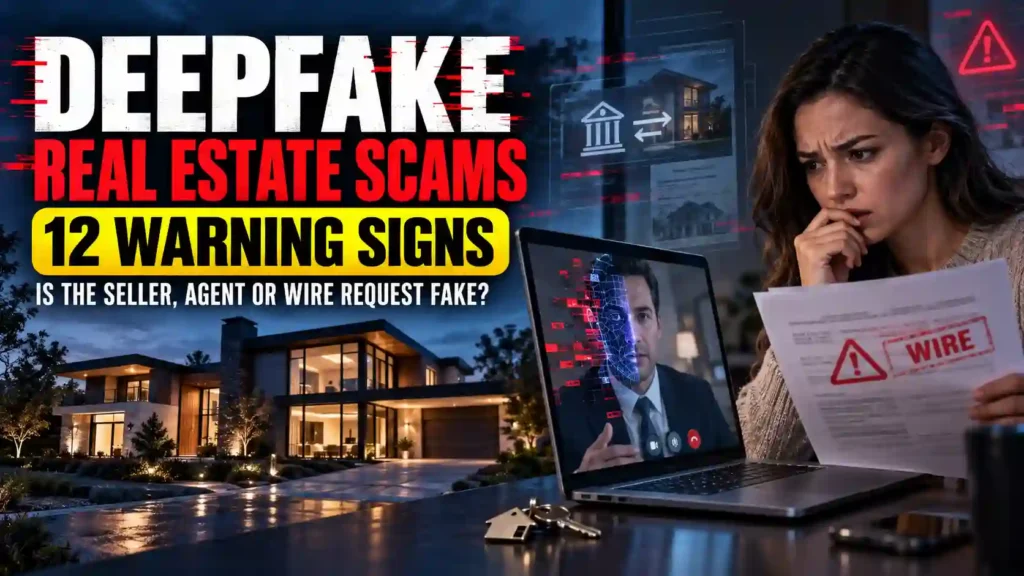
12 Signs the Seller, Agent or Wire Request May Be Fake
One irregularity may have an innocent explanation. Several appearing together should stop the transaction.
1. The Remote Seller Refuses Independent Verification
A genuine seller may be unable to attend in person. That does not justify rejecting every secure alternative.
Be cautious when the supposed owner:
- Refuses established identity procedures
- Avoids independently initiated calls
- Declines qualified notarization
- Rejects questions about the property
- Supplies only documents chosen by them
- Claims that urgency makes verification impossible
Remote participation should increase verification rather than eliminate it.
2. The Property Is Offered Far Below Market Value
A remarkably low price creates excitement and competition.
The seller may claim to be relocating, handling an inheritance or needing immediate money.
Investigate:
- Ownership
- Condition
- Liens
- Seller identity
- Authority to sell
- Payment destination
An attractive bargain should make you more careful—not less.
3. The Seller Knows Public Facts but Not the Property
A criminal can copy information from public records and old listings.
Ask about:
- Repairs
- Utilities
- Access
- Maintenance
- Renovations
- Occupancy
- Property management
- Known defects
- Keys
- Neighbors
One forgotten detail proves nothing. A pattern of vague, incorrect or contradictory answers deserves investigation.
4. The Video Call Is Brief or Carefully Controlled
The supposed seller may:
- Remain far from the camera
- Use poor lighting
- Keep the face nearly motionless
- Disable video after introductions
- Avoid spontaneous conversation
- Blame every problem on weak internet
- Refuse approved identity procedures
- Answer only prepared questions
These behaviors do not establish fraud. They justify stronger verification.
5. The Face or Voice Contains Inconsistencies
Possible clues include:
- Delayed lip movement
- Flickering facial edges
- Distorted glasses
- Unnatural blinking
- Changing skin texture
- Inconsistent lighting
- Strange vocal rhythm
- Expressions that do not match speech
- Difficulty handling interruptions
- Mispronounced names
Poor cameras and connections can produce similar defects. Use visual clues as supporting evidence—not the final decision.
6. Identity Documents Conflict With Other Records
Compare the supplied identification with:
- Ownership records
- Tax mailing address
- Contract information
- Seller’s appearance
- Existing contact details
- Previous signatures
- Disbursement instructions
- Notary information
Look for inconsistent names, addresses, photographs, fonts, spacing and expiration details.
A professional-looking document can still be fabricated.
7. One Person Controls Every Professional
The supposed client insists on using an unfamiliar:
- Agent
- Attorney
- Title company
- Closing service
- Notary
- Escrow provider
- Payment intermediary
A legitimate client can have preferences. The danger arises when every person verifying the transaction was introduced by the same unverified identity.
8. Wire Instructions Change Near Closing
This is one of the most dangerous warning signs.
The message may claim:
- The receiving bank changed.
- The earlier instructions contained an error.
- The title company opened another account.
- The old account cannot receive funds.
- A manager approved an exception.
- The closing will fail unless you act immediately.
Do not confirm the change by replying to that message.
9. The New Recipient Does Not Match the Transaction
The account may belong to:
- An unfamiliar individual
- An unrelated business
- A foreign company
- A payment processor
- A cryptocurrency platform
- A supposed escrow intermediary
The sender may offer a complicated explanation.
Stop the payment and verify through established contacts.
10. Proof of Funds Cannot Be Verified
A supposed buyer may submit:
- Artificial bank statements
- Fabricated balance screenshots
- Fake loan approvals
- Forged accountant letters
- Altered investment statements
- Synthetic identity documents
Do not verify these documents through a telephone number, email address or link printed only on the document.
Where lawful and appropriate, use independent contact information and established professional procedures.
11. You Are Told to Keep a Change Secret
The sender may say:
- Only one manager knows.
- Other employees will delay closing.
- The seller requested confidentiality.
- The lender should not be contacted.
- The bank should receive a different explanation.
- Another buyer is waiting.
Secrecy removes the people most likely to detect the fraud.
12. Verification Is Treated as a Threat to the Deal
The supposed seller or professional warns that questions will cause:
- Cancellation
- Loss of the deposit
- Additional fees
- Legal action
- Selection of another buyer
- A missed deadline
- Loss of the property
A legitimate transaction involving substantial money should survive reasonable verification.
Use the C.L.O.S.E. Property Verification Test
The C.L.O.S.E. test covers identity, ownership, authority and payment.
C — Confirm Every Person Independently
Verify the identity and authority of the:
- Seller
- Buyer
- Agent
- Broker
- Lawyer
- Title representative
- Notary
- Lender
Do not rely solely on introductions made by another unverified person.
L — Look Up the Property and Ownership
Compare:
- Ownership records
- Tax mailing address
- Listing history
- Property address
- Previous transactions
- Liens or title information
- Known owner contacts
Public records provide comparison information. They do not prove that the person communicating with you is the owner.
O — Obtain Instructions Through a Trusted Channel
Establish payment instructions early.
Contact the closing representative through independently verified details and read the recipient, bank and account numbers aloud.
S — Stop Every Unexpected Change
Pause changed:
- Bank accounts
- Recipient names
- Email addresses
- Telephone numbers
- Closing representatives
- Notaries
- Payment methods
- Signing platforms
until the change has been independently confirmed.
E — Escalate Every Inconsistency
Tell the appropriate agent, broker, lawyer, title company, lender, bank or law-enforcement authority.
Do not hide a concern because you fear appearing difficult.
The Two-Minute Verify-Before-You-Wire Test
Complete this test before sending an earnest-money deposit, closing wire or sale proceeds.
First Minute: Leave the Message
- Stop using the email containing the instructions.
- Locate contact information verified earlier.
- Call the known closing representative.
- Confirm the representative’s identity.
- Explain that you are verifying a payment.
Second Minute: Read Every Detail
Read aloud:
- Recipient’s complete name
- Bank name
- Routing or sort code
- Account number
- Payment reference
- Exact amount
- Purpose of payment
Then ask:
- Have any details changed?
- Who authorized the instructions?
- Is a second confirmation required?
- How will receipt be confirmed?
Do not merely ask whether “the instructions” are correct. The document you received may already have been altered.
The Closing-Wire Security Procedure
A homebuyer may be transferring the largest amount of money they have ever controlled.
Verification should reflect that risk.
Establish Trusted Contacts Early
Save verified contact information for the:
- Agent
- Broker
- Closing lawyer
- Title company
- Lender
- Bank
Do this before suspicious communication begins.
Agree on How Instructions Will Arrive
Ask:
- Who will send the instructions?
- Which system will be used?
- Who can change them?
- How will a change be authenticated?
- Which number should be used for confirmation?
- How will receipt be confirmed?
Confirm the Actual Numbers
Call the known representative and read the details back.
If an email account has been compromised, asking whether the attachment is correct may not reveal that it was replaced.
Use a Second Reviewer
Ask another trusted person to compare the:
- Recipient
- Bank
- Account details
- Amount
- Contact information
One changed character can redirect a large payment.
Confirm Receipt Immediately
After sending the funds, call the verified closing representative and confirm that the correct account received them.
Do not wait until the following day.
How Compromised Email Creates Convincing Wire Fraud
The criminal may gain access to the mailbox of a buyer, seller, agent, lawyer, lender or title employee.
They quietly monitor conversations and learn:
- Closing date
- Payment amount
- Property address
- Participant names
- Writing style
- Genuine documents
- Expected communication
The attacker then inserts fraudulent instructions at the right moment.
Because the message appears inside an authentic conversation, it may come from a genuine address and contain accurate details.
A correct sender address does not make changed banking information safe.
How to Verify a Remote Seller
Remote property sales are legitimate, but casual video calls are not sufficient verification.
Use an Approved Identity Process
Depending on applicable laws and professional requirements, verification may involve:
- Government-issued identification
- Document-authenticity checks
- Independent contact information
- Live identity verification
- Public-record comparison
- Property knowledge
- Qualified notarization
- Professional review
- Device or location information
An identification photograph attached to an email should not be treated as complete proof.
Confirm Identity Continuity
Make sure the same verified person:
- Requests the listing
- Signs the agency agreement
- Answers property questions
- Completes identity checks
- Approves the contract
- Participates in closing
- Receives the proceeds
Identity substitution may occur after an earlier verification.
Separate Identity From Ownership
Ask four distinct questions:
- Is this a real person?
- Is this person the legal owner or authorized representative?
- Is the verified person participating throughout the transaction?
- Is the payment destination appropriate?
A genuine person can still lack authority to sell.
Use Contact Information That Predates the Listing
When possible, contact the owner through information not supplied during the new transaction.
Do not let the supposed seller create the identity, evidence and confirmation.
A Casual Video Call Is Not a Notarization
Someone appearing on camera while holding an identification document has not automatically completed a valid remote notarization.
Requirements differ by jurisdiction and may include:
- Approved technology
- Credential analysis
- Identity verification
- Audiovisual recording
- Location requirements
- Specific certificates
- Record retention
- Qualified notarial procedures
Follow applicable law and the procedures required by licensed professionals.
A deepfake-detector score cannot replace legal requirements.
When a remote participant’s identity affects ownership or payment, use the verification methods in deepfake video call scams alongside the required professional process.
How to Verify a Buyer and Proof of Funds
A fake buyer may waste time, obtain information or prepare another scam.
Check Identity Consistency
Compare the buyer’s:
- Name
- Contact details
- Documents
- Signature
- Payment account
- Professional history
- Transaction behavior
Verify Proof of Funds Independently
Where lawful and appropriate, verify the institution and document through independently obtained channels.
Do not use only the contact details printed on the submitted statement.
Investigate Warning Signs
Be cautious when:
- The account holder differs from the buyer.
- Fonts and dates appear inconsistent.
- Balances look altered.
- The financial institution cannot be verified.
- The buyer rejects ordinary checks.
- The supposed banker uses an unofficial address.
- Immediate acceptance is demanded.
Watch for Overpayments
A fake buyer may send a fraudulent check for more than required and ask you to refund the difference.
When the original deposit is reversed, you may remain responsible for the money returned.
AI Rental Scams and Fake Virtual Tours
Renters may encounter copied advertisements, generated property images and prerecorded tours.
Rental Warning Signs
Be cautious when:
- Rent is far below similar properties.
- The landlord claims to be permanently overseas.
- Payment is required before viewing.
- The address appears under different contacts.
- The landlord refuses an independently controlled tour.
- Images show inconsistent layouts.
- Gift cards or cryptocurrency are requested.
- The person cannot prove authority to rent the property.
- Urgency is created because other renters are waiting.
A virtual tour proves that someone possesses a video. It does not prove they own or manage the property.
Verify Before Paying
Confirm:
- Property address
- Owner or management company
- Landlord or agent
- Authority to rent
- Lease terms
- Deposit rules
- Payment recipient
- Access to the property
Do not send sensitive identity documents merely to reserve an unverified home.
Manipulated Listing Images and Virtual Staging
Artificial staging can help buyers imagine an empty property when the alteration is disclosed.
Deceptive editing may:
- Remove water damage
- Hide cracks
- Enlarge rooms
- Add windows
- Improve views
- Remove neighboring buildings
- Create amenities
- Finish incomplete construction
- Replace damaged landscaping
- Remove power lines
Buyers should obtain:
- In-person viewing
- Independent inspection
- Measurements
- Unedited photographs when available
- Public-record information
- Qualified appraisal
- Buyer-directed live walkthroughs
During a remote walkthrough, ask the presenter to move spontaneously between specific rooms and show details you choose.
What Buyers Should Do
Buyers face risks involving deposits, fake listings, stolen identities and closing wires.
Verify the Agent
Confirm the agent through the brokerage’s official website, independently obtained office number and applicable licensing records.
A copied photograph or license number does not authenticate the person messaging you.
Confirm the Listing
Compare the property across multiple sources and contact the brokerage independently.
Inspect the Property
Whenever possible, visit the property.
If you cannot attend, use a trusted local representative and independently verified inspector.
Verify Every Payment
Confirm:
- Recipient
- Purpose
- Amount
- Refund terms
- Escrow arrangement
- Bank details
- Authority to receive the money
Protect Your Documents
Submit identification and financial statements only through verified systems.
What Sellers Should Do
Sellers can be impersonated or have their proceeds redirected.
Protect Your Email Account
Use a unique password and multifactor authentication.
Establish Disbursement Information Early
Agree on how sale proceeds will be paid and how changes must be verified.
Monitor Online Listings
Search periodically for unauthorized advertisements using your address and property photographs.
Monitor Available Property Records
Some jurisdictions allow owners to register for alerts concerning recorded documents.
An alert may expose activity sooner, but it does not necessarily prevent a fraudulent filing.
Establish Communication Rules
Tell the transaction team that banking changes will never be authorized through email alone.
What to Do If Someone May Be Transferring Your Property
If you discover a suspicious filing, notice or unauthorized listing:
- Preserve the notice and account information.
- Contact the relevant land-records or recorder’s office.
- Ask which documents were filed or submitted.
- Notify your lender where applicable.
- Contact any title or closing company involved.
- Consult a qualified local real estate lawyer.
- Report suspected fraud to law enforcement.
- Warn tenants, neighbors or property managers.
- Register for property-record alerts when available.
- Monitor for additional listings and filings.
Do not assume that one online alert service can prevent or reverse every fraudulent transfer.
What Real Estate Professionals Should Do
Agents, brokers, lawyers and closing professionals need procedures that remain secure when the impersonation looks genuine.
Verify Clients Early
Do not postpone identity concerns until closing.
Apply Risk-Based Checks
Remote sellers, vacant property and unexplained urgency may require enhanced verification.
These factors are not proof of fraud.
Verify Four Separate Elements
Determine whether:
- The person is real.
- The person owns or controls the property legally.
- The same verified person remains involved.
- The payment instructions are legitimate.
Require Independent Payment Confirmation
Do not accept a changed account through the same communication channel that announced it.
Document Every Verification
Record:
- Who was contacted
- Which channel was used
- What was confirmed
- Date and time
- Employee completing the check
- Second approval
- Supporting records
Protect Communication Accounts
Use:
- Unique passwords
- Multifactor authentication
- Login alerts
- Active-session reviews
- Forwarding-rule monitoring
- Controlled third-party access
What to Do If You Sent Money to the Wrong Account
Contact your bank immediately.
Ask it to:
- Stop a pending transfer
- Initiate a recall
- Contact the receiving institution
- Attempt to freeze the recipient account
- Preserve transaction records
- Escalate the matter to its fraud team
Recovery is not guaranteed. Delays can reduce the possibility.
Alert the Genuine Transaction Team
Contact your verified:
- Agent
- Broker
- Closing lawyer
- Title company
- Lender
Do not continue using the suspicious email thread.
Preserve Evidence
Save:
- Complete emails
- Email headers
- Wire instructions
- Attachments
- Recipient details
- Telephone numbers
- Messages
- Call times
- Contracts
- Transaction confirmations
- Video invitations
Secure Potentially Compromised Accounts
Change passwords and review:
- Active sessions
- Email forwarding rules
- Recovery information
- Connected applications
- New devices
- Unauthorized delegates
Watch for a Follow-Up Scam
Criminals may impersonate the bank’s fraud department and request another payment to recover the first transfer.
That tactic belongs to deepfake banking scams. End the incoming call and contact the bank through its official number.
What to Do If You Paid a Fake Landlord
Contact the payment provider immediately.
Then:
- Report the listing.
- Notify the genuine owner or brokerage.
- Preserve the advertisement.
- Save payment receipts.
- Secure information supplied in the application.
- Monitor for identity theft.
- Report the fraud.
- Avoid unsolicited recovery services.
A fake rental application may collect enough personal information for identity theft after the deposit scam ends.
Why Deepfake-Detection Software Is Not Enough
Detection tools may assist with suspicious images, audio and video.
Their results can be affected by:
- Compression
- Cropping
- Low resolution
- Poor lighting
- Screenshots
- Later editing
- New AI-generation methods
A detection score should not decide whether ownership is transferred or money is released.
The strongest protection combines:
- Identity verification
- Ownership confirmation
- Independent communication
- Professional review
- Secure payment procedures
- Account protection
- Human escalation
Official Help After Real Estate Fraud
The first urgent contact after a misdirected transfer should be the sending bank.
Depending on your location and circumstances, also contact:
- The receiving bank when advised
- Local law enforcement
- A national cybercrime-reporting service
- Your real estate lawyer
- The title or closing company
- Your lender
- A property-records office
- Your insurer when relevant
In the United States, online real estate wire fraud can be reported through IC3.gov.
Legal procedures, ownership records, notarization rules and consumer protections vary by jurisdiction. Obtain advice from qualified local professionals for your transaction.
Frequently Asked Questions About Deepfake Real Estate Scams
These answers address common questions about seller impersonation, fake buyers, rental listings and closing wires.
What is a deepfake real estate scam?
It is property fraud involving artificial or manipulated voices, faces, images, videos, documents or identities.
Is every real estate wire scam a deepfake scam?
No. Many wire scams use compromised email or forged instructions without synthetic media.
Can someone sell a property they do not own?
A criminal may attempt to impersonate an owner using stolen information and fabricated documents. Identity, ownership and authority must be verified separately.
Why are vacant properties targeted?
Regular contact with the owner may be limited, making unauthorized activity more difficult to notice.
Does a seller appearing on video prove ownership?
No. The person may be an accomplice, use stolen information or employ manipulated media.
Can closing instructions change legitimately?
Changes may occur, but every change should be treated as high risk and independently verified.
Who should verify wire instructions?
The person sending the funds should confirm the complete details with an authorized representative through previously verified contact information.
What if I cannot reach the closing representative?
Do not send the money. Wait until the instructions can be properly confirmed.
Should I confirm new instructions by replying to the email?
No. If the account is compromised, the reply may go directly to the criminal.
Can a criminal enter a genuine email conversation?
Yes. A compromised account may allow the attacker to monitor and participate in a legitimate conversation.
What if the recipient name does not match the closing company?
Stop and investigate. Do not accept an explanation supplied through the same suspicious communication.
Should I send a small test wire?
A test payment does not prove the recipient is legitimate. Verify everything before sending any amount.
How quickly should I report a fraudulent wire?
Immediately. Contact the bank as soon as you suspect that the money went to the wrong account.
Can a real estate wire be recovered?
Sometimes, particularly when reported quickly. Recovery is never guaranteed.
Is a cash buyer harder to verify?
A cash transaction may remove lender checks. Identity and proof-of-funds verification remain necessary.
How should proof of funds be verified?
Use lawful professional procedures and independently obtained contact information for the issuing institution.
Can someone obtain a mortgage using a synthetic identity?
Criminals may attempt to use stolen or fabricated information and manipulated documents to obtain financing.
Is a casual video call sufficient for remote notarization?
No. Remote notarization must satisfy the legal and professional requirements applicable to the jurisdiction and transaction.
Can AI create a nonexistent property?
Yes. AI can generate convincing buildings, rooms, views and amenities.
Is virtual staging fraudulent?
Not automatically. It becomes deceptive when alterations are concealed or materially misrepresent the property.
How can I verify a rental listing?
Confirm the address, owner or manager, authority to rent, property access, lease terms and payment recipient.
Can title monitoring prevent deed fraud?
Monitoring may alert an owner to recorded activity, but it may not prevent every fraudulent filing.
What should I do if my property is listed without permission?
Preserve the listing, report it, contact the impersonated brokerage, check official property records and obtain appropriate legal help.
What if I purchased property from an impersonator?
Contact a qualified real estate lawyer, title professional, lender and law-enforcement authority immediately. The consequences depend on local law and the specific facts.
What is the safest payment rule in real estate?
Never send money or accept changed instructions until the people, property authority, recipient and banking details have been verified independently.
Final Warning
A property transaction can be real while one message inside it is fraudulent.
The agent may be genuine. The inspection may have occurred. The contract may be valid. The closing date may be correct.
Then one compromised email changes where the money goes.
A fake seller can know every fact in the public records. A cloned voice can sound like your agent. A deepfake video participant can resemble the legal owner. A fabricated financial statement can look professional.
Appearance is not authority.
Use the C.L.O.S.E. test:
- Confirm every person independently.
- Look up the property and ownership.
- Obtain payment instructions through a trusted channel.
- Stop every unexpected change.
- Escalate every inconsistency.
The most dangerous message in a property transaction may be:
“Our bank account has changed. Use these new instructions.”
Do not let a closing deadline rush you past the verification protecting your deposit, property or sale proceeds.