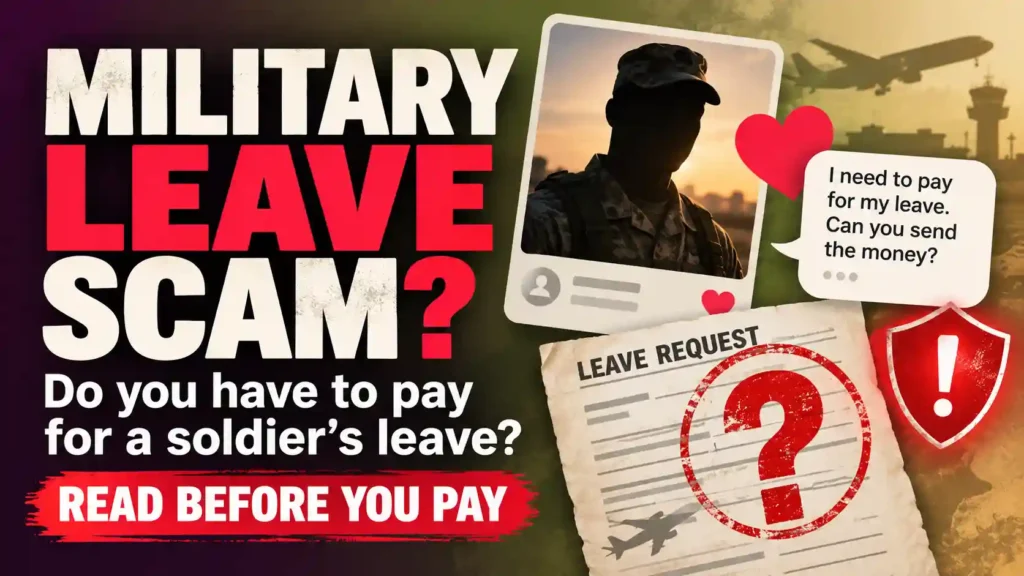
Military Leave Scam: Do You Have to Pay for a Soldier’s Leave? Read This Before You Send Money
The person you have been waiting to meet says they finally have good news: their leave has been approved. They can come to see you.
Then comes the condition. Before they can travel, you must pay for their leave papers. Or an officer emails you an invoice. Or the person says the fee is only a refundable deposit.
You may be looking at the message right now, wondering whether refusing to pay will ruin the visit. Do not send money to obtain leave for someone claiming to be a U.S. service member. Their partner, family, and friends are not required to pay for their leave approval.
That answer does not depend on how convincing the person seems, how long you have spoken, or how official the document looks. Below, you can check the exact claim you received and decide what to do next.
What Is a Military Leave Scam?
A military leave scam is a demand for money based on the false claim that a service member cannot take time off until someone pays a fee. The person requesting payment may say it covers leave papers, an application, an officer’s approval, or a replacement while the service member is away.
Often, the request is made to someone who has been talking online with a person claiming to be deployed. The promised visit makes the payment feel urgent and personal. A scammer may also send a letter or introduce a second person who claims to work for the military.
The key point is the same in every version: you are being asked to pay so a supposed service member can take leave. Do not pay.
A service member’s leave is handled through their military process. An online partner does not buy the approval. If you are worried about the entire relationship, the broader military romance scam guide can help you examine it. This article stays focused on the leave request and its payment demands.
Do You Have to Pay for a Soldier’s Leave?
No. Someone claiming to serve in the U.S. military does not need you to purchase their leave.
This is where the scam creates confusion. Real service members do request time off, and leave may need approval. A scammer takes that real idea and adds a false requirement: a payment from you.
They might call it a “processing fee” rather than a leave fee. They might say it is for an emergency request. They might insist the money will be returned when the person arrives. The name and promise do not change what you are being asked to do.
If the message says your payment will allow a service member to take leave, stop the transaction. You do not have to prove that every other detail of their story is false before making that decision.
Check the Exact Payment Request You Received
The language on a fake invoice can be hard to interpret. Use the descriptions below to identify the request behind it.
| What you are told to pay for | What the request means for you |
|---|---|
| “Leave papers” or a “leave certificate” | You are being asked to pay for supposed permission to take leave. Do not pay. |
| “Leave application” or “processing” | A new label does not create a fee for an online partner. Do not pay. |
| “Commanding officer’s approval” | An officer’s title or email does not make the payment necessary. Do not pay. |
| “Emergency leave” or “compassionate leave” | An urgent reason does not make you responsible for buying approval. Do not pay. |
| “Replacement personnel” | You are not responsible for paying someone to cover a service member’s duties. |
| “Refundable leave deposit” | A promise of repayment does not protect money you send. Do not pay. |
| “Travel authorization” after leave approval | If the charge is another condition for the promised visit, stop and reassess the entire request. |
You may see a different term on your document. Focus on its purpose: Are you being told to send money before this person can leave their assignment and visit you? If so, do not follow the payment instructions.
How a Fake Military Leave Request Is Presented
Some requests are direct: “Please send me the money so I can come home.” Others are designed to look like formal administration. Understanding the presentation can help you avoid being distracted by it.
An email from a supposed commanding officer
The email may use a title, rank, unit name, and formal closing. It may say the officer is contacting you because you are the service member’s partner or designated contact.
The sender may know your name and the planned travel dates because the person you have been talking to supplied those details. Their knowledge does not establish their authority.
If the email tells you to pay for leave approval, do not pay. Do not rely on the phone number in that email as independent verification; it may reach the same people who sent it.
A PDF with a seal and signature
A fake document can include a flag, a case number, a photograph, and a signature. It may look especially convincing if it contains the same dates your online partner discussed with you.
A document’s appearance cannot make a fee payable by you. Save it as evidence, but do not enter your card details or send an ID to complete it.
A payment page that looks official
You may be sent to a website to “register” as a partner or make a deposit. It could ask for your address, identity documents, and financial information.
Do not use a link supplied by the person making the claim as proof that the claim is genuine. Do not enter sensitive details to see what happens next.
A second person who confirms the story
An “agent,” “officer,” or “administrator” might contact you through a separate account. Two people repeating a request can make it seem verified. They may be working together, or one person may control both accounts.
The number of messages does not change the answer: you should not pay for a U.S. service member’s leave.
Why the Fee Changes After You Ask Questions
You might challenge the first request. The person then says you misunderstood: the leave is free, but you need to cover their flight. Or the fee is for security clearance. Or payment is necessary to bring in someone to replace them.
Pay attention to the sequence. If each new explanation appears only after you refuse the last one, you are not getting a clear account of one expense. You are being given another reason to pay.
Write down the requests in order:
- What was the first fee called?
- Who asked you to pay it?
- Where were you told to send the money?
- What changed when you questioned it?
- Was a new deadline or amount introduced?
You do not need to argue over every version. Once you recognize that payment keeps being made a condition of the visit, you can stop discussing it.
“My Account Is Frozen”: Does That Make the Leave Fee Real?
No. A claim about an inaccessible bank account does not establish that a leave fee exists.
The supposed service member may say they have plenty of money but cannot use it during deployment. They promise to repay you the moment they land. That promise asks you to carry all the risk while they provide no independent way to verify the payment.
Sometimes the story goes further: an officer will allegedly refund you, or the military will release the deposit after the visit. Do not send money based on a promised reimbursement from a person or office introduced through the same conversation.
If someone has a genuine problem accessing their funds, you are still not required to pay for their leave.
“We’ll Lose the Leave Slot Tonight”: How Urgency Works
A deadline can make you feel that asking questions will cost you the relationship. You may be told the officer is waiting, the paperwork closes in an hour, or another person will receive the leave slot.
That pressure is a reason to slow down. A financial request you cannot examine calmly is not one you should rush to complete.
Take a break from the messages. You can put your phone down, speak with someone you trust, and return to the request later. You do not owe an immediate answer to a person asking for your money.
A simple response is enough:
“I will not pay for military leave, leave papers, or an approval fee. Please do not send me further payment requests.”
You do not need to persuade the sender that you understand military procedure. You only need to decline the payment.
Can You Verify the Leave Papers Yourself?
You can review what you received, but there is no need to authenticate a document before refusing to pay. The request for your money is the central problem.
Still, the following checks can help you understand and document what happened:
Keep the original message and attachment
Save the email, PDF, website address, and screenshots of the conversation. Include the messages where the person first promised to visit and first mentioned a fee. These may help your payment provider or a fraud reporting authority if you have already paid.
Look at who receives the money
Is payment going to a personal bank account, gift card, cryptocurrency address, payment app, or third party introduced in the conversation? Save those details. Do not send a small amount to “test” the process.
Ask someone outside the conversation to read it
Show a trusted person the actual payment demand and the surrounding messages. Tell them you want an opinion on the request, not a judgment about your relationship.
Do not submit more information
A leave form may ask for your passport, driver’s license, address, or bank details. Do not send those items to investigate whether the request is genuine.
These steps help you protect yourself. They do not require you to continue negotiating with the sender.
What If the Person Has a Real Military Name and Photos?
A name or photograph can belong to a real service member while the account messaging you belongs to someone else. Finding that person online does not verify who is asking you for money.
You can reverse-search the photographs and look for the same images under different names. That may uncover impersonation. If nothing suspicious appears, however, the result does not make the leave payment safe.
Keep the two questions separate:
- Is the person in these pictures real?
- Is the person contacting me entitled to ask for money for military leave?
A real photograph does not answer the second question. You can refuse payment regardless of what an image search finds.
What to Do If You Already Paid
The first step is to stop further payments. You may be told that the initial fee succeeded but one more charge is needed. Do not pay for a flight, certificate, refund release, or final authorization.
Then act in this order.
1. Contact the payment provider immediately
Tell your bank, card issuer, payment app, wire transfer company, or gift card provider that you sent money because of a suspected scam. Ask whether the transaction can be stopped or reversed.
Use the provider’s official app, website, or phone number. Do not call a “refund department” named in the leave email.
2. Save the full paper trail
Keep transaction records, receipts, account details, messages, email addresses, attached documents, and links. Record when each payment was requested and made.
Do this before you report or block the accounts so information remains available.
3. Protect any personal details you shared
If you entered card information on a website, contact your card issuer. Change any password you disclosed or entered through a link you were sent. If you provided identity documents, seek guidance from the identity theft reporting service where you live.
If the person sent you a check or asked you to receive and forward money, speak to your bank before moving any funds.
4. Report the account and the request
Report the profile to the dating or social media platform. In the United States, you can also report suspected fraud at ReportFraud.ftc.gov. If you live elsewhere, use your local fraud reporting authority.
Finally, be careful with unsolicited offers to retrieve the money. Fund recovery scams may ask someone who has already lost money to pay yet another fee.
Frequently Asked Questions About Military Leave Scams
A formal email or a person you care about can make a straightforward answer feel uncertain. Here are the questions that matter most when you are deciding whether to pay.
Can I pay for my boyfriend’s military leave?
If he claims to serve in the U.S. military, you do not need to pay for his leave. Do not send money for leave papers, processing, or approval.
Does the answer change if we are engaged or married?
No. Being a fiancée or spouse does not make you responsible for buying a service member’s permission to take leave.
What if the request came from a commanding officer?
A sender can claim any title in an email. If the message asks you to pay for a service member’s leave, do not pay because it appears to come from an officer.
Are military leave papers a real thing?
Service members have real leave procedures. That does not mean an online partner must purchase paperwork, and it does not make a payment demand in an emailed form legitimate.
What if the fee is refundable?
A promised refund is still a request for your money. Do not send a deposit for someone else’s military leave.
What if I only have to pay for their replacement?
You are not responsible for paying to cover a service member’s duties while they are away. Do not send money for “replacement personnel.”
What if the amount is small?
Do not pay a smaller sum to test the story. It could be followed by more charges, and sending it may expose payment information.
What if I spoke to the soldier on a video call?
A video call does not create a leave fee for you to pay. Assess the payment request on its own.
Should I keep replying until I understand every document?
No. Save the documents, decline payment, and take time to seek an outside opinion. You are not required to debate the sender.
Can I recover money I already sent?
Possibly, depending on the payment method and timing. Contact the company that handled the transaction immediately and ask what options are available. Be wary of anyone who guarantees recovery for an upfront fee.
What to Do Now
If you are being asked to pay for a U.S. service member’s leave, do not send the money. Save the request and speak to someone you trust. If you have already paid, contact your payment provider immediately.
You can still have questions about the person and the relationship. Those questions deserve careful attention, but they do not have to delay this decision. No promised airport meeting, official-looking form, urgent deadline, or offer to repay you makes a leave payment your responsibility.