The caller says your savings are in danger. They know your name, sound calm, and offer to help. Then they tell you to withdraw your money before someone steals it.
Or perhaps the voice on the phone sounds like your grandchild. There has been an accident, they say. They need money, and you must not tell anyone.
The fear you feel in that moment is real. The emergency may not be.
Scams targeting seniors often begin with a story that makes checking the facts feel risky, disloyal, or too slow. A criminal may pretend to protect your bank account, repair your computer, help someone you love, or offer companionship. Whatever the story, the goal is to gain enough trust to obtain your money, information, or account access.
If something suspicious is happening right now, start with the four steps below. Then use the rest of this guide to recognize common schemes, respond to what you may have shared, and help a family member without making them afraid to speak up.
If Someone Is Pressuring You Right Now, Do This First
You do not have to decide whether the person is a scammer before taking a protective step. An unexpected request can wait while you verify it.
- End the conversation. Hang up, close the message, or leave the website. Do not stay on the line while you decide.
- Send nothing. Do not transfer money, withdraw cash, buy gift cards or cryptocurrency, or read out a password or security code.
- Make your own contact. Call the relative using a number you already saved, or contact the organization through a number on your card, statement, or official account.
- Tell someone you trust. Explain what the person claimed and what they asked you to do. You can check the story together.
If you have already paid or shared information, go to “What to Do If You Already Responded to a Scam” below. There are still steps worth taking.
What Are Scams Targeting Seniors?
Scams targeting seniors are fraud attempts directed at older adults or built around situations criminals believe may matter to them. They may arrive by phone, text, email, social media, letter, website, or in person.
There is no single type of “senior scam.” One person may receive a call about a grandchild. Another may see a warning about a computer virus. Someone else may be approached about an investment or develop an online relationship that eventually leads to requests for money.
Nor does age make someone unable to recognize fraud. Scammers succeed by creating a believable situation at a difficult moment. They may know real details about your family or account, sound professional, and tell you that waiting will make matters worse.
A useful rule cuts through those details: verify an unexpected request through a separate contact route before you send money, share sensitive information, or grant access to a device.
Warning Signs That Appear Across Different Scams
You cannot memorize every new scam story. You can, however, recognize attempts to control your time, isolate you from advice, and dictate how you pay.
They Say You Cannot Wait
The caller claims a relative will remain in jail, an account will be emptied, or a benefit will end unless you act immediately.
The point of that deadline is to prevent you from checking. If the request concerns your money or identity, end the conversation and verify it before acting.
They Tell You to Keep It Secret
You may be told that speaking to family will embarrass a grandchild or interfere with an investigation. Someone pretending to protect your savings may claim that bank staff are involved in the crime.
Secrecy leaves you alone with the caller’s version of events. Tell a trusted person what you were asked to do, especially if the caller insists you must not.
They Choose an Unusual Way to Pay
A scammer may demand gift card numbers, cryptocurrency, a rushed transfer, or cash handed to a courier. They may even tell you what to say if a cashier or bank employee asks about the transaction.
If someone tells you to withdraw cash or buy gold and hand it to a courier for “safekeeping,” stop. Contact your bank yourself through a number you already trust.
They Resist an Independent Check
The person offers to transfer you to a supervisor, gives you a callback number, or says you can verify the matter only through a link they sent.
Those options keep the check within the conversation they started. Hang up and find the real person or organization yourself. A displayed caller ID, familiar voice, or accurate personal detail is not enough to replace that step.
How a Fake Bank Warning Can Turn Into a Cash Pickup
Consider how an ordinary afternoon could be interrupted.
A message says there has been suspicious activity on your account. Before you can think it through, a “fraud specialist” calls. They know your name and say the problem is serious: someone inside the bank may be trying to take your savings.
The caller tells you not to discuss the investigation with branch employees. To protect the money, you must withdraw it and hand it to a courier who will place it in a “secure account.”
Notice how the story changes your options. The supposed threat creates fear. The claim about bank employees stops you from asking them for help. The courier gives the criminal a way to collect your money.
The point to stop is the first instruction to move or withdraw funds for protection. End the call. Contact your bank using the number on your card or statement, and tell them exactly what you were instructed to do. Do not use the number in the original message.
The story may sound different in another scam, but the decision is similar: someone you did not contact wants control over your money before you can verify their claim.
Common Scams Targeting Seniors
Each of these schemes has its own story. Focus on the request that follows the story: money, information, device access, or secrecy.
Bank and Government Impersonation
A supposed bank employee reports an unauthorized transfer. A supposed government official says your identity has been connected to a crime. Either may claim your savings must be moved to keep them safe.
The request may happen in stages. First, the caller asks you to confirm details. Next comes a security code or an instruction to approve something in your banking app. Finally, they may direct you to send or withdraw money.
What to do: End the call and contact the bank or office independently. Do not approve a sign-in request, share a one-time code, or transfer savings because an unexpected caller tells you to.
For a closer look at account and payment schemes, read financial scams and how they work.
Tech Support and Remote Access
A pop-up says your computer is infected. An email warns that your account is at risk. A caller offers to fix the problem if you install a program or let them control your screen.
Once connected, the person may ask you to open online banking, show you frightening information, or demand payment for a repair. The warning you saw does not establish that the person offering help is genuine.
What to do: Do not call a number displayed in an unexpected pop-up. Close the page if you can and find support details independently. If you already granted access, disconnect the device from the internet and follow the steps in the response section below.
Family Emergency and Grandparent Scams
Someone claims to be a grandchild or another relative who has been arrested, injured, or stranded. They need money immediately. A supposed lawyer, officer, or doctor may take over the call and insist that the matter stay private.
Do not supply a name when a vague caller asks, “Do you know who this is?” Even if the voice sounds familiar, end the call and check through another route.
What to do: Contact your relative using a number you already know. If they do not answer, try another trusted family member. Do not send money while the original caller controls the conversation.
Our AI grandparent scam guide explains these emergency calls in greater detail, including voice impersonation and ways to verify a supposed relative.
Romance and Companionship Scams
A new online connection may listen closely, remember personal details, and become part of your daily routine. Later, an emergency appears: medical treatment, travel costs, a frozen account, or an investment you could supposedly share.
An emotional connection can be genuine to you even if the other person has lied about who they are. That makes an outside conversation valuable, especially once money enters the relationship.
What to do: Do not send funds or let the person use your accounts. Tell someone you trust about the relationship and the request, including any reasons the person has given for avoiding independent verification.
Read romance scam warning signs for more detail on how emotional trust can turn into financial pressure.
Investment Scams
An advertisement, online group, or new acquaintance offers an opportunity with impressive returns. A website displays your growing balance. When you try to withdraw, however, you are asked to pay a tax, release fee, or account charge.
Figures on a website do not prove the money exists. Another payment may simply create another loss.
What to do: Stop sending money. Preserve the website address, messages, account details, and transaction records. Seek independent, qualified advice before making another decision. Do not pay a further fee solely because the platform says it will release your funds.
Health, Benefits, and Prize Scams
A caller may offer to fix your health coverage, arrange a medical item, secure a benefit, or release a prize. To proceed, they ask for personal numbers, account details, or a payment.
Some requests sound reassuring: “We only need to verify your identity.” Others sound frightening: “Your coverage will stop today.” Both require the same response.
What to do: Contact the health plan, benefits administrator, or organization named in the message using contact details you obtained yourself. Do not disclose sensitive information just because the caller already knows your name.
What to Do If You Already Responded to a Scam
Do not spend the first hour blaming yourself or trying to persuade the scammer to return what they took. The useful next step depends on what you shared or paid.
If You Sent Money
Contact your bank, card issuer, payment app, or transfer service immediately. Say that you believe you were deceived in a scam. Ask whether the payment can be stopped, recalled, disputed, or flagged.
Options vary by payment method and circumstances. Recovery is not guaranteed, but waiting can reduce the options available.
Save receipts, transaction details, messages, phone numbers, website addresses, and any payment instructions. Contact the provider first; you can organize the evidence afterward.
If You Shared a Password or Security Code
Contact the affected account provider through its official channel. Explain whether you gave out a password, read out a one-time code, or approved a sign-in request.
Change an exposed password and check the account for unfamiliar activity. If you used the same password on other accounts, change it there too. Ask the provider what further steps are needed to secure access.
If You Allowed Remote Access to Your Device
Disconnect the device from the internet to end the remote connection. From another device you trust, contact any bank or account provider whose information you opened while the person had access.
Get help removing the remote access program and checking the device before using it for sensitive tasks again. If the person could see you enter passwords, treat those passwords as exposed.
If You Shared Personal Information
Write down exactly what you disclosed. Then contact the relevant bank, insurer, benefits office, or identity provider and ask which protective steps fit that information.
Watch affected accounts for activity you do not recognize. Tell each organization about the specific information shared so it can advise you accurately.
If the Scammer Is Still Contacting You
Do not send another payment to “finish” the transaction or recover the first one. Keep messages and payment instructions, but stop engaging with the person.
A later caller may claim to have located your lost money and demand an upfront recovery fee. Treat that as a new suspicious request, even if they know accurate details about the original scam.
Who Should You Contact After a Suspected Scam?
There is no need to complete every report before protecting your accounts. Contact people in the order that addresses the immediate risk.
- Your payment provider or bank: Contact them first if money moved, a card was used, or account access may be exposed. Explain what happened and ask what can still be stopped or secured.
- The affected account or service: If you shared a password, code, or personal details, contact the organization that controls that account through its official channel.
- A trusted person: Ask them to help you make calls, record what each organization says, and keep track of the next steps. You should remain involved in decisions about your own money and accounts.
- The platform where the approach began: Report the suspicious profile, listing, message, or website if the platform provides a reporting option.
- The appropriate fraud-reporting authority: Use the official reporting service for the country where you live. Include the messages, contact details, payment information, and timeline you have saved.
If someone claims there is an immediate threat to a person’s safety, contact your local emergency service through a number you obtained independently. Do not let the original caller choose whom you speak to.
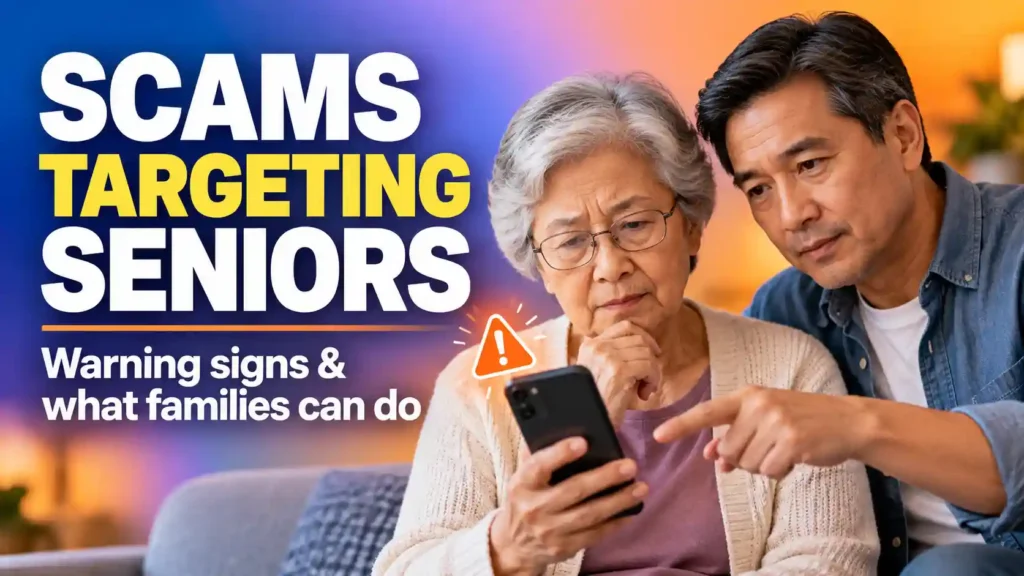
How Families Can Help Without Taking Over
Finding out that a parent or grandparent has been speaking to a scammer can be frightening. It is tempting to ask, “Why did you believe them?” That question may make the person less willing to tell you what else happened.
Begin with a response that keeps the conversation open:
“I’m glad you told me. Let’s check what happened together. Have you sent money or shared a code? We can call the bank now.”
Then listen. Ask what the person was told, what they did, and whether the caller can still reach them. The answers determine which provider needs to be contacted first.
Help with the practical work: finding the correct phone number, staying nearby during a call, writing down instructions, saving messages, or arranging help with a device. Explain each step rather than quietly taking control of the person’s accounts.
If Your Relative Is Still Talking to the Caller
Ask them to end the call before discussing whether the story is true. A simple sentence is enough: “We need to check this ourselves. We’ll call back if necessary.”
Then help them call the supposed relative, bank, or organization through a number obtained separately. If money has already been sent, contact the payment provider promptly.
Avoid turning verification into an argument about who is right. Focus on the one fact you can check next.
Make a Family Rule Before There Is an Emergency
Agree that an unexpected request for money on behalf of a relative will always be checked through a separate call. Tell family members that nobody will be offended by a callback, even during a real emergency.
You may also agree on a private family code. It can add a check, but it should never replace independent contact. If a caller knows the code, you still need to verify the situation separately.
Frequently Asked Questions About Scams Targeting Seniors
These answers cover concerns that often arise when a suspicious call or message feels convincing.
Are Older Adults the Only People Who Fall for These Scams?
No. Many of these tactics can work on people of any age. This guide focuses on stories and requests that may be used when targeting older adults.
What If the Caller Knows My Name and Address?
Those details alone do not prove who they are. End the conversation and contact the supposed person or organization through a route you obtained independently.
Should I Stay on the Call While Someone Else Checks?
End the call first. Staying connected gives the caller more time to pressure you or interfere with the check.
What If My Grandchild Does Not Answer?
Try another trusted contact, such as a parent or sibling. An unanswered call does not confirm the stranger’s emergency story.
Should I Pay a Fee to Get Scammed Money Back?
Be cautious of anyone who contacts you unexpectedly, guarantees recovery, and asks for an upfront fee. Contact the original payment provider directly to learn what options may apply.
Can Money Lost to a Scam Be Recovered?
Sometimes, depending on how you paid, when you report it, and the circumstances. Contact the payment provider immediately. Nobody can promise that a payment will be recovered.
A Rule to Use Before the Next Emergency
You cannot predict every story a scammer will tell. You can decide now how you will respond to an unexpected request.
End the conversation. Contact the real person or organization independently. Talk it through with someone you trust before sending money or sharing access.
And if you have already responded, focus on what you can protect next. A prompt call to the right provider matters more than finding the perfect explanation for how the scam happened.