Imagine two people receiving the exact same scam email.
Both are intelligent.
Both use the internet every day.
Both have online banking.
One clicks the link.
The other deletes the email without a second thought.
The difference isn’t luck.
It isn’t age.
It isn’t education.
It’s habit.
Scammers don’t usually look for the smartest person.
They look for the easiest person.
Someone who reacts quickly.
Someone who trusts too easily.
Someone who never verifies.
The encouraging news is that you don’t need expensive software or advanced cybersecurity knowledge to become a difficult target.
Often, a handful of small daily habits are enough to convince a scammer that you’re too much trouble.
The goal isn’t to become impossible to scam.
The goal is to become so cautious that criminals move on to someone else.
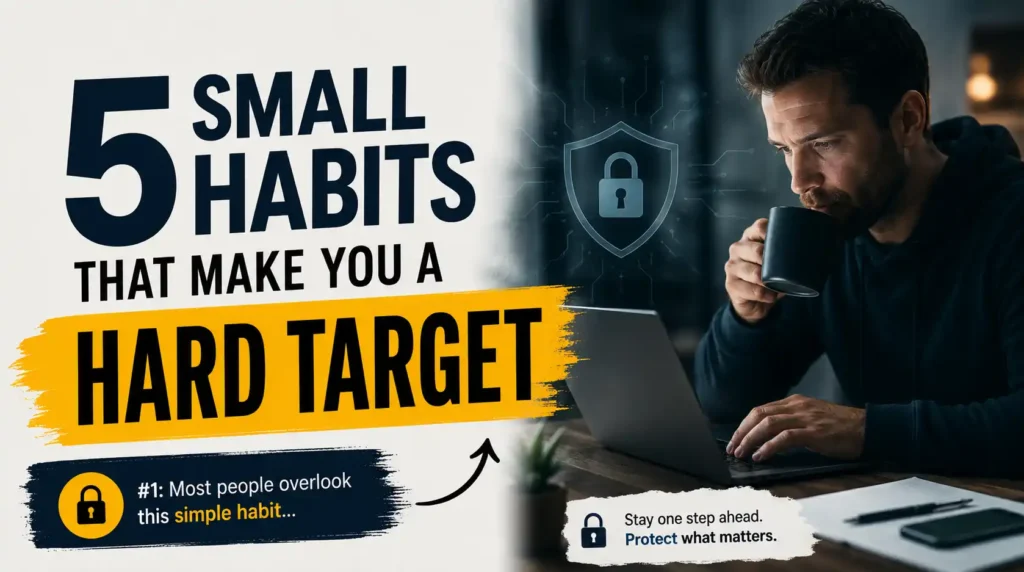
Here are five simple habits that can dramatically reduce your chances of becoming the next victim.
How to Protect Yourself From AI Scams: 17 Steps That Could Save Your Money and Identity
1. Slow Down Before You Click Anything
Every successful scam has one thing in common.
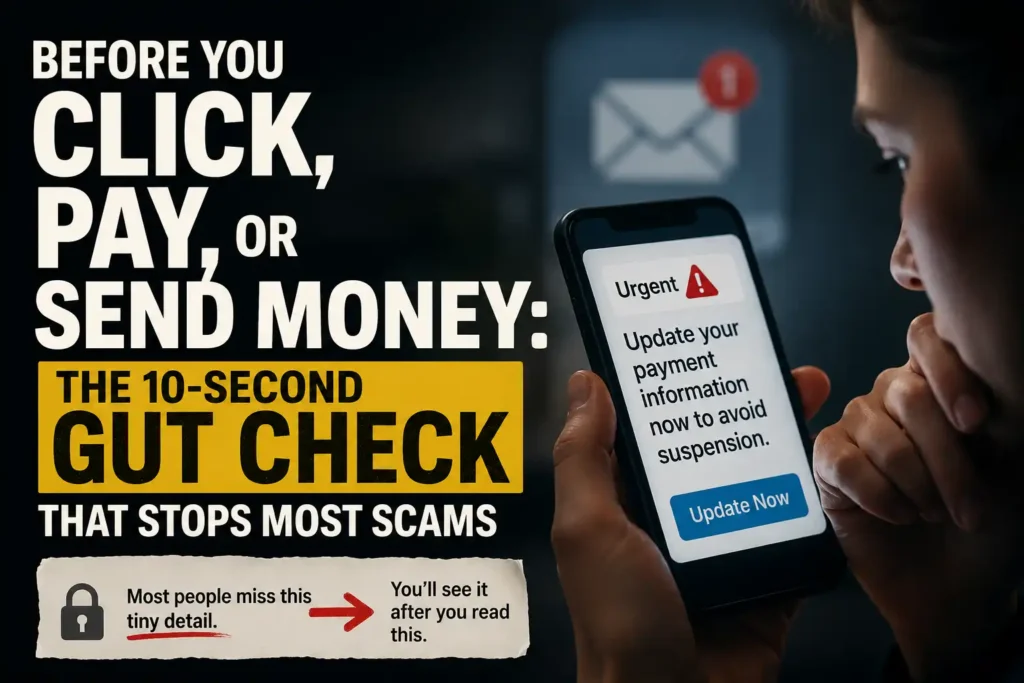
Before responding to an urgent message, use this 10-second GUT Check that catches most scams to examine the request calmly.
The victim acted before thinking.
Scammers know this.
That’s why they create urgency.
“Your account will be suspended.”
“Your package couldn’t be delivered.”
“Someone is using your bank card.”
“Claim your refund now.”
They’re trying to replace logic with emotion.
One simple habit changes everything.
Pause.
Even thirty seconds is often enough.
Ask yourself:
- Was I expecting this?
- Does this make sense?
- Why am I being rushed?
- Can I verify this another way?
That short pause interrupts the scammer’s plan.
You begin thinking instead of reacting.
And once you’re thinking clearly, scams become much easier to recognize.
2. Verify Before You Trust
Never trust someone simply because they say who they are.
Verification matters even more now that criminals can imitate familiar voices and produce believable messages. Learn how to spot an AI scam before trusting what you hear or see.
If your bank calls you…
Verify.
If someone claims to be from Amazon…
Verify.
If an email says it’s from Microsoft…
Verify.
If your “boss” asks you to buy gift cards…
Verify.
Scammers hate independent verification because it destroys their story.
Instead of using the phone number in the message, visit the company’s official website and contact them directly.
Those extra two minutes may save you thousands of dollars.
3. Treat Personal Information Like Cash
Imagine walking through a shopping mall carrying a bag filled with cash.
You probably wouldn’t hand it to the first stranger who asked.
Your personal information deserves the same level of protection.
Think carefully before sharing:
- Passwords
- Verification codes
- Banking details
- Passport information
- Driver’s licence
- National ID numbers
Every piece of information has value.
Sometimes criminals don’t need your money today.
They simply collect information they can use months later.
A good habit is to ask:
Does this person genuinely need this information?
If you’re unsure, don’t share it until you’ve verified the request independently.
4. Make “Something Feels Wrong” a Good Enough Reason to Stop
One sentence appears again and again in stories from scam victims.
“I knew something didn’t feel right.”
Yet they continued anyway.
Perhaps they didn’t want to appear rude.
Perhaps they were afraid of missing out.
Perhaps they didn’t want to disappoint someone.
Scammers rely on those emotions.
Your instincts aren’t always perfect.
But they often notice problems before your conscious mind does.
If something feels strange…
Stop.
Leave the website.
End the phone call.
Close the email.
You can always come back later.
A legitimate opportunity will still exist after you’ve verified it.
A scam usually won’t.
5. Keep Learning How Scammers Think
Technology changes.
Start with these 25 practical ways to protect your money and identity and turn individual precautions into a complete protection system.
Scammers change.
The psychological tricks rarely do.
Whether it’s:
- a fake online store
- a phishing email
- a romance scam
- an investment opportunity
- a fake customer support call
- an AI-generated voice message
the underlying goal remains the same:
Get you to trust before you verify.
That’s why one of the best habits you can develop is staying informed.
The more scam techniques you understand, the faster you’ll recognize familiar patterns.
Eventually, you’ll stop seeing individual scams.
You’ll start seeing the psychology behind them.
That’s when you become a much harder target.
A Small Habit That Could Save You Thousands
Here’s one habit you can start today.
Create a personal rule:
I never send money, click links, or share personal information until I’ve verified who I’m dealing with.
Simple.
Easy to remember.
Remarkably effective.
One personal rule like this can prevent dozens of different scams.
Why Scammers Prefer Easy Targets
Imagine you’re a scammer.
Would you spend an hour trying to convince someone who keeps asking questions?
Or would you move on to the person who immediately clicks the link?
Most criminals choose the easier option.
That’s exactly why these habits matter.
You’re not trying to eliminate scams.
You’re trying to become too much work.
Professional scammers contact hundreds—or even thousands—of potential victims.
If you slow them down, question them, and verify everything, many will simply abandon the attempt and look elsewhere.
Your Future Self Will Thank You
Most people only become interested in scam prevention after they’ve already lost money.
By then, they’re trying to recover.
You’re doing something much smarter.
You’re preparing before the crisis happens.
Think of these habits like wearing a seatbelt.
Most days, you won’t notice them.
But on the day something goes wrong, you’ll be incredibly glad they were already part of your routine.
Want to Become Even Harder to Scam?
These five habits are a powerful starting point.
But they’re only part of the picture.
Today’s scammers also use fake websites, phishing emails, QR-code scams, investment fraud, romance scams, fake customer support calls, identity theft, and AI-generated impersonation to trick unsuspecting people.
Final Thought
Scammers are constantly searching for people who are distracted, rushed, or willing to trust without verifying.
Your advantage isn’t being a technology expert.
It’s building simple habits that interrupt a scam before it succeeds.
Pause before clicking.
Verify before trusting.
Protect your personal information.
Listen to your instincts.
Keep learning.
These habits take very little time, but together they create something every scammer hates:
A prepared target.
Disclosure: This article may contain affiliate links. If you choose to use a provider through one of these links, we may earn a commission at no additional cost to you. These commissions help support the ongoing maintenance and operation of our website so we can continue providing helpful, up-to-date content.