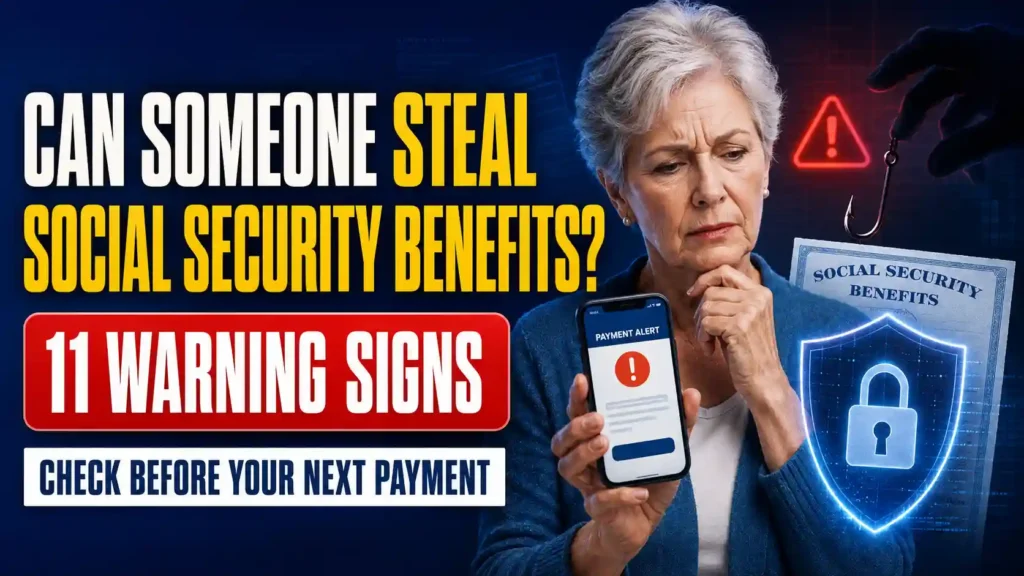
Yes, someone can steal your Social Security benefits.
A criminal may redirect your direct deposit, take over your online account, steal money from the bank account receiving your benefits or trick you into transferring the payment yourself. A dishonest caregiver or representative payee may also misuse benefits intended for your care.
The thief does not normally steal your legal right to receive Social Security. Instead, the person steals individual payments or gains control over where future benefits are sent.
That distinction offers little comfort when rent is due and your expected payment is missing. However, it tells you something important: if you act quickly, you may be able to correct the account, protect future deposits and investigate the stolen money.
Do not wait for a second payment to disappear.
This guide explains how Social Security benefit theft happens, the warning signs that expose it and exactly whom to contact based on where the money went.
What Can—and Cannot—Be Stolen?
Someone who obtains your personal information does not automatically become entitled to your retirement, disability or survivor benefits.
However, a criminal may impersonate you long enough to interfere with your account or intercept the money after it is issued.
| What a thief may be able to do | What a thief cannot simply do |
|---|---|
| Attempt to access your online account | Erase your work history |
| Change your contact information | Legally become you |
| Redirect an upcoming direct deposit | Automatically take away your eligibility |
| Steal money after it reaches your bank | Permanently cancel your Social Security number |
| Trick you into transferring your payment | Make an arrest disappear in exchange for gift cards |
| Misuse benefits managed on your behalf | Protect your money through a secret government account |
| Steal or fraudulently deposit a paper check | Charge you a private fee to “unlock” a legitimate benefit increase |
In other words, your eligibility may remain intact while the money is delivered to the wrong person.
That is why a missing payment should be investigated rather than dismissed as a banking delay.
11 Warning Signs Someone May Be Stealing Your Social Security Benefits
Benefit theft is easiest to stop before several deposits disappear. Watch for these signs even when your current payment appears normal.
1. Your Expected Payment Does Not Arrive
A missing payment does not always mean theft. The scheduled date may have changed because of a weekend or holiday, or the bank may still be processing the deposit.
Nevertheless, you should investigate promptly when a normally reliable payment fails to appear.
Check the payment date, pending transactions and recent account activity. Then ask your bank whether the deposit was received, rejected, returned or removed after arriving.
2. Your Direct-Deposit Information Changes
An unauthorized change to your bank information is one of the strongest signs that someone may be trying to steal your benefits.
You may receive a notice about a new account even though you made no request.
Do not wait to see where the next payment goes. Access your Social Security account through ssa.gov and call 1-800-772-1213 using a call you initiate yourself.
3. You Receive a Password-Reset Message You Did Not Request
An unexpected password-reset email or security code may mean someone is attempting to enter your account.
Do not click the link in the message. Open a new browser window, type ssa.gov yourself and check the account independently.
Then secure the email account connected to it.
4. Your Usual Password Suddenly Stops Working
A failed login may result from a typing mistake or temporary lockout. It may also mean someone changed your password.
Use the legitimate recovery process. If you cannot regain access, call 1-800-772-1213 and ask for help with your account.
Never call a customer-support number included in an unsolicited email, text message or search advertisement.
5. Your Address, Email or Telephone Number Is Different
Criminals may change your contact information before redirecting a payment.
This helps them intercept alerts, receive password-reset messages and prevent you from seeing notices about additional account changes.
Review every contact detail—not just the bank information.
6. You Receive an Alert About an Action You Did Not Take
Treat any unexpected notice about the following as urgent:
- A new online account
- A direct-deposit change
- A mailing-address change
- A password reset
- A new telephone number
- A benefit application
- An identity-verification attempt
- A one-time security code
The notice itself could also be fraudulent. Therefore, do not click its links. Visit ssa.gov independently.
7. Your Bank Shows an Unfamiliar Withdrawal or Transfer
Sometimes the benefit reaches the correct account, but someone steals it afterward.
Look for:
- ATM withdrawals you did not make
- Transfers to unfamiliar accounts
- Debit-card purchases you do not recognize
- New payment-app recipients
- Changes to your online banking profile
- New devices accessing the account
Contact your bank’s fraud department immediately if the money was deposited and then removed without your authorization.
8. Your Direct Express Card Stops Working or Shows Missing Money
If you receive benefits through Direct Express, the Social Security record may still show that the payment was issued correctly.
However, a thief may gain access to your card number, PIN or account and remove the funds afterward.
Warning signs include:
- Purchases you do not recognize
- ATM withdrawals you did not make
- A card that unexpectedly stops working
- A changed PIN
- A replacement card you did not request
- Contact information you did not change
Use the customer-service number printed on the back of your actual card. Do not use a number supplied in a suspicious text, email or advertisement.
9. Your Representative Payee Cannot Explain the Spending
A representative payee receives and manages benefits for someone who needs assistance.
That money must be used for the beneficiary’s needs. Warning signs of misuse include:
- Rent or utility bills remain unpaid.
- The beneficiary lacks sufficient food or clothing.
- Medical needs are neglected.
- Money disappears without explanation.
- The payee refuses to show how funds are being used.
- The payee uses the benefits for personal shopping, travel or debts.
- The beneficiary is threatened for asking questions.
A personal relationship does not excuse financial exploitation.
10. Someone Pressures You to Share a Verification Code
A one-time code can allow a criminal to reset your password, enter an account, add a new device or change direct-deposit information.
Never give a security code to an unexpected caller.
A scammer may claim the code is needed to cancel fraud or protect your benefits. In reality, the person may be using it to complete the unauthorized action.
11. Someone Tells You to Move Your Benefits Into a “Safe” Account
A caller may claim your bank account has been compromised and your money must be moved to a protected government account.
The supposed safe account belongs to the criminal.
No legitimate employee will protect your Social Security benefits by ordering you to:
- Buy gift cards
- Send cryptocurrency
- Purchase gold
- Mail cash
- Use a payment app
- Transfer money to a secret account
- Meet a courier
- Keep the transaction confidential
Read How to Spot Social Security Scams Before Your Benefits or Identity Are Stolen if a caller is threatening arrest, benefit suspension or immediate legal action.
Is Your Payment Late, Stopped or Stolen?
A missing payment is frightening, but it does not automatically prove fraud.
Several situations can produce the same symptom.
| What you notice | Possible explanation | What to check first |
|---|---|---|
| Payment has not arrived | Payment schedule, holiday or processing delay | Confirm the expected date |
| Bank has no record of the deposit | Payment issue, rejected deposit or redirected payment | Check your Social Security account |
| Deposit arrived and disappeared | Bank-account or card fraud | Contact the bank or card provider |
| Benefit amount is smaller | Deduction, adjustment or withholding | Review your benefit notice |
| Payments stopped after a notice | Eligibility or administrative issue | Read the notice and call Social Security |
| Direct deposit changed unexpectedly | Account takeover or identity theft | Contact Social Security immediately |
| Address and bank changed together | Serious account-compromise risk | Secure the account and email |
| Representative payee received the money but bills remain unpaid | Possible benefit misuse | Request records and report concerns |
The important question is not merely, “Where is my payment?”
Ask, “At what point did the money disappear?”
That answer determines your next move.
Who Should You Contact First?
| What happened | First contact | Next action |
|---|---|---|
| Payment never reached your bank | Social Security | Verify the payment destination |
| Direct deposit was changed | Social Security | Secure your email and bank accounts |
| Payment reached your bank and was withdrawn | Bank fraud department | Change banking credentials |
| Money disappeared from Direct Express | Direct Express customer service | Secure the card and PIN |
| A paper check never arrived | Social Security | Investigate mail theft if necessary |
| A representative payee misused the funds | Social Security fraud reporting | Document unmet needs and spending |
| You transferred money to a scammer | Payment provider | Attempt to stop or recall the transaction |
| Your identity was used elsewhere | Identity-theft reporting and credit bureaus | Freeze your credit files |
| A stranger accessed your device | Bank and account providers | Disconnect and secure the device |
Contacting the wrong organization first can waste valuable time. Determine whether the payment failed before deposit, disappeared after deposit or was voluntarily transferred because of deception.
How Criminals Steal Social Security Benefits
Benefit theft does not happen through one single method. The criminal’s approach depends on what information or access is available.
1. Online Account Takeover
An account takeover occurs when someone gains unauthorized access to your personal Social Security account.
The criminal may obtain your credentials through:
- A phishing email
- A fraudulent login page
- A fake security text
- Password reuse
- A compromised email account
- Malicious software
- A telephone impersonation scam
- Information exposed in a data breach
Once inside, the person may review your records, change contact information or attempt to redirect future payments.
A criminal does not necessarily need to steal your Social Security password directly. If your email is compromised, the person may try to reset the password and intercept the recovery message.
That is why your email deserves the same protection as your benefit account.
2. Direct-Deposit Redirection
Direct-deposit theft happens when a criminal changes the bank account receiving your benefits.
If the change succeeds, your next payment may be deposited into:
- A bank account opened with stolen information
- A prepaid debit account
- An account controlled by the thief
- Another victim’s compromised account
- An account belonging to an accomplice
The payment may continue going to the fraudulent destination until you discover and correct the change.
An alert about a direct-deposit update should never be ignored merely because the current month’s payment arrived. The change may affect a future deposit.
3. Bank-Account Theft
Your Social Security account can remain secure while the deposited money is stolen from your bank.
This may happen after someone obtains your:
- Banking password
- Debit-card information
- Personal identification number
- One-time bank code
- Checkbook
- Mobile device
- Payment-app access
The payment record may show that your benefits were delivered correctly. The theft occurred afterward.
In that situation, the bank’s fraud department should be your first call.
4. Direct Express Card Fraud
A criminal may steal the card, copy its details, obtain the PIN or trick the cardholder into revealing account information.
Someone pretending to offer card support may request a security code or instruct the beneficiary to move money.
If you notice unauthorized activity:
- Use the number on the back of the card.
- Report the transactions immediately.
- Ask whether the card should be blocked and replaced.
- Change the PIN and other security information.
- Review recent transactions for smaller test charges.
- Keep the report or claim number.
Do not rely on a telephone number appearing in a text message or online advertisement.
5. Benefits Transferred Under Pressure
A scammer may persuade you to move your own money.
The person may claim:
- You were overpaid.
- Your Social Security number was suspended.
- Your bank account is under investigation.
- Your benefits are connected to a crime.
- You must return an accidental payment.
- A penalty must be paid before midnight.
- Your money must be moved for protection.
The criminal may remain on the telephone while you visit a bank, buy gift cards or send cryptocurrency.
If the person tells you what to say when a bank employee asks questions, you are almost certainly being manipulated.
6. Representative-Payee Misuse
A representative payee has a duty to use benefits for the beneficiary’s present and reasonably foreseeable needs.
Misuse can include:
- Paying the payee’s personal expenses
- Withholding necessary food or medical care
- Taking cash without records
- Using benefits to pay the payee’s debts
- Keeping money after the beneficiary dies
- Hiding account information
- Threatening the beneficiary into silence
Concern about misuse should not be dismissed as a private family dispute. It directly affects the beneficiary’s safety and financial well-being.
7. Paper-Check and Mail Theft
Although electronic payments are far more common, a paper check can still be stolen or fraudulently deposited.
A thief may:
- Remove it from a mailbox
- Redirect the beneficiary’s mail
- Forge the endorsement
- Alter the payment
- Deposit it using a fraudulent account
Secure your mailbox and investigate unexplained address changes or missing notices.
8. Financial Exploitation by Someone Close to You
A relative, caregiver, partner or household member may already have access to your:
- Phone
- Bank cards
- Passwords
- Identification documents
- Checkbook
- Online accounts
The person may make unauthorized withdrawals, pressure you to hand over the money or change your banking information.
This can be harder to confront than a stranger’s scam because the victim may depend on the offender for housing, transportation or care.
However, taking or controlling another person’s benefits without permission is still financial exploitation.
How Does a Thief Obtain Enough Information?
A caller knowing your name, address or part of your Social Security number may appear legitimate.
However, the information may come from:
- A data breach
- Stolen mail
- Public records
- Social media
- A compromised email account
- A fake application form
- An earlier scam
- Malware
- A stolen device
- Someone with legitimate access to your documents
Criminals use information they already possess to extract whatever is missing.
For example, a caller who knows your bank’s name may ask you to confirm the account number. Someone with the last four digits of your Social Security number may request the first five.
Never complete the missing pieces for someone who contacted you unexpectedly.
What to Do If Your Social Security Payment Is Missing
Do not assume the payment was stolen until you determine where it went.
Step 1: Confirm the Payment Date
Verify that the payment was actually due.
Weekends, holidays and your type of benefit can affect when a deposit appears. Check whether the transaction is pending or displayed under an unfamiliar description.
Step 2: Contact Your Bank or Card Provider
Ask whether the payment:
- Was received
- Is pending
- Was rejected
- Was returned
- Entered the account and was later withdrawn
- Was deposited under a different description
If the money arrived and then disappeared, ask for the fraud department.
Step 3: Check Your Social Security Account
Using a trusted device, type ssa.gov into your browser and sign in.
Review:
- Direct-deposit information
- Mailing address
- Email address
- Telephone number
- Benefit details
- Recent notices
Do not use a link from an unexpected text or email.
Step 4: Contact Social Security
Call 1-800-772-1213 or locate an office through ssa.gov.
Explain exactly what happened. Say whether the payment never arrived, your direct deposit changed, your account is inaccessible or you suspect representative-payee misuse.
Step 5: Document Everything
Record:
- The missing payment date
- The expected amount
- Unauthorized account changes
- Bank transactions
- When you discovered the problem
- Whom you contacted
- Report and confirmation numbers
- Instructions you received
Screenshots and written records can help you explain the case consistently.
What to Do If Your Direct Deposit Was Changed
An unauthorized direct-deposit change requires immediate action.
Contact Social Security First
Report the change through a call you initiate.
Ask how to:
- Correct the banking destination
- Protect future payments
- Investigate the missing deposit
- Secure your record
- Block electronic access if necessary
Do not assume changing the bank information automatically resolves every security problem. The criminal may still have access to your email or online account.
Contact Your Bank
Ask the bank to review:
- Recent login activity
- New devices
- Password changes
- Contact-information changes
- Unauthorized transfers
- New linked accounts or payees
Secure Your Email
From a trusted device:
- Change your password.
- Turn on multi-factor authentication.
- Sign out of unfamiliar devices.
- Review recovery information.
- Check for automatic forwarding rules.
- Look for deleted security messages.
Change Reused Passwords
If the compromised password was used elsewhere, change it everywhere.
Start with email, banking, tax, health-insurance and payment accounts.
Ask About Protective Account Blocks
If your identity has been compromised, ask whether you should block electronic access or restrict direct-deposit changes.
Understand the tradeoff: a strong block can stop unauthorized online activity, but it may also prevent you from using those services until you complete additional identity verification.
Can Stolen Social Security Benefits Be Recovered?
Possibly, but recovery depends on where the theft occurred and how quickly you respond.
No one should promise automatic reimbursement before the case is investigated.
If the Payment Was Redirected
Report the unauthorized change and missing payment to Social Security.
You may need to provide identity documents, bank records or other evidence. Ask what will happen to future deposits and what steps are required to investigate the missing money.
If the Money Was Stolen From Your Bank
Contact the bank’s fraud department immediately.
Explain whether the loss involved:
- An unauthorized transfer
- A debit-card transaction
- An ATM withdrawal
- A payment app
- A check
- Online account access
Recovery may depend on the transaction type and how quickly it was reported.
If Direct Express Money Was Stolen
Report the unauthorized transactions using the telephone number on your card.
Keep the claim number, requested documents and written responses. Follow up if you do not receive the promised communication.
If You Sent the Money to a Scammer
Contact the company that processed the payment immediately.
That may be:
- Your bank
- A wire-transfer company
- A payment app
- A gift-card issuer
- A cryptocurrency exchange
- A debit- or credit-card company
Ask whether the payment can be stopped, recalled, frozen or disputed.
Recovery is not guaranteed, but acting immediately gives you the best chance.
If a Representative Payee Misused the Benefits
Report the suspected misuse and explain how the beneficiary’s needs were neglected.
Provide whatever evidence is available, such as:
- Unpaid bills
- Missing necessities
- Bank records
- Receipts
- Messages
- Witness statements
- Photographs of unsafe living conditions
Ask how the payee’s suitability will be reviewed and whether another person should manage future benefits.
Your First 24-Hour Emergency Plan
When Social Security benefits are stolen, you may be dealing with both payment theft and identity theft.
During the First 10 Minutes
- End contact with the suspected scammer.
- Try to stop any pending transfer.
- Disconnect any device controlled remotely.
- Preserve messages, receipts and transaction information.
During the First Hour
- Secure your email.
- Change compromised passwords.
- Contact your bank or card provider.
- Review your Social Security account.
- Remove unknown devices from important accounts.
During the First 24 Hours
- Report unauthorized direct-deposit changes.
- Freeze your credit if identifying information was exposed.
- Review your credit reports.
- Report identity theft at
IdentityTheft.govwhen appropriate. - Report Social Security-related fraud through
ssa.gov/fraud. - Create a written record of every action.
During the Following Weeks
Continue watching your:
- Social Security account
- Bank statements
- Direct Express activity
- Credit reports
- Credit-card accounts
- Tax records
- Health-insurance statements
- Physical mail
- Email alerts
A criminal may wait before using stolen information again.
Follow this Identity Theft Recovery Checklist so that no exposed account, device or document is overlooked.
How to Protect Your Social Security Benefits
You cannot eliminate every risk, but you can make your account much harder to steal.
Create Your Online Account Before a Criminal Tries
Establishing your own account allows you to review information and notice unauthorized changes.
Always begin at ssa.gov. Do not register through an unsolicited link.
Use a Unique Password
Your Social Security password should not be used for email, banking, shopping or social media.
A password leaked by an unrelated website may be tested automatically against your other accounts.
Turn On Multi-Factor Authentication
Multi-factor authentication can stop someone who has only your password.
However, never share the resulting code with an unexpected caller. The code may be the final barrier preventing an account takeover.
Protect Your Email Account
Use a strong, unique password and enable multi-factor authentication.
Regularly review:
- Signed-in devices
- Recovery telephone numbers
- Recovery email addresses
- Forwarding rules
- Recent security events
Your email may control password recovery for multiple financial and government accounts.
Monitor Direct-Deposit Information
Periodically check that your bank information, address, email and telephone number remain correct.
Do not wait until a payment goes missing.
Set Up Bank and Card Alerts
Request notifications for:
- Deposits
- Withdrawals
- Transfers
- New payees
- New devices
- Password changes
- Contact-information changes
Immediate alerts can expose suspicious activity before the entire payment disappears.
Keep Your Card and PIN Separate
Do not write your PIN on your Direct Express or debit card.
Never give the PIN to a caller, even if the person claims to represent card support, your bank or Social Security.
Protect Physical Documents
Store your Social Security card, benefit notices and financial records securely.
Do not routinely carry your Social Security card. Shred sensitive paperwork before disposing of it.
Secure Your Mail
Collect mail promptly and consider a locked mailbox.
Investigate missing statements, unexpected address changes and mail from unfamiliar financial institutions.
Freeze Your Credit When Appropriate
A credit freeze can make it harder for an identity thief to open new credit accounts in your name.
It does not stop your Social Security payments or reduce your credit score.
Limit Remote Access to Your Devices
Do not install software because an unexpected caller claims your account has been hacked.
A person who controls your screen may watch you enter passwords, read your security codes and access your financial accounts.
Create a Family Verification Rule
Agree that no family member will move money, share a code or change direct-deposit information because of an unexpected call without first speaking to another trusted person.
This simple pause can defeat even a convincing scam.
The warning signs in How to Know If You Are Talking to a Scammer can help your family recognize manipulation before anyone follows dangerous instructions.
What Social Security Will Not Require You to Do
Be suspicious of anyone who orders you to:
- Transfer money to protect it
- Pay with gift cards
- Send cryptocurrency
- Buy gold or other precious metals
- Mail cash
- Meet a courier
- Reveal your password
- Share an unexpected security code
- Keep the matter secret
- Remain on the telephone
- Pay to reactivate your Social Security number
- Move benefits into a government-protected account
Caller ID, an official-looking letter, a badge photograph or a case number does not make these instructions legitimate.
Frequently Asked Questions
1. Can someone steal your Social Security benefits?
Yes. A criminal may redirect your direct deposit, take over your online account, steal the money after it reaches your bank or trick you into transferring the payment.
2. Can someone steal my eligibility for Social Security?
A thief does not automatically acquire your legal eligibility. The more immediate risk is that the person intercepts individual payments or gains control of your account.
3. Can someone steal benefits using only my Social Security number?
The number alone may not be sufficient, but it can be combined with your date of birth, address, password, bank information or security codes. Treat exposure seriously.
4. Can someone change my Social Security direct deposit?
A criminal with enough personal information or account access may attempt an unauthorized change. Monitor your account and respond immediately to any change notice you did not expect.
5. How do I know if my direct deposit was changed?
Access your account through ssa.gov and review the recorded bank information. Investigate any unexpected notice involving your deposit, address, email or telephone number.
6. What should I do if my payment does not arrive?
Confirm the scheduled payment date, ask your bank whether the deposit was received and review your online Social Security account. If the payment is genuinely missing, call 1-800-772-1213.
7. How long should I wait before reporting a missing payment?
First confirm that the scheduled date has passed and check with your bank. Once you establish that the payment is missing, report it promptly.
8. Can a family member steal my Social Security benefits?
Yes. A relative or caregiver with access to your mail, cards, passwords, phone or bank account may misuse the money. The relationship does not make unauthorized use acceptable.
9. Can a representative payee steal a beneficiary’s money?
A representative payee can misuse benefits by spending them for purposes unrelated to the beneficiary’s needs. Suspected misuse should be reported.
10. What are the signs of representative-payee misuse?
Warning signs include unpaid necessities, unexplained withdrawals, refusal to provide records, personal spending by the payee and threats against the beneficiary.
11. Can benefits be stolen from a Direct Express card?
Yes. A criminal may steal the card, obtain its number and PIN or gain unauthorized account access. Report suspicious activity through the number printed on the card.
12. What if my Social Security payment reached my bank and then disappeared?
Contact the bank’s fraud department. The theft likely occurred after the payment was deposited, making the bank account or card the immediate point of investigation.
13. Can stolen Social Security benefits be replaced?
A missing payment may be investigated, but replacement is not automatic in every case. Report the loss immediately and provide any requested documentation.
14. Will I receive a warning when my direct deposit changes?
You may receive an alert or notice. Keep your email, telephone number and mailing address accurate so you do not miss important account messages.
15. What if I receive a direct-deposit change notice I did not request?
Do not click any link in the message. Check your account independently and call Social Security immediately.
16. Can someone create a Social Security account in my name?
An identity thief may attempt to register or access an account using stolen information. Creating and protecting your own account helps reduce the risk.
17. What should I do if my password stops working?
Use the recovery process reached through ssa.gov. If you suspect unauthorized access, secure the associated email and call 1-800-772-1213.
18. Should I share a one-time code with a caller?
Never share a code with an unexpected caller. Only use a code during a legitimate action you initiated through independently verified contact information.
19. Can someone steal my benefits without entering my Social Security account?
Yes. The person may compromise your bank account, Direct Express card, debit card, mailbox or device without accessing your Social Security account.
20. Will freezing my credit protect my monthly benefits?
A credit freeze does not directly control benefit payments, but it can make it harder for someone to open new credit accounts using your identity.
21. Will a credit freeze stop my Social Security payments?
No. Freezing your credit does not stop existing benefits or lower your credit score.
22. Should I change my Social Security number after benefit theft?
A new number is not automatically issued because your information was exposed. Begin with account security, monitoring, credit freezes and identity-theft reporting.
23. What should I do if a scammer accessed my computer?
Disconnect the device from the internet. Use another trusted device to secure your email, banking and Social Security accounts. Remove the remote-access software and run a reputable security scan.
24. Where should I report stolen Social Security benefits?
Contact Social Security through ssa.gov or 1-800-772-1213. Report related fraud through ssa.gov/fraud and broader identity theft through IdentityTheft.gov.
25. What is the best way to prevent Social Security benefit theft?
Create and monitor your online account, secure your email, use unique passwords, enable multi-factor authentication, protect verification codes and investigate every unauthorized change immediately.
Final Thoughts
Can someone steal your Social Security benefits? Yes—but the criminal usually needs access to your personal information, online account, bank account, payment card, mail or trust.
Each of those access points gives you an opportunity to stop the theft.
Remember one rule:
Find out where the payment disappeared.
If the money never reached your bank, contact Social Security. If it arrived and was later removed, contact the bank or card provider. If you transferred it because of a scam, contact the payment company immediately. If a representative payee misused it, document the neglect and report the misuse.
Most importantly, do not wait for another monthly payment to vanish.
A missing deposit, unauthorized direct-deposit change, unexpected security code or unfamiliar withdrawal is not something to “watch for a while.” It is a signal to secure your accounts and act immediately.
Pingback: How to Spot Social Security Scams Before Your Benefits, Savings or Identity Are Stolen: 17 Red Flags You Should Never Ignore - SafeGuard Press