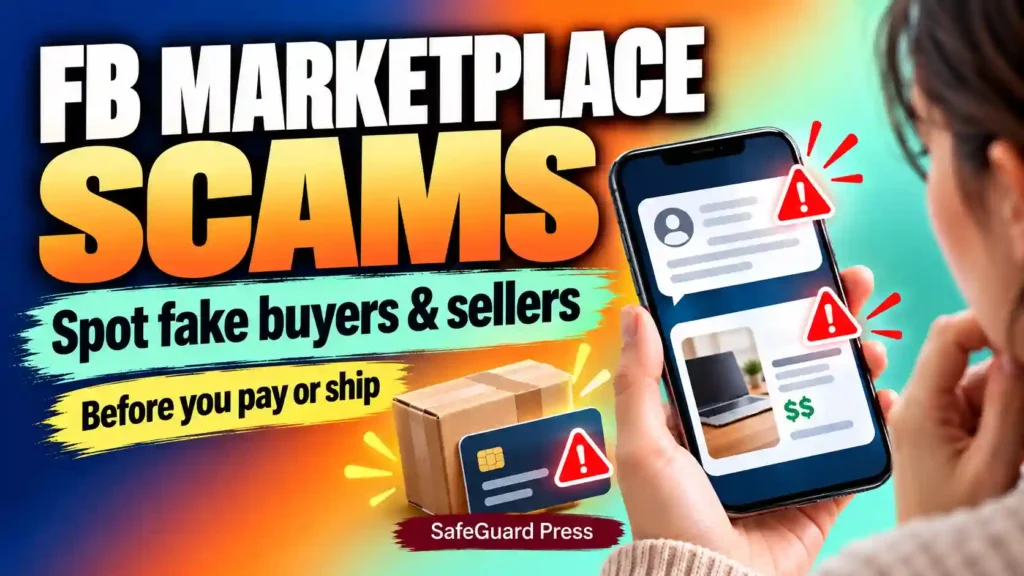
The buyer agrees to your price almost immediately. They send a screenshot showing they have paid, then say their brother is already on his way to collect the item.
You open your bank app. No payment appears.
“Don’t worry,” the buyer replies. “It’s processing. He’ll be there in five minutes.”
Now the pressure is on you to trust their screenshot instead of your own account.
A different FB Marketplace scam starts with a bargain you want to buy. The seller says they will hold it for a small deposit. You send the money, then the listing disappears.
FB Marketplace scams target buyers and sellers at different points in a sale. Buyers can lose money before receiving an item. Sellers can lose an item before receiving payment. Both can be tricked into sharing a security code or entering details on a fake website.
The way to protect yourself is to identify what you are being asked to trust—and check it without relying on the other person’s screenshot, link or promise.
What Are the Most Common FB Marketplace Scams?
Some Marketplace scams use fake listings. Others use fake payments, invented fees or requests for private information. Use this table to find the situation closest to yours.
| If someone says… | The possible trap | Check this before acting |
|---|---|---|
| “Send a deposit and I’ll reserve it.” | You may be paying for an item you cannot verify. | Can you inspect the item or independently confirm the purchase arrangement? |
| “I’ve paid. Here’s the screenshot.” | The image may not reflect a real payment. | Does the transaction appear in your own payment account? |
| “Your account needs an upgrade to receive my money.” | The payment notice or fee may be invented. | Does your payment provider show this requirement when you contact it directly? |
| “My courier will collect it. Use this link.” | The link may collect your card or login details. | Can you verify the courier and arrangement independently? |
| “Give me the code to prove you’re real.” | The code may be used to register or access an account. | What service sent the code? Keep it to yourself. |
| “Pay now or I’ll sell it to someone else.” | The deadline may stop you from checking the item. | Can you verify the deal before the deadline? If not, let it go. |
A suspicious request does not mean you must investigate the stranger until you can prove their intentions. You can simply refuse a transaction that you cannot verify.
How Do FB Marketplace Scams Work?
A Marketplace listing introduces two people, but it does not settle every part of their deal. They still need to agree on the item, its condition, the price, payment and delivery or pickup.
A scammer exploits one of those steps. A fake seller asks you to pay before you discover they do not have the item. A fake buyer wants you to release an item before you discover they have not paid. Another person sends a payment or courier link and hopes you will enter information without checking where it leads.
The account may look normal. It could have photographs, friends and years of posts. Those details can help you examine a person, but they do not show that today’s listing is genuine or that today’s payment was made. If the profile raises questions, read Signs of a Scammer on Facebook. Then check the transaction itself.
The question to keep asking is: What can I confirm without using evidence controlled by the person asking me to pay or hand over the item?
FB Marketplace Scams That Target Buyers
When you are buying, your main decision is whether to part with money before you can confirm what you will receive. These are the situations where that decision becomes difficult.
The deposit to “hold” an item
You see a games console at a good price. The seller replies quickly:
“Three other people want it. Send $30 and I’ll mark it reserved.”
The amount seems small. You may think losing $30 would be better than missing the console. But you have not established that the seller has it, that it works or that they intend to meet you.
Ask whether you can inspect the console and pay when the purchase is completed. If the seller will ship it, find out exactly how you would pay and what options you would have if it never arrives.
Walk away if the seller demands a deposit while preventing every reasonable check. A bargain is not worth buying if the item exists only in a photograph.
The listing copied from someone else
A listing has attractive photographs and a detailed description. When you ask about a scratch shown in one picture, the seller cannot explain it. When you ask for another photograph, they say the item is already packed.
The photographs may belong to another seller.
Search the images to see whether they appear in other listings. Ask questions specific to the item: What is included? What does not work? Can you see or test it before paying?
Finding the same photographs elsewhere is a reason to investigate. Finding no matches is not proof that the seller is genuine. Your strongest check is whether you can verify the item and the terms of the sale.
The item is real but not as described
Not every bad Marketplace deal involves an item that never existed. You might arrive to find a different model, undisclosed damage or missing parts.
Suppose a seller describes a phone as fully working. Before meeting, ask whether the screen, cameras, charging port and other features you care about work. At the meeting, inspect the actual phone. Do not let the effort of travelling make you accept a condition you would have rejected in the listing.
Keep important answers in the conversation. If the item differs materially from what was agreed, leave without paying.
The seller asks you to change payment methods
You agreed on one way to complete the purchase. Just before payment, the seller says that method is unavailable and asks for a direct transfer to another account.
First, establish who will receive the money and what would happen if the item is never delivered. Do not assume a purchase has the same protections simply because you found the listing on Facebook. Protection depends on the specific checkout and payment arrangement. A local pickup paid person to person is not the same as an eligible purchase made through checkout.
If the seller will not allow you time to understand the new arrangement, choose another listing.
The deal changes just before pickup or delivery
You agree to buy a table for a set price. Then the seller says a relative has it, adds a delivery fee and gives you a new name for payment.
Any one change could have an innocent explanation. Several changes also mean the deal you checked is no longer the deal you are being offered.
Pause and verify the new details. Who has the table? Can you inspect it? Why has the payment recipient changed? Do not send money to keep the transaction moving while those questions remain unanswered.
FB Marketplace Scams That Target Sellers
A seller can be scammed without paying for anything. The person may take the item by making an unpaid transaction look complete.
The fake payment screenshot
A buyer sends a screenshot showing the agreed amount. They immediately arrange pickup or ask you to ship.
Open your own bank or payment app. Check the account where the money should arrive. If you cannot find or confirm the transaction, do not release the item. An image in the buyer’s chat is not a substitute for a payment you can verify.
You can reply:
“I’ll arrange pickup once I can confirm the payment in my account.”
You do not need to debate whether the screenshot is fake. Set the condition for handover and stick to it.
The “pay to receive payment” story
The buyer claims to have paid, but a message says your account must be upgraded before the money can reach you. It may ask for a fee or claim the buyer sent extra money that you must return first.
Stop. Open your payment service through the app or website you normally use. If you need help, contact the provider using details you find independently.
Do not send money to a stranger because an unexpected message says it will release the price of your item. If the buyer insists the problem is real, they can wait while you check it directly.
The overpayment and refund request
You list a chair for $150. The buyer claims to have sent $250 and wants you to refund the extra $100 immediately.
Do not make a separate payment based on their message or screenshot. Check whether anything arrived in your account. If a payment genuinely appears to have been made in error, ask your payment provider how to handle it through its process.
Why does the distinction matter? The amount you send as a “refund” may leave your account even if the original payment was fake, mistaken or later disputed. Do not allow the buyer to set both the deadline and the destination for a repayment.
The courier who requires your card details
The buyer says a courier will collect the item. Then you receive a link to confirm pickup. The page asks for your card number, banking login or a small “insurance” payment.
Do not enter the details. Find the courier’s contact information yourself and ask whether the arrangement exists and what, if anything, the seller must do.
If collection depends on a fee or a payment link sent by a Marketplace stranger, pause the transaction. Keep the item until you understand how you will actually be paid.
The verification code request
A buyer asks for your phone number to arrange collection. Soon afterward, a code arrives by text. They ask you to read it back to prove you are a real seller.
You may choose to share a phone number for a genuine pickup, but you should never give the buyer a verification code. The code belongs to the account or service that sent it. The buyer has no need to know it to purchase your item.
If a code arrives unexpectedly, read the message carefully to see which service sent it. Do not share it, and do not approve a login or registration request you did not initiate.
How to Spot FB Marketplace Scams Without Guessing From a Profile
A new account can belong to an honest person. An old account can be controlled by someone dishonest. Poor spelling is not proof of fraud, and polished messages are not proof of safety.
Focus on the actions required to complete the deal.
Can you check the item?
If you are buying locally, can you inspect or test what you intend to buy? Does the seller answer reasonable questions about its condition? If it is being shipped, can you establish what is actually being offered and what happens if it does not arrive?
A photograph shows what someone chose to display. It does not confirm what will be handed over or shipped.
Can you check the payment?
If you are selling, does the payment appear where it should—in your account, checked by you? If its status is unclear, can your provider explain it through an official channel?
Do not substitute an email, screenshot or buyer’s assurance for your own check.
Can you check the delivery or pickup plan?
Who is collecting or shipping the item? Where will you meet? Has the arrangement changed? If a courier is involved, can you verify it without clicking the other person’s link?
A vague plan creates room for a sudden fee, a new payment recipient or a person arriving to collect an item you have not been paid for.
Are you being allowed time to check?
A seller may have other interested buyers. A buyer may have a tight schedule. Neither fact obliges you to bypass a check involving your money, item or personal information.
“I need to verify the payment first” is a reasonable response. So is “I need to inspect the item before I pay.” If that ends the deal, you have avoided taking a risk you could not assess.
A Safer Way to Buy or Sell on FB Marketplace
Keep the process simple enough that you know what must happen next.
If you are buying locally:
- Ask about the exact item, its condition and what is included.
- Agree on the price before travelling.
- Choose a meeting place where you feel safe.
- Inspect and, where practical, test the item.
- Pay only when you are satisfied with what you are receiving.
If you are selling locally:
- Confirm the agreed price and collection arrangement in the conversation.
- Open your own payment account to check any claimed transfer.
- Do not pay a fee to receive the proceeds of your sale.
- Keep verification codes private.
- Hand over the item only after you can confirm the agreed payment.
If the item will be shipped: Establish how checkout, payment, shipping and any applicable protection work for that particular purchase. Keep a record of the listing and agreement. Do not rely on the fact that a conversation happened on Facebook as proof that every part of the transaction is protected.
What to Do If You Were Scammed on FB Marketplace
Your first step depends on what the other person received. Act promptly, then save what you need to make a report.
If you paid and the item did not arrive
Stop sending money. A new delivery fee or “refundable” charge will not verify the original sale.
Save the listing, profile link, messages, receipt and any delivery information. Contact the bank, card issuer or payment service you used through its official channel. Tell them what happened, when you paid and to whom. Ask what dispute, recall or investigation options are available.
Then report the listing and account on Facebook. Be cautious if another person contacts you claiming they can recover your payment for an upfront fee.
If you handed over or shipped an item without receiving payment
Check your account directly and preserve the buyer’s messages and claimed proof of payment. If the item is still in transit, contact the shipping company immediately to ask whether it can be held or redirected.
If someone collected it, record the time, place and details you have about the collection. Report the account and conversation on Facebook. Consider contacting the appropriate local authority if the item was taken through deception.
If you entered details on a link
If you entered card details, contact the card issuer promptly. If you entered a password, visit the genuine service yourself, change the password and change it anywhere else you reused it.
If you shared a verification code, approved an unfamiliar login or lost access to an account, contact the affected service through its official support channel. Review account activity and sign out of sessions you do not recognise where that option exists.
For a broader response checklist, follow Been Scammed? Do These 5 Things in the Next Hour.
If you shared your phone number or address
Neither detail alone proves that someone accessed your accounts. Do not send further information or respond to unexpected requests for codes. Watch for follow-up messages that use your details to seem trustworthy.
If someone has your home address and has threatened you or made you fear they may come there, focus on your safety. Tell someone you trust and seek local help as appropriate.
Preserve the evidence and report the incident
Keep the listing address, profile link, messages, payment records and any screenshots you received. Report the relevant listing, account and messages through Facebook’s available options. If money or payment details were involved, report the incident to your provider as well.
If you are still unsure whether a suspicious exchange was a scam, compare what happened with the broader situations in Online Scams: Common Types, How to Spot Them, and What to Do Next.
Frequently Asked Questions About FB Marketplace Scams
Is a very cheap item always a scam?
No. Price alone cannot establish whether a listing is genuine. Check whether the seller has the item, whether you can inspect it and why payment is required when it is.
Can a buyer scam me if I am the seller?
Yes. A buyer may use a fake payment screenshot, an invented account fee, an overpayment request, a courier link or a request for a verification code.
Is a payment screenshot enough proof to ship?
No. Check the expected payment in your own account. If you cannot confirm it, hold the item and contact your provider if needed.
Should I pay to upgrade my account before receiving a buyer’s payment?
Do not pay an upgrade fee requested through the buyer’s message or an unexpected email. Check any claimed account requirement directly with your payment provider.
Is it safe to give a Marketplace buyer my phone number?
You can decide whether a number is needed to arrange pickup. You can also keep the conversation in Marketplace. In either case, never share an unexpected verification code.
What if someone asks for my address?
Consider whether they need your home address for the particular item. A public meeting may work for a smaller item; a large item may require collection from your home. Share details only when you are comfortable with the arrangement and stop if the person becomes threatening.
Are all Marketplace purchases protected?
No. Check the current terms for the exact checkout and payment method you intend to use. A listing appearing on Facebook does not make every person-to-person transaction eligible for Purchase Protection.
What if the seller has good reviews?
Reviews can help you assess a seller, but they do not verify the current item, its condition or a changed payment request. Check those parts of the deal separately.
What if the buyer says a courier is already outside?
Keep the item until you can confirm payment through your own account and agree to the pickup. A courier’s arrival does not establish that the buyer paid.
Should I send a deposit if the seller says other buyers are waiting?
Only make a payment after you understand what you are buying, have checked the seller and item as far as practical, and know what recourse the payment method offers. If the seller’s deadline prevents those checks, let the item go.
Can I get my money back after a Marketplace scam?
It depends on how you paid and the circumstances. Contact your payment provider immediately, describe the transaction accurately and ask what options apply. Anyone promising guaranteed recovery for another upfront fee should be treated with caution.
The Decision to Make Before Money or Goods Change Hands
A convincing Marketplace scam can look like an ordinary sale until the final minute. The price is agreed. The conversation is friendly. Only then does the person introduce a deposit, payment screenshot, courier link, upgrade fee or urgent deadline.
That change is your cue to pause.
If you are buying, verify the item and payment terms before you send money. If you are selling, verify the payment in your own account before you release the item. You do not need a perfect explanation for every suspicious detail. You need enough independent evidence to make a decision you are comfortable with.
Pingback: How to Not Get Scammed on Vinted as a Seller: Before You Ship - SafeGuard Press