An unfamiliar WhatsApp number beginning with +44 sends you a message. The profile may show a professional photograph, a British company name or an attractive stranger. The sender might offer you a job, ask whether you have time to talk or claim that your parcel, bank account or visa application requires attention.
Is the message genuinely from the United Kingdom, or are you dealing with a scammer?
Quick answer: +44 is the legitimate international country code for the United Kingdom. A +44 WhatsApp number is not automatically a scam. However, the number alone does not prove that the sender lives in the UK, works for the organization named in the profile or has an honest reason for contacting you.
Treat an unexpected +44 message cautiously when the sender requests money, personal documents, passwords, verification codes, application downloads or immediate action.
What Country Uses the +44 Country Code?
The +44 international country code belongs to the United Kingdom, which includes:
- England
- Scotland
- Wales
- Northern Ireland
British telephone numbers are usually written with a leading zero when used inside the UK. That zero is generally removed when the number is displayed internationally and +44 is added.
For example, a UK mobile number written locally as:
07XXX XXXXXX
may appear internationally as:
+44 7XXX XXXXXX
Therefore, the absence of the first zero after +44 does not automatically mean the number is incorrectly formatted.
However, the country code provides limited information. It does not prove:
- Who controls the WhatsApp account
- Where that person is physically located
- Whether the profile photograph is genuine
- Whether the person works for a British company
- Whether the number’s owner sent the message
- Whether the sender’s story is true
A scammer can use a UK SIM, virtual number, stolen account or number registered by an accomplice. The sender may operate from inside or outside the United Kingdom.
Is a +44 WhatsApp Number a Scam?
No. Millions of genuine people and businesses use +44 telephone numbers.
A +44 number becomes suspicious when you were not expecting the contact and the sender cannot provide a clear, independently verifiable reason for messaging you.
The country code should never be your only test. Examine the message, identity, behavior and request together.
| More likely legitimate | More likely fraudulent |
|---|---|
| Gives a specific reason for contacting you | Begins with a vague greeting |
| Explains how your number was obtained | Avoids saying how your number was found |
| Provides details you can verify elsewhere | Supplies only links and details controlled by the sender |
| Uses an official company email address | Communicates exclusively through WhatsApp |
| Accepts reasonable verification | Pressures you to act immediately |
| Follows normal recruitment or payment procedures | Requests a registration fee or task deposit |
| Never asks for security codes | Requests an OTP or WhatsApp code |
| Respects your refusal | Uses threats, guilt or intimidation |
A British telephone number, professional profile, business-account label or fluent English message is not proof of legitimacy.
Why Am I Receiving WhatsApp Messages From +44 Numbers?
Receiving an unsolicited message does not necessarily mean that your phone was hacked. There are several ways a stranger may have obtained your number.
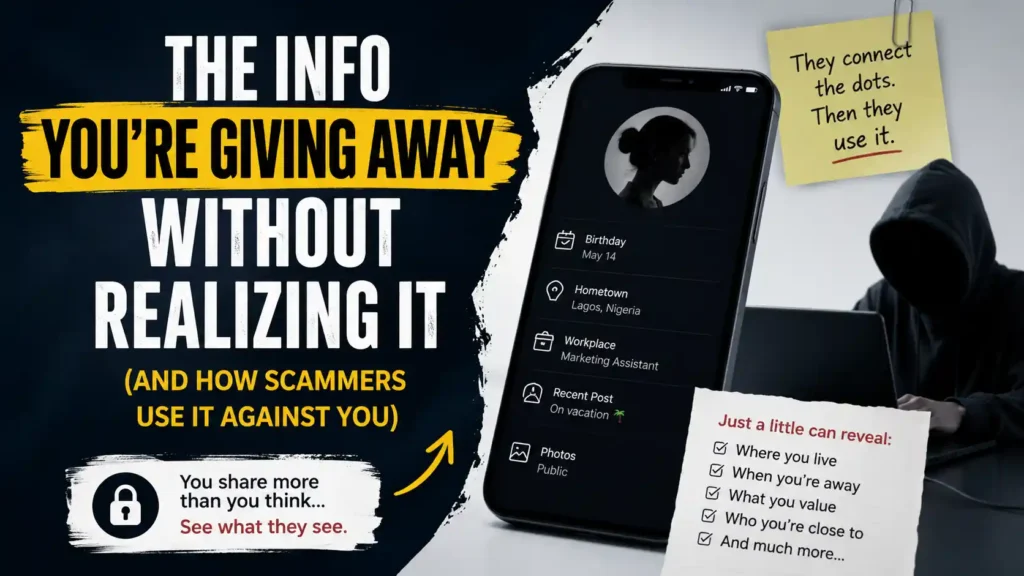
Your number was found publicly
Your telephone number may appear on:
- A business website
- Social media
- A professional directory
- A classified advertisement
- A marketplace listing
- A résumé or job board
- A public messaging group
- An old forum profile
Publishing a business number helps customers contact you, but it also makes unsolicited approaches easier.
Your information appeared in a data breach
An organization you used may have exposed customer information. Lists containing names, telephone numbers and email addresses can be combined and circulated.
A scammer may know your name, location or employer without having access to your phone. Personal details make the message more convincing, but they do not prove that the sender is trustworthy.
You entered your number on a website
Fake surveys, competitions, job applications and promotional pages collect contact information. The number may later be used for fraudulent calls and messages.
Your number was visible in a WhatsApp group
Depending on the group and its privacy structure, participants may see other members’ numbers. A stranger may contact you privately after finding you in a group.
Someone else’s account was compromised
A criminal controlling another person’s account may access conversations, group memberships or stored contact information.
This does not necessarily mean that your own WhatsApp account was breached.
The sender is testing active numbers
Some scammers send generic messages to large lists of numbers. They continue with people who respond.
Common opening messages include:
- “Hello, are you available?”
- “Can I speak with you?”
- “Are you looking for work?”
- “I found your profile online.”
- “Is this still your number?”
- “Sorry, have I reached Anna?”
- “Can you complete a short task?”
A reply confirms that your number is active and monitored.
The person genuinely entered the wrong number
Typing mistakes happen. A genuine sender normally apologizes and ends the conversation.
A scammer may use a supposed wrong number to start a friendship. After several conversations, the person introduces cryptocurrency, trading, romance or another financial opportunity.
17 Warning Signs a +44 WhatsApp Number May Be a Scammer
Do not decide based on one detail alone. Look for a combination of warning signs.
The country code identifies a numbering region, not the sender’s honesty. These WhatsApp scammer warning signs explain what to check before you trust the message.
1. The message provides no context
A legitimate recruiter, customer or company representative should explain why they contacted you.
Messages such as “Hello,” “Are you free?” and “Can we talk?” are designed to provoke curiosity without revealing the sender’s purpose.
Ask the person to identify themselves before sharing anything about yourself.
2. The sender refuses to explain how they found you
Ask one direct question:
“Where exactly did you obtain my telephone number?”
Be suspicious of vague answers such as:
- “From our database”
- “Online”
- “A colleague recommended you”
- “Our recruitment department sent it”
- “You applied some time ago”
A genuine sender should provide details you can check.
3. The number appears British, but the story does not make sense
A +44 number may create an impression of credibility, particularly when the sender claims to represent a UK company.
However, ask:
- Why is this company contacting me through WhatsApp?
- Why is there no official email?
- Why does the person refuse a normal telephone call?
- Why is the payment going to an unrelated individual?
- Why can the company not verify the employee?
- Why does the stated office know nothing about the offer?
A believable country code cannot repair an unbelievable story.
4. You receive an unsolicited job offer
Fake recruitment messages often claim to come from well-known companies, hotels, online retailers, travel businesses or marketing agencies.
The position may involve:
- Liking videos
- Reviewing products
- Rating hotels
- Following social media pages
- Completing product “optimization”
- Processing orders
- Receiving and forwarding payments
- Performing simple online tasks
The sender may offer unusually high pay and say that no experience or formal interview is required.
5. You must pay before earning or withdrawing money
A task scam may initially pay you a small amount. This payment is bait.
Later, the platform claims that you must deposit money to:
- Unlock premium tasks
- Correct a negative balance
- Combine an order
- Increase your commission
- Complete a final task
- Pay tax
- Verify your wallet
- Release your earnings
Do not send more money to recover money already trapped inside the platform.
A legitimate employer pays you. You do not finance the employer’s workflow.
6. The sender impersonates a UK recruiter
A scammer may copy a real recruiter’s name, photograph, company branding and job description.
Check the opportunity independently:
- Visit the company’s official website yourself.
- Find its careers page.
- Check whether the vacancy exists.
- Contact the company using a published number or email.
- Ask whether the named recruiter works there.
- Compare the sender’s email domain with the official domain.
Do not rely on a website, email address or telephone number supplied by the suspected recruiter.
7. The sender claims to be from your bank
The person may say:
- A suspicious payment was detected
- Your account must be secured
- A new payee was added
- Your card has been compromised
- Money must be moved to a “safe account”
- You must approve or reject a transaction
A real bank will not require you to transfer money to another account to protect it.
End the conversation and contact your bank through the number printed on your card, shown inside the official banking application or published on its official website.
8. The message claims to be from a UK government department
The sender might impersonate a tax authority, immigration service, police force, court or benefits office.
Common stories include:
- You are owed a tax refund
- You have an unpaid tax bill
- Your National Insurance information is incomplete
- Your visa will be cancelled
- Your identity is connected to a crime
- An arrest warrant has been issued
- A payment is required to avoid prosecution
Government departments do not resolve criminal cases through secret WhatsApp payments.
9. The message concerns a parcel you were not expecting
A fake delivery message may claim that:
- Your address is incomplete
- A parcel could not be delivered
- Customs fees remain unpaid
- You must choose a new delivery time
- A small redelivery charge is required
The link may open a fake payment page designed to steal card details and personal information.
If you are expecting a parcel, open the seller’s or courier’s official website independently and enter the tracking number there.
10. The sender asks for a verification code
Never share:
- A WhatsApp registration code
- A banking one-time password
- An email security code
- A social media login code
- An account-recovery code
- A two-factor authentication code
A scammer may claim that the code was sent to you accidentally. The person may actually be attempting to register your account on another device or authorize a transaction.
11. You are asked to scan a QR code
A QR code can be used to connect a device or direct you to a fraudulent website.
Do not scan a QR code supplied by an unfamiliar WhatsApp contact, especially when the sender claims it will:
- Verify your identity
- Confirm a payment
- Activate a job account
- Join a work platform
- Secure your WhatsApp account
- Receive a refund
A malicious device-linking request could give another person access to your WhatsApp account.
12. The sender requests identity documents
Do not send a stranger:
- Passport photographs
- Driver’s licence images
- National identity documents
- Bank statements
- Proof of address
- Card photographs
- Tax records
- Selfies holding identification
Fake recruiters and immigration agents frequently use job opportunities or visa assistance to collect sensitive documents.
13. The person offers UK visa sponsorship
A scammer may promise a sponsored job, work permit, visa appointment or certificate of sponsorship in exchange for an advance payment.
Warning signs include:
- Guaranteed visa approval
- No interview or skills assessment
- Payment to a personal bank account
- Pressure to pay immediately
- Communication only through WhatsApp
- A job offer without verifiable company involvement
- Requests to buy insurance, accommodation or training from the same agent
- A certificate that cannot be independently verified
A British number does not prove that the sender is an authorized recruiter, immigration adviser or sponsoring employer.
14. The sender introduces an investment
The conversation may begin as a friendship, wrong-number exchange or romantic approach. Later, the person mentions successful trading and offers to teach you.
The investment may involve:
- Cryptocurrency
- Foreign exchange
- Gold
- Stocks
- Artificial intelligence trading
- A private investment group
- A supposedly exclusive platform
The dashboard may display imaginary profits. When you attempt to withdraw, additional payments are demanded.
15. The sender wants an unusual payment method
Be suspicious when payment is requested through:
- Cryptocurrency
- Gift cards
- Wire transfers
- Payment vouchers
- Cash deposits
- A stranger’s personal bank account
- Multiple unrelated accounts
- Peer-to-peer transfers marked as personal
The payment method may be chosen because it is difficult to reverse.
16. The sender creates urgency or demands secrecy
The person may say:
- The offer expires today
- Your account will be closed
- Police will arrive soon
- Your parcel will be destroyed
- You must not contact the company
- Your family must not know
- Your bank will interfere with the transaction
- Delaying will cause a financial loss
Urgency and secrecy are used to prevent verification.
17. The sender becomes aggressive when questioned
A genuine professional should understand reasonable security concerns.
Stop the conversation when the person:
- Insults you
- Threatens legal action
- Accuses you of wasting time
- Repeatedly calls after being asked to stop
- Changes the story
- Refuses independent verification
- Demands that you “trust the process”
Follow this complete guide on how to identify a scammer on WhatsApp when you need to investigate the sender’s profile, story and requests.
A Five-Minute Check for an Unknown +44 WhatsApp Number
You do not need to interrogate the sender or attempt to expose them. Use this quick verification process.
Minute 1: Examine the opening message
Ask:
- Was I expecting this contact?
- Does the sender identify themselves?
- Is the purpose specific?
- Does the message mention money or employment?
- Is there pressure to respond quickly?
- Does the wording appear generic?
A vague opening is not proof of fraud, but it should prevent you from trusting the account immediately.
Minute 2: Inspect the profile
Check the name, photograph, description and claimed business.
Look for contradictions:
- The name does not match the payment account
- The photograph belongs to another person
- The description does not match the stated occupation
- The company logo is used without an official website
- The account name recently changed
- The supposed business cannot be found independently
Do not treat a business-account label as a guarantee.
Minute 3: Search the complete number
Search the number in quotation marks. You can also search:
- The number plus “scam”
- The person’s name plus “fraud”
- The company name plus “WhatsApp”
- Exact sentences copied from the message
- The job title plus the company name
- The website domain plus “review” or “scam”
A clean search result is not proof of safety. The number may be new, stolen or recently activated.
Minute 4: Verify the organization independently
Leave WhatsApp and find the organization’s official website yourself.
Contact it through a number or email address published there. Ask whether:
- The sender works for the organization
- The job or promotion exists
- WhatsApp is an approved communication channel
- The payment instructions are genuine
- The organization owns the website you received
Do not use a telephone number introduced by the suspicious sender as your verification channel.
Minute 5: Identify what the sender wants
Ignore the friendly language and focus on the requested action.
Stop if the sender wants you to:
- Send money
- Reveal a password
- Share a security code
- Scan a QR code
- Submit identity documents
- Install an application
- Grant remote access
- Transfer money through your account
- Keep the conversation secret
- Make an immediate decision
If you cannot verify both the identity and the request, do not proceed.
Can a Scammer Use or Fake a +44 Number?
Yes. A +44 number does not prove that the sender is a genuine UK resident or business representative.
The account may involve:
- A legitimate UK SIM controlled by a criminal
- A virtual or internet-based number
- A stolen WhatsApp account
- A number registered by an accomplice
- A recycled telephone number
- A person operating outside the UK
Traditional caller-ID spoofing and WhatsApp account registration are not identical. A suspicious WhatsApp account may be connected to a functioning number while the person using it presents a false identity.
The correct question is not merely whether the number exists. You must determine whether the person controlling it is who they claim to be.
Is a +44 WhatsApp Mobile Number Always Written With +44 7?
Many UK mobile numbers appear internationally with +44 followed by 7 because the leading zero used in the domestic format is removed.
However, seeing +44 7 does not prove that the number belongs to an ordinary mobile subscriber or trustworthy individual. The UK numbering system contains different ranges, and criminals may also use legitimately issued mobile numbers.
Do not approve a payment, release information or accept a job simply because the number resembles a standard British mobile number.
Can Answering a +44 WhatsApp Call Hack Your Phone?
Answering an ordinary WhatsApp call does not usually grant the caller automatic access to your messages, photographs, contacts or bank account.
The main danger is manipulation during the call.
The caller may attempt to persuade you to:
- Share your screen
- Install remote-access software
- Reveal account information
- Read out a verification code
- Scan a device-linking QR code
- Open a malicious website
- Approve a transaction
- Transfer money to a “safe account”
Software vulnerabilities can exist, which is why you should keep WhatsApp and your phone’s operating system updated.
If you answered but did not reveal information, click anything, install an application, scan a code or authorize a request, the immediate risk is much lower.
Is It Safe to Reply to an Unknown +44 Number?
A simple reply does not normally compromise your phone. However, responding confirms that your number is active and gives the sender an opportunity to continue the conversation.
If you have no reason to expect contact from the UK, ignoring the message is the safest option.
If the contact could concern your business, request identification without supplying information first:
“Please provide your full name, organization and the specific reason you contacted this number.”
Do not reveal your full name, employer, location or account information merely to help the sender explain why they contacted you.
Common +44 WhatsApp Scams
The following schemes are commonly delivered through numbers that appear British, although none is exclusive to +44 numbers.
Fake remote jobs
The sender offers easy online work and eventually requires deposits to unlock commissions or withdrawals.
Bank impersonation
The victim is told to move money into a “safe account.” The account actually belongs to the criminal or an accomplice.
Parcel delivery scams
A fake delivery notice directs the victim to a fraudulent payment page.
Tax-refund scams
The message promises a refund and requests banking or card information through a fake website.
Visa and sponsorship scams
The sender promises British employment and visa sponsorship in exchange for advance fees.
Wrong-number investment scams
A supposedly accidental message becomes a friendship followed by a fraudulent investment recommendation.
Romance scams
The sender creates an emotional relationship before requesting money for travel, medical care, legal problems or an emergency.
Account-takeover scams
The criminal requests a security code, device-linking approval or QR-code scan to gain access to the victim’s account.
Marketplace scams
A supposed buyer sends a fake payment notice, requests a refund or claims that the seller must pay to upgrade an account before receiving money.
How to Block and Report a Suspicious +44 Number
The exact labels can vary by device and application version, but the normal process is:
- Open the conversation.
- Tap the number or profile name at the top.
- Scroll down the contact-information page.
- Select “Block” or “Report.”
- Confirm your selection.
Reporting may provide WhatsApp with recent messages and relevant account information for review.
If the sender threatened you or requested money, preserve evidence first.
Save:
- The complete telephone number
- Profile name and image
- The conversation
- Website links
- Payment instructions
- Bank or cryptocurrency details
- Transaction receipts
- Dates and times
Do not continue communicating merely to collect additional evidence.
How to Strengthen Your WhatsApp Security
Blocking one account may not prevent another number from contacting you. Improve your privacy and account protection.
Enable two-step verification
Create a WhatsApp PIN that you do not use elsewhere. Add a secure recovery email address if the option is available.
Never disclose the PIN or your registration code.
Inspect linked devices
Review every linked browser, computer and device. Remove anything you do not recognize.
Do not scan a QR code or approve a linking request because a stranger claims it is required for employment, payment or security.
Silence unknown callers
WhatsApp can silence calls from unknown numbers. Silenced calls may remain visible in your call history without ringing normally.
Restrict your profile information
Limit who can view your:
- Profile photograph
- About information
- Status
- Last-seen information
- Online status
Restrict group invitations
Adjust who can add you to groups. Unexpected group invitations can expose you to fake investments, fraudulent jobs and impersonation attempts.
What If You Already Replied?
Do not panic. A simple answer does not automatically give the sender access to your phone.
If you only said “hello” or asked who the person was:
- Stop responding.
- Block and report the number.
- Expect possible messages from other accounts.
- Ignore claims that your response created a debt or obligation.
If you disclosed personal information, watch for more targeted phishing attempts.
If you supplied a password, change it immediately on every account where you reused it.
If you shared a verification code or scanned a QR code, inspect linked devices and secure the affected account immediately.
What If You Clicked a Link?
Close the page and do not enter more information.
Then:
- Check whether a file or application was downloaded.
- Remove unfamiliar software.
- Review application permissions.
- Update your device and applications.
- Change any password entered on the page.
- Replace reused versions of the password.
- Monitor your email and financial accounts.
- Contact your bank if card or account details were entered.
If you installed a remote-access application, remove it and secure important accounts from another trusted device.
What If You Sent Money?
Contact the relevant financial institution immediately.
- Tell the bank, card issuer, payment service or cryptocurrency platform that you were deceived.
- Ask whether the transaction can be stopped, recalled, disputed or traced.
- Secure every account connected to the payment.
- Change exposed passwords.
- Preserve the messages and transaction records.
- Report the incident through the appropriate fraud-reporting channel in your country.
- Warn your contacts if your WhatsApp account was compromised.
Be careful after reporting the loss. Fraud victims are often contacted by fake lawyers, investigators and hackers promising guaranteed recovery.
Read the warning signs of fund recovery scams before paying anyone who claims they can retrieve your money.
Can You Identify a Scammer From a +44 Number Alone?
No.
A reverse-number search may reveal reports or public listings, but it has limitations:
- The number may be new.
- The account may be stolen.
- The number may have been reassigned.
- The current user may not be the person named in an old listing.
- The sender may use a real number with a false identity.
- No public reports may exist yet.
Do not trust a person solely because the number does not appear on a scam-reporting website.
Use this WhatsApp scammer list and suspicious-number checklist to evaluate the number, profile, message and request together.
How to Tell Whether a +44 WhatsApp Contact Is Genuine
A genuine contact is more likely to:
- State a clear reason for contacting you
- Explain how your number was obtained
- Provide independently verifiable information
- Communicate through an official company channel
- Accept reasonable verification
- Avoid asking for passwords and security codes
- Follow ordinary payment procedures
- Respect your refusal
- Give consistent answers
A scammer is more likely to:
- Start with a vague message
- Hide how your number was obtained
- Create urgency
- Promise unrealistic rewards
- Request secrecy
- Send suspicious links
- Demand advance payment
- Change the story
- Become aggressive
- Prevent independent verification
The number may look British. Trust must still be earned through verification.
Frequently Asked Questions About +44 WhatsApp Numbers
These answers address the most common questions about unexpected British WhatsApp contacts.
1. Which country uses the +44 code?
The United Kingdom uses +44 as its international country code.
2. Is +44 a scam country code?
No. +44 is a legitimate country code used by millions of people and businesses. Scammers can use +44 numbers, but the prefix itself is not fraudulent.
3. Why did I receive a WhatsApp message from a +44 number?
Your number may be public, exposed in a data breach, visible in a group, entered incorrectly or included in a mass-messaging list.
4. Does +44 mean the person is in England?
Not necessarily. +44 covers the United Kingdom, and the account’s user may also be physically located outside the UK.
5. Is +44 only for England?
No. +44 covers England, Scotland, Wales and Northern Ireland.
6. Why is the zero missing after +44?
The leading zero used in a UK domestic number is normally removed when the international +44 prefix is added.
7. Is +44 7 always a UK mobile number?
Many UK mobile numbers begin with 07 domestically and appear as +44 7 internationally. However, the format alone does not prove that the user is trustworthy.
8. Can scammers use real UK mobile numbers?
Yes. A scammer may use a legitimate SIM, virtual number, stolen account or number registered by another person.
9. Does a +44 number prove that the sender lives in the UK?
No. It indicates association with the UK numbering system, not the sender’s present location.
10. Should I answer a +44 WhatsApp call?
If you do not recognize the number and are not expecting the call, allowing it to go unanswered is safer.
11. Can answering a +44 call hack my phone?
Answering an ordinary call does not usually provide automatic access to your device. The main danger is being persuaded to reveal information or perform a risky action.
12. Can replying to a +44 message get me hacked?
A simple text reply does not normally compromise your device. It may confirm that your number is active and encourage further contact.
13. Is a +44 WhatsApp business account trustworthy?
Not automatically. The profile and business information must still be verified independently.
14. Why does the sender know my name?
Your name may be available through a public profile, data breach, messaging group, business listing or compromised contact list.
15. Are job offers from +44 numbers genuine?
Some may be genuine, but unsolicited offers requiring deposits, fees or simple paid tasks are serious warning signs.
16. Can a UK employer recruit through WhatsApp?
A recruiter may use WhatsApp for communication, but the job, recruiter and company should be independently verifiable. Legitimate employment should not depend solely on a WhatsApp conversation.
17. Is a UK visa sponsorship offer on WhatsApp legitimate?
Do not assume it is legitimate. Verify the employer, vacancy and sponsorship claim independently before sending documents or money.
18. Should I pay a recruiter for a UK job?
Do not pay an unknown WhatsApp recruiter for guaranteed employment, interviews or sponsorship. Investigate every charge and organization independently.
19. What if the sender claims to be my bank?
End the conversation and contact your bank through its official application, website or the number printed on your card.
20. What if the message says my parcel is waiting?
Visit the courier’s official website yourself. Do not use the link in the unexpected message.
21. Are wrong-number messages from +44 scams?
Not always. However, be suspicious if the sender continues the conversation and eventually introduces romance, investing or a money-making opportunity.
22. Can a video call prove that the sender is real?
No. A video call can be staged, manipulated or conducted by someone who is participating in the deception.
23. How can I check a +44 number?
Search the complete number, inspect the profile, search exact wording from the message and verify the sender through an independent channel.
24. What should I do if I shared a WhatsApp code?
Secure your account immediately, inspect linked devices, re-register your number if necessary and warn your contacts.
25. Should I block every +44 number?
No. Block numbers that are suspicious, unsolicited, abusive or irrelevant. Do not treat every British individual or business as fraudulent.
Final Verdict: Is That +44 WhatsApp Number Real or Fake?
The +44 country code is real and belongs to the United Kingdom. However, it cannot prove who controls the WhatsApp account or whether the sender’s claims are honest.
A contact may be legitimate if you expected the message, the sender provides a specific reason and you can verify the person independently.
Treat the contact as suspicious when the sender:
- Remains vague
- Pressures you
- Offers effortless income
- Promises guaranteed investment profits
- Requests advance payment
- Asks for personal documents
- Sends an unfamiliar link
- Demands a verification code
- Requests a QR-code scan
- Discourages independent verification
Before taking action, ask:
“Can I verify this person and request without relying on any telephone number, website, document or contact supplied by the sender?”
If the answer is no, do not proceed. Preserve necessary evidence, report the account and block it.
Pingback: WhatsApp Country Code List: How to Check an Unknown International Number - SafeGuard Press