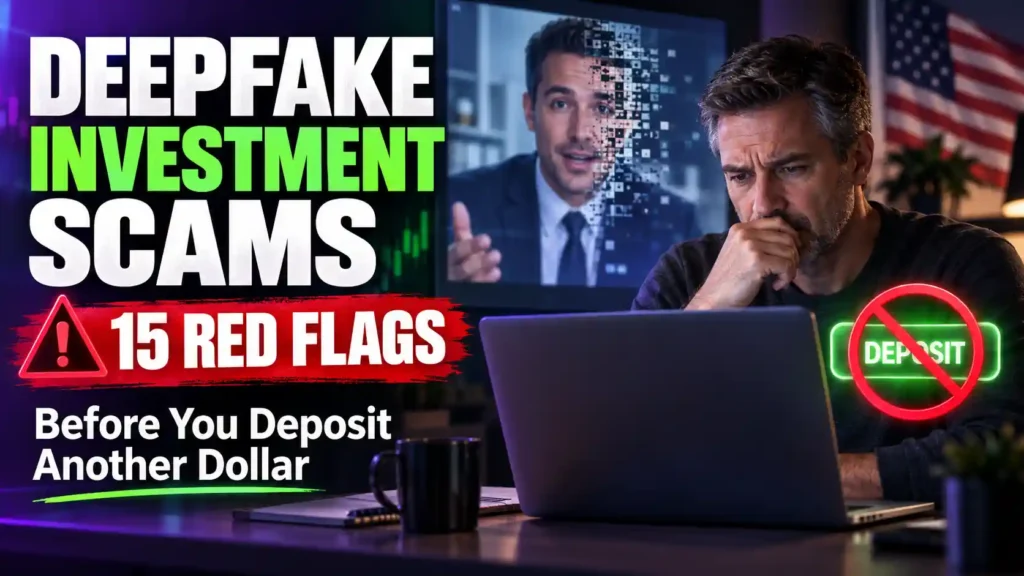
The video shows a billionaire entrepreneur, respected financial expert or government official speaking directly to the camera.
They describe an investment platform that supposedly uses artificial intelligence, automated trading or advanced technology to generate consistent profits.
The opportunity does not look like an obvious get-rich-quick scheme. The promised returns seem attractive but believable. The website looks professional and displays familiar company logos.
You enter your telephone number.
Within minutes, a friendly “investment adviser” calls. They guide you through opening an account and making a small deposit. A few days later, the dashboard shows that your investment has grown.
The adviser congratulates you and recommends depositing more.
Everything appears legitimate—until you try to withdraw.
Suddenly, you must pay taxes, insurance, a security deposit or an account-upgrade fee. Each payment creates another requirement, while the impressive balance displayed on your screen remains out of reach.
This is how deepfake investment scams turn borrowed authority into financial loss.
The AI-generated video is only the entrance. The full operation may include fake news articles, copied financial websites, persuasive account managers, fabricated trading dashboards and repeated withdrawal fees.
If you are considering an investment promoted through an AI-generated or celebrity video: Do not deposit money yet. Identify the company’s legal name, verify it through the appropriate financial register and contact the registered business using details that did not come from the advertisement.
This guide explains how deepfake investment scams work, 15 red flags to examine, seven checks to complete before investing and what to do if you have already sent money or identity documents.
What Are Deepfake Investment Scams?
Deepfake investment scams use AI-generated or digitally manipulated videos, voices and images to make a fraudulent financial opportunity appear legitimate.
The deepfake may impersonate:
- A billionaire entrepreneur
- A respected investor
- A financial journalist
- A television presenter
- A politician
- A government official
- A company executive
- A social media influencer
- A financial adviser
- A satisfied customer
The apparent person may recommend:
- A cryptocurrency platform
- An automated trading system
- An AI-powered investment application
- A foreign-exchange service
- A government-backed opportunity
- A private wealth program
- A high-yield account
- A supposedly overlooked stock
- A commodity or derivatives platform
The endorsement may be completely fabricated.
Moreover, the deepfake is usually only one part of the fraud. The complete operation can include:
- A paid social media advertisement
- A copied news website
- A fake registration form
- An aggressive sales team
- A cloned financial company
- A fraudulent trading dashboard
- False profits
- Blocked withdrawals
- A follow-up recovery scam
Deepfake investment fraud belongs to the wider category of deepfake scams, but its financial funnel deserves separate attention because the relationship may continue for weeks or months.
How Deepfake Investment Scams Work
Understanding the complete journey is more useful than concentrating exclusively on visual defects in the advertisement.
The operation moves you gradually from curiosity to trust, then from trust to financial commitment.
Stage One: A Familiar Face Stops You
You encounter an advertisement on Facebook, Instagram, TikTok, YouTube or another platform.
A recognizable person appears to discuss:
- Artificial intelligence
- Automated investing
- Cryptocurrency
- A private financial system
- A government-supported program
- A supposedly exclusive platform
- A simple way for ordinary people to invest
The video may be AI-generated, edited or completely genuine footage paired with a false story.
Stage Two: A Fake News Page Builds Credibility
Clicking the advertisement may take you to a page that imitates a recognized newspaper, television network or financial publication.
The article claims the public figure:
- Revealed the platform during an interview
- Earned substantial profits
- Was challenged by banks
- Accidentally exposed a secret
- Was prevented from discussing the system
- Encouraged ordinary people to register
The logos and design may look authentic, but the page may belong entirely to the scammer.
Stage Three: A Form Collects Your Information
You are asked to provide:
- Your name
- Email address
- Telephone number
- Country
- Preferred investment amount
The page may claim that only a few places remain.
Submitting the form identifies you as a potential target and allows the sales operation to begin.
Stage Four: An Account Manager Builds Trust
A caller introduces themselves as an adviser, broker or account manager.
They may sound patient, knowledgeable and professional.
The person explains:
- How the platform works
- Why it is supposedly safe
- How little you need to begin
- Why the famous person recommends it
- Why registration must happen now
They may remain on the telephone while you make the first payment.
Stage Five: The Dashboard Displays Profits
Your online account starts showing gains.
The adviser may even allow a small withdrawal. That payment can make the platform feel legitimate.
However, the withdrawal might come from your original deposit, another victim’s money or the scammer’s operating funds. Its purpose may be to persuade you to invest much more.
Stage Six: Deposit Pressure Increases
The adviser claims:
- A special trade is available
- Your account qualifies for an upgrade
- A market event creates a rare opportunity
- More capital will produce better results
- A senior analyst has selected your account
- You must act before the market changes
The calls become more frequent. The adviser may discuss your financial goals and personal life to deepen the relationship.
Stage Seven: Withdrawals Become Difficult
When you request your money, the rules change.
The platform may demand:
- Taxes
- Insurance
- A liquidity fee
- A verification payment
- A withdrawal commission
- An anti-money-laundering charge
- A loan repayment
- A blockchain fee
- An account-unfreezing payment
Each payment produces another requirement.
Stage Eight: A Recovery Scam Begins
After you stop paying or the website disappears, someone else contacts you.
They may claim to be:
- A lawyer
- A government investigator
- A fraud-recovery agent
- A blockchain expert
- A financial regulator
- A cybersecurity company
They say your money has been located but require another upfront payment.
The recovery offer may come from the same criminal group.
A Realistic Deepfake Investment Scam Journey
Imagine seeing a social media video that appears to show a famous entrepreneur discussing a new AI trading platform.
The video leads to what looks like a trusted news article. A registration form asks for your telephone number.
An adviser calls and requests a small starting deposit.
Within a week, your dashboard shows a meaningful profit. The adviser allows you to withdraw a small amount, apparently proving the investment is genuine.
You then deposit a much larger sum.
When you request another withdrawal, the platform claims your account owes tax. After you pay, an insurance charge appears. Then a compliance problem blocks the account.
At this stage, the fraud no longer depends on the original deepfake. It depends on your hope of recovering the balance displayed on the screen.
That progression—from familiar face to false profit to withdrawal fee—is the real structure you must recognize.
Why Deepfake Investment Scams Are So Convincing
These operations combine modern technology with old psychological pressure.
Borrowed Authority
A respected person makes an unfamiliar platform feel established.
Professional Presentation
The advertisement, website, documents and dashboard may look better than those of some legitimate companies.
Professional design is easy to reproduce. Regulation and accountability are not.
Personal Attention
The adviser remembers your goals, calls regularly and celebrates your apparent success.
This relationship makes it harder to accept that the person may be manipulating you.
Fabricated Profits
Seeing an account balance grow feels more convincing than hearing a promise.
However, a criminal who controls the website can display any number.
Small Initial Commitment
A modest deposit feels less dangerous than risking a large sum.
Once you pay, the adviser uses that commitment to push for a larger decision.
Fear of Losing the Displayed Balance
When withdrawals are blocked, victims may pay additional fees because they are afraid of losing the apparent profit.
The displayed balance may be fictional, but the emotional attachment to it is real.
Real Investment Platform or Deepfake Scam?
Use the complete pattern to evaluate the opportunity.
| What you notice | Possible legitimate explanation | Why it may be suspicious |
|---|---|---|
| A public figure promotes it | Genuine endorsement | The promotion is missing from official channels |
| An adviser calls immediately | Responsive customer service | You never clearly requested the call |
| A small minimum deposit is offered | Accessible entry level | The deposit begins escalating pressure |
| The dashboard shows profits | Genuine market performance | No independent statement confirms ownership |
| You receive a small withdrawal | Normal access to funds | It may be bait for a larger deposit |
| A license number appears | Genuine registration | The number may belong to another firm |
| The adviser criticizes your bank | Frustration with delays | They do not want the transfer questioned |
| More money is required to withdraw | Contractual charge | Every payment creates another demand |
| Reviews are overwhelmingly positive | Satisfied clients | Reviews may be manufactured |
A beautiful dashboard cannot compensate for missing authorization, unclear asset custody or blocked withdrawals.
15 Red Flags of Deepfake Investment Scams
The deepfake may contain visual problems, but the investment structure usually offers stronger evidence.
Examine how you were contacted, who operates the platform, where your money goes and what happens when you request a withdrawal.
1. A Famous Person Reveals a Supposedly Secret Investment
A public figure appears to expose a platform that banks, governments or traditional financial institutions do not want ordinary people to discover.
This story conveniently explains:
- Why you have never heard of it
- Why you must act before it disappears
Search the person’s official channels for the exact company.
The detailed guide to celebrity deepfake scams explains how genuine interviews can be manipulated to create false financial endorsements.
2. The Advertisement Leads to an Imitation News Page
The page may copy a recognized broadcaster, newspaper or financial publication.
Check:
- The exact domain
- Whether navigation works
- The author’s identity
- Other articles
- Contact information
- Legal pages
- Publication date
- Whether the genuine publication carries the story
A logo does not prove that the page belongs to the organization displayed.
3. The Video Makes an Uncharacteristic Claim
Ask whether the statement fits the person’s established behavior.
Be suspicious when:
- A cautious investor guarantees profits
- A journalist promotes a specific broker
- A politician endorses a private platform
- A financial expert says a system never loses
- A public figure tells viewers to invest secretly
- A billionaire promises everyone a fixed daily return
A familiar face does not make an implausible claim credible.
4. The Company’s Legal Identity Is Difficult to Establish
A genuine financial business should identify the legal entity operating the service.
Look for:
- Full legal name
- Registration number
- Physical address
- Regulatory authority
- License details
- Official telephone number
- Client agreement
- Risk disclosures
- Complaints procedure
A brand name, chat box and email form are not enough.
5. Its License Belongs to Another Company
Scammers may copy the name, license number and address of a legitimate financial firm.
This creates a clone-firm scam.
Compare:
- Website domain
- Email addresses
- Telephone numbers
- Physical address
- Payment beneficiary
- Authorized services
Do not merely confirm that a similarly named business appears on a financial register.
Use the regulator’s contact details to reach the genuine company and ask whether it operates the platform.
6. The Adviser Calls Immediately and Repeatedly
After submitting a form, you may receive a call within minutes.
Warning signs include:
- Calls from several numbers
- Pressure to remain connected while depositing
- Refusal to provide clear information in writing
- Questions about your savings and credit
- Encouragement to borrow money
- Instructions to hide the investment from family
- Anger when you delay
- Claims that a special place is being held
A legitimate adviser should not need to control the speed of your decision.
7. You Are Asked to Install Remote-Access Software
The adviser offers to help you register or complete the payment.
They ask to view or control your screen.
Remote access can expose:
- Banking credentials
- Verification codes
- Identity documents
- Saved passwords
- Cryptocurrency wallets
- Personal files
An unsolicited investment representative does not need control of your device.
8. Your Payment Goes to an Unexpected Beneficiary
Check who receives the money.
Be suspicious when funds go to:
- A personal account
- An unrelated company
- An adviser-controlled cryptocurrency wallet
- An account in another country
- A payment processor with no clear connection
- A beneficiary that changes between deposits
- Several separate accounts
A legitimate investment company should clearly explain who receives and holds customer funds.
9. The Platform Shows Profits That Rarely Decline
Real investments fluctuate.
A dashboard showing steady daily gains with almost no losses may contain fabricated numbers.
Other suspicious patterns include:
- Profits appearing immediately
- Identical gains every day
- Returns unaffected by market conditions
- Trades you never authorized
- Vague asset descriptions
- No independent statements
- No identifiable custodian
- Balances changing after conversations with the adviser
Money displayed on a dashboard is not necessarily money you own.
10. Screenshots Are Offered as Proof
The adviser may send screenshots showing:
- Successful withdrawals
- Regulatory licenses
- Celebrity messages
- Customer profits
- Bank balances
- Company certificates
- Trading results
- Media coverage
Every screenshot can be edited, generated, stolen or taken from another business.
Verify the underlying record directly. Do not treat an image of a license as proof that the license belongs to the website you are using.
11. A Small Withdrawal Is Used to Encourage a Larger Deposit
Receiving one withdrawal feels like strong proof.
However, the money may come from:
- Your original deposit
- Another victim’s funds
- The scammer’s marketing budget
After the withdrawal succeeds, the adviser recommends a much larger investment.
One small payment does not replace company verification.
12. You Are Pressured to Borrow or Sell Assets
The scammer may encourage you to:
- Take a personal loan
- Use a credit card
- Withdraw retirement savings
- Sell investments
- Remortgage property
- Borrow from relatives
- Sell jewelry
- Increase bank-transfer limits
An adviser who prioritizes deposits over your financial stability is not acting in your interest.
13. You Are Told to Mislead Your Bank
The scammer may claim your bank does not understand cryptocurrency, artificial intelligence or alternative investments.
They instruct you to:
- Give a false reason for the transfer
- Say you are paying a friend
- Avoid naming the platform
- Split payments
- Use several accounts
- Withdraw cash
- Ignore fraud warnings
A person asking you to deceive your bank is removing a safety barrier.
Tell your bank the truth.
14. Withdrawals Require New Payments
The platform shows a large balance but demands a separate payment before releasing it.
The charge may be described as:
- Tax
- Insurance
- Liquidity verification
- Account authentication
- Anti-money-laundering clearance
- Blockchain release fee
- Security deposit
- Withdrawal commission
- Conversion charge
Paying one fee may lead to another.
Do not send additional money to unlock funds that may not exist.
15. A Recovery Service Contacts You Afterward
Your details may be retained, sold or shared.
A supposed recovery professional may know the original platform, amount lost and adviser’s name. That information does not prove legitimacy.
Warning signs include:
- Unsolicited contact
- Guaranteed recovery
- Upfront fees
- Cryptocurrency payment requests
- Claims of special government access
- Pressure to act quickly
- Remote-access requests
- Demands for a wallet recovery phrase
Never reveal a cryptocurrency seed phrase or wallet recovery phrase to anyone.
Seven Checks Before You Deposit
Complete this checklist before sending money to any platform discovered through an advertisement or unsolicited contact.
- Can I confirm the company’s full legal identity?
- Does the platform’s website match the regulator’s official record?
- Can I independently verify the adviser?
- Does the payment beneficiary match the registered company?
- Can I identify who will hold my money or assets?
- Are all fees and withdrawal rules available in writing?
- Have I obtained an independent second opinion?
If any answer is no, do not deposit.
The V.E.R.I.F.Y. Investment Test
Use this process before making your first payment.
V — Verify the Endorsement
Check the supposed expert’s official channels.
Find the original interview and compare the audio, captions and context.
Do not trust a repost merely because it claims the video is authentic.
E — Establish the Company’s Legal Identity
Find the full legal name, registration number, address and regulator.
A trading brand without an identifiable legal operator is not sufficient.
R — Research the Official Register
Use the official financial register for the type of service being offered.
Confirm:
- Registration status
- Authorized activities
- Official domain
- Telephone number
- Physical address
- Disciplinary history
- Public warnings
Find the regulator independently rather than using the adviser’s link.
I — Inspect the Website and Payment Details
Compare the platform with the regulator’s record.
Check:
- Domain spelling
- Email addresses
- Telephone numbers
- Company name
- Payment beneficiary
- Withdrawal terms
- Risk disclosures
- Privacy policy
Every critical detail should match.
F — Find an Independent Second Opinion
Speak to someone who does not benefit from your deposit.
This might be:
- Your bank
- A qualified independent financial professional
- An accountant
- A lawyer
- A trusted relative
- The registered company
- The financial regulator
The platform’s adviser is not an independent source.
Y — Yield to No Urgency
Do not invest because a countdown is running, an adviser is waiting or a special trade is approaching.
If the opportunity cannot survive verification, you should not trust it.
How to Check an Investment Professional in the United States
Different financial activities may appear in different databases.
Check Brokers and Brokerage Firms
FINRA’s BrokerCheck can help you research brokerage firms and individual brokers.
Compare the person’s name, employer, registration status, disclosures and contact information.
Check Investment Advisers
The Investment Adviser Public Disclosure database can help you research investment-advisory firms and professionals.
Confirm that the adviser is connected to the company and service being promoted.
Check Futures and Derivatives Firms
NFA BASIC can provide information about certain professionals and businesses dealing with futures, derivatives and related services.
Check State Registration
Some professionals and offerings may fall under state securities authorities. The relevant state regulator can help confirm registration or identify warnings.
Compare Every Contact Detail
Finding a matching name is only the beginning.
Compare:
- Website domain
- Email address
- Telephone number
- Physical address
- Employer
- Payment beneficiary
Scammers can copy genuine names and license numbers.
Remember What Registration Does Not Prove
Registration may help confirm identity and authorization.
It does not guarantee:
- Future performance
- Honesty
- Suitability
- Investment safety
- Protection from loss
A registered professional can still recommend a risky investment, and a criminal can impersonate a registered professional.
How to Evaluate a Cryptocurrency Investment Request
Cryptocurrency requires additional caution because transactions can be difficult to reverse.
A Wallet Address Is Not Proof of Legitimacy
A professionally presented wallet address does not identify who controls it.
The adviser may describe it as a company, trading or liquidity wallet. Verify that claim independently.
Blockchain Visibility Does Not Prove an Investment Occurred
You may be able to see that a transaction reached an address. That does not prove the money purchased an asset or entered a genuine trading account.
Do Not Send Crypto Directly to an Adviser
Be extremely cautious when someone instructs you to purchase cryptocurrency and transfer it to a wallet they provide.
Never Reveal Your Seed Phrase
A wallet recovery phrase provides control over the assets inside the wallet.
A legitimate support agent, investigator or recovery service does not need it.
Do Not Pay a Blockchain Release Fee
Scammers may claim that taxes, gas fees or compliance charges must be paid separately to release stolen or frozen cryptocurrency.
Verify every charge independently. Do not keep sending money because technical language makes the demand sound official.
How Fake Investment Dashboards Manufacture Profit
A fraudulent platform may imitate the features of a genuine trading account.
You may see:
- Price charts
- Open positions
- Transaction histories
- Profit totals
- Withdrawal buttons
- Verification levels
- Live market prices
- Messages from account managers
These features may be visual decoration.
The scammer can control the balance and transaction history. Numbers may rise after each telephone call to support the adviser’s story.
Signs the Dashboard May Be Fabricated
- Your balance rises too consistently.
- Trades appear without authorization.
- Assets are poorly described.
- No independent custodian is identified.
- Statements cannot be verified.
- Prices differ from public markets.
- Assets cannot be transferred elsewhere.
- Withdrawals remain pending.
- Support redirects you to the same adviser.
- Every problem requires another payment.
Interface complexity is not financial proof.
What to Do If You Already Sent Money
Stop additional losses first. Then preserve evidence and pursue available recovery options.
Stop All Further Payments
Do not pay withdrawal fees, taxes, verification charges or recovery costs.
The displayed balance may be designed specifically to keep you paying.
Act According to the Payment Method
| Payment method | Immediate action |
|---|---|
| Bank wire | Ask your bank to initiate a recall and alert the receiving bank |
| Debit or credit card | Report the transaction and ask about dispute and card-replacement options |
| ACH transfer | Contact your bank’s fraud department immediately |
| Cryptocurrency | Contact the exchange used and provide the transaction ID and wallet address |
| Gift card | Contact the card issuer with the card information and receipt |
| Money-transfer service | Ask whether the transfer can be stopped before collection |
| Cash deposit | Contact your bank and law enforcement immediately |
These actions do not guarantee recovery. Acting quickly may preserve options that disappear after funds move.
Preserve Evidence
Save:
- Original advertisement
- Deepfake video
- Website address
- Account-manager messages
- Telephone numbers
- Email addresses
- Payment instructions
- Beneficiary details
- Cryptocurrency wallet addresses
- Transaction IDs
- Receipts
- Dashboard screenshots
- Withdrawal demands
Capture evidence before the website or account disappears.
What to Do If You Submitted Identity Documents
Fraudulent investment platforms may collect:
- Passports
- Driver’s licenses
- Social Security numbers
- Selfies
- Proof-of-address documents
- Bank statements
- Tax information
- Signature samples
The criminals may use these details in future identity theft or impersonation attempts.
Take these steps:
- Secure your email account.
- Change exposed passwords.
- Enable multifactor authentication.
- Monitor bank and credit accounts.
- Review credit reports.
- Consider placing a fraud alert or credit freeze.
- Watch for accounts opened in your name.
- Inform relevant document-issuing authorities when appropriate.
- Treat future verification calls as suspicious.
- Preserve evidence of what you submitted.
Do not assume the danger ended when the investment platform disappeared.
How to Report a Deepfake Investment Scam
Report the entire operation—not only the advertisement.
Report the Financial Transaction
Contact the bank, card provider, exchange or transfer service.
Report the Advertisement and Account
Use the platform’s categories for fraud, impersonation, manipulated media or investment scams.
Report the Website
Include the full domain and any copied company information.
Report the Adviser
Save the person’s name, telephone numbers, email addresses and messaging profiles.
Report the Investment Fraud
In the United States, relevant reporting options may include ReportFraud.ftc.gov, IC3.gov, the SEC, FINRA, the CFTC, NFA and state securities authorities, depending on the investment and parties involved.
Readers outside the United States should contact their national financial regulator, fraud-reporting service and law-enforcement authority.
Do Not Blame Yourself
Deepfake investment scams are designed to defeat ordinary caution.
The criminals may use:
- Professional websites
- Patient advisers
- Genuine company information
- Convincing AI videos
- Small successful withdrawals
- Real market data
- Polished legal documents
- Fabricated profits
Some operations spend weeks building trust.
Shame creates silence, and silence helps scammers.
Focus on stopping further payments, protecting your identity, preserving evidence and warning others.
Deepfake Investment Scams and Online Relationships
Not every investment scam begins with a celebrity advertisement.
Some begin with friendship or romance.
A person contacts you through social media, a dating application or an unexpected message. Over time, they build emotional trust before introducing an investment platform.
Deepfake video calls, AI-generated photographs and cloned voices may be used to strengthen the identity.
The investment appears successful initially. Eventually, withdrawals become impossible.
The detailed guide to deepfake romance scams explains how emotional grooming and synthetic identities can transform an online relationship into a financial trap.
Frequently Asked Questions About Deepfake Investment Scams
Deepfake technology makes the introduction more convincing, but traditional verification can still expose the investment fraud behind it.
What is a deepfake investment scam?
It is an investment fraud using AI-generated or manipulated media to impersonate a trusted person, fabricate testimonials or make a fraudulent platform appear legitimate.
How do deepfake investment scams begin?
Many begin with a social media advertisement, fake news article, private message, online relationship or unsolicited telephone call.
Can a celebrity genuinely endorse an investment?
Yes. However, a genuine endorsement does not prove that an investment is safe, suitable or accurately advertised.
How can I check a deepfake investment video?
Find the original footage, check official channels, reverse-search screenshots and compare the speech with the person’s established views.
Are all AI trading platforms scams?
No. Claims that artificial intelligence eliminates risk or guarantees profits are still major warning signs.
Can an investment platform fake my profits?
Yes. A fraudulent dashboard can display any balance, transaction or trade the operator chooses.
Why would a scammer allow a withdrawal?
A small withdrawal can build confidence and persuade the victim to make a much larger deposit.
Does one successful withdrawal prove legitimacy?
No. The money may come from your original deposit, another victim’s funds or the scammer’s operating budget.
Can scammers copy a real company’s license?
Yes. They may copy genuine registration details while using different websites, telephone numbers and payment accounts.
How do I identify a cloned investment company?
Compare the platform’s domain, email, telephone number, address and payment beneficiary with the official regulatory record.
Does registration guarantee that an investment is safe?
No. Registration may confirm identity and authorization, but it does not guarantee performance, suitability or protection from loss.
Should an adviser ask me to install remote-access software?
An unsolicited investment adviser should not need control of your device. Refuse and end the conversation.
Why does the adviser want me to remain on the telephone while paying?
Keeping you connected allows the person to control the process, answer doubts and prevent independent consultation.
Should I lie to my bank about the transfer?
No. A request to deceive your bank is a serious warning sign. Tell the bank exactly where the money is going.
Is cryptocurrency payment proof of fraud?
No, but cryptocurrency transactions may be difficult to reverse. Unsolicited requests to send crypto to an adviser-controlled wallet require extreme caution.
Does an on-chain transaction prove I made an investment?
No. It may prove that cryptocurrency reached an address, but not that genuine assets were purchased.
Why does the platform demand tax before withdrawal?
The charge may be fabricated. Verify tax obligations independently instead of paying through the platform.
Should I pay an account-unfreezing fee?
Do not send more money merely because the platform promises to release your balance.
Can a legitimate broker delay a withdrawal?
A legitimate firm may delay a withdrawal for lawful verification or contractual reasons. It should provide clear documentation—not endless new payment demands.
What is a recovery scam?
It is a second scam targeting previous victims with promises of recovering lost money for an upfront fee or sensitive information.
How did the recovery scammer know what I lost?
Your information may have been retained, sold or shared by the original criminals.
Can a blockchain expert recover stolen cryptocurrency?
Recovery may be difficult or impossible. Be suspicious of guaranteed results, upfront crypto fees and requests for your seed phrase.
What should I do immediately after discovering the fraud?
Stop paying, contact your financial institution, protect exposed accounts, preserve evidence and report the scam.
Can my bank recover the money?
Recovery depends on the payment method, timing and circumstances. Contact the bank immediately because delays may reduce available options.
What is the best way to avoid a deepfake investment scam?
Complete the seven pre-deposit checks and use the V.E.R.I.F.Y. test before sending money or identity documents.
Final Thoughts
A deepfake investment scam does not need a perfect video.
It only needs to make you curious enough to click.
From there, fake news stories, persuasive advisers, copied registrations and fabricated profits create the appearance of legitimacy. By the time withdrawals are blocked, the famous face from the original advertisement may feel almost irrelevant.
Do not wait until that stage.
Before depositing money, remember the V.E.R.I.F.Y. test:
- Verify the endorsement
- Establish the company’s legal identity
- Research the official register
- Inspect the website and payment details
- Find an independent second opinion
- Yield to no urgency
Never confuse money displayed on a dashboard with money you own. Never mislead your bank for an adviser. Never send another payment merely to unlock a larger balance.
Most importantly, do not let a familiar face make an unfamiliar investment feel safe.
Pingback: What Are AI Scams? How Artificial Intelligence Is Making Fraud Harder to Spot - SafeGuard Press